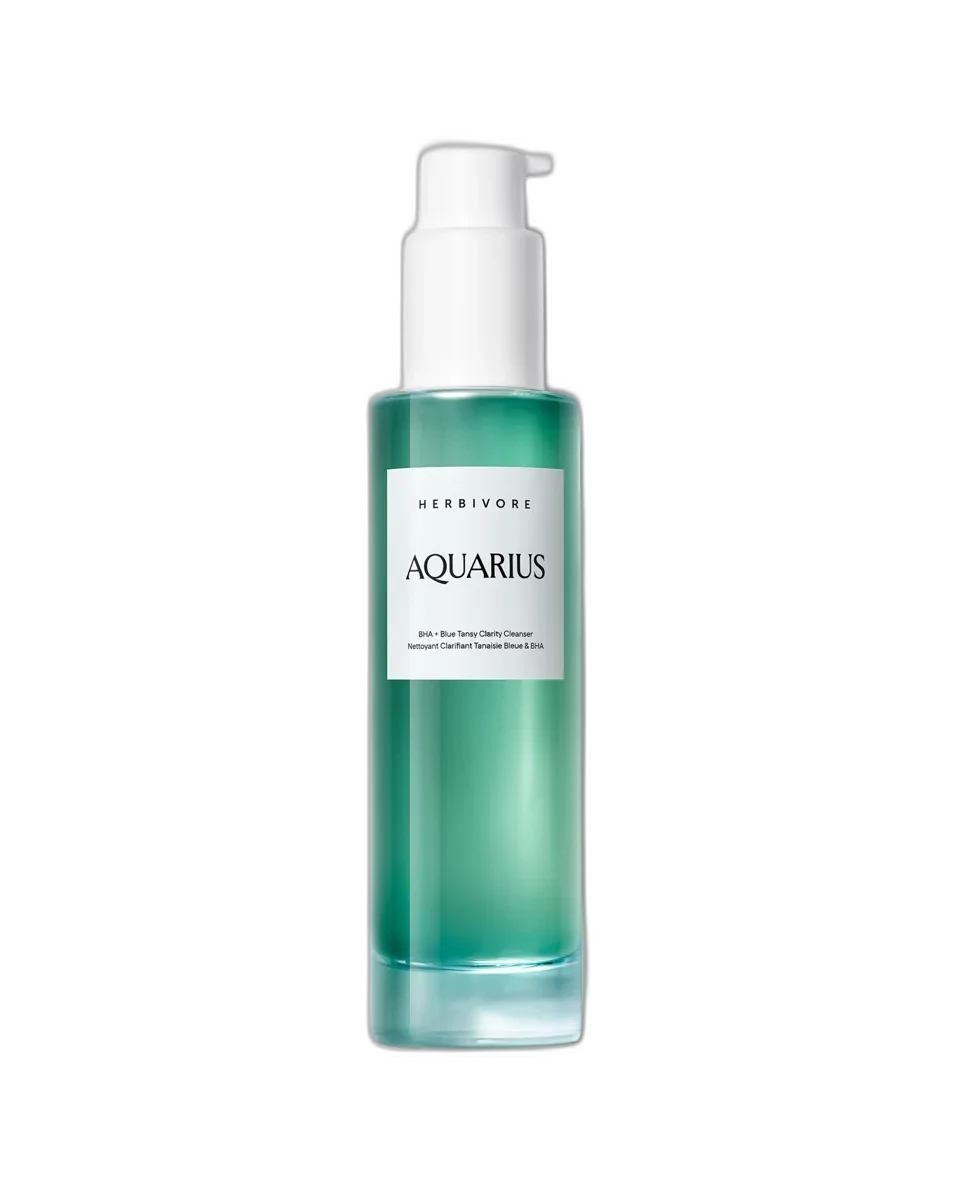
Aquarius BHA + Blue Tansy Clarity Facial Cleanser
Sephora Blue Tansy Cult Cleanser
 Verified reviewer
Pros & cons.
- +Mild sulfate-free surfactant system that doesn't strip the barrier
- +Willow bark, pineapple enzymes, and zinc PCA form a considered decongesting trio
- +Distinctive natural blue color from blue tansy's chamazulene
- +Gentle enough for twice-daily use on most oily and combination skin
- +Beautiful packaging that shows off the signature blue formula
- +Vegan, cruelty-free, and free of parabens, sulfates, and drying alcohols
- −Blue tansy essential oil is a reactivity risk for sensitive or rosacea-prone skin
- −Pricey for a 100ml cleanser versus drugstore salicylic acid alternatives
- −Willow bark extract is not a substitute for a proper leave-on BHA treatment
- −Menthyl lactate cooling sensation isn't for everyone
- −Not fungal-acne safe due to the essential oil and fatty acid profile
The full review.
Herbivore Botanicals defines itself through both aesthetics and formulations. Founded in a Seattle kitchen in 2011 and now a Sephora mainstay, the brand uses beautiful glass bottles, polarizing essential oil signatures, and a minimalist ingredient philosophy centered on botanical extracts. Herbivore products are visually memorable—the cobalt blue mask, pink quartz crystals, and apothecary atmosphere. The Aquarius cleanser follows this tradition, using a clear glass pump bottle to show a deep blue gel the color of a Mediterranean swimming pool. It looks good on a bathroom counter. The real question is whether it works as a cleanser.
The INCI list shows a formulation that performs better than expected from an aesthetic-focused brand. The surfactant system uses sodium lauroyl methyl isethionate—one of the mildest anionic surfactants in modern cleanser chemistry—with cocamidopropyl betaine and two sugar-derived glucoside co-surfactants. This combination works well for acne-prone skin, where harsh cleansers compromise the barrier and worsen breakouts. This cleanser avoids that. It produces a light gel-to-foam lather, rinses clean, and leaves skin feeling refreshed instead of squeaky or tight. It does not overstrip the skin.
The actives create a plausible decongesting profile. Willow bark extract provides salicin, a natural precursor to salicylic acid; it is not a 1-2% salicylic acid serum, but it offers BHA-adjacent action in a rinse-off product. Zinc PCA helps regulate sebum, which matters for oily and acne-prone skin. Pineapple fruit extract adds bromelain enzymes for mild exfoliation. Blue tansy essential oil—the Tanacetum annuum that colors the cleanser—provides chamazulene, a compound with documented anti-inflammatory activity in dermatological literature. This is a considered oily-skin formula, not a single-ingredient marketing story.
The blue color is the product’s most memorable feature. Blue tansy oil is naturally deep blue due to its chamazulene content—the same compound that turns German chamomile oil blue during distillation. This is a real pigment from a real plant, not an added dye. Herbivore builds much of its anti-acne lineup around this visual. The cleanser, the matching mask, and the toner all share this color because they share the same signature oil. Most skincare brands use FD&C colorants and photography for visuals rather than the actual formula.
The product has two weaknesses. First, the essential oil load. Blue tansy is soothing for most, but it is a known potential sensitizer for some. Essential oils always carry a reactivity risk; reactive or rosacea-prone skin should patch test carefully. Menthyl lactate also creates a subtle cooling sensation that some users find tingly rather than pleasant. If you dislike mentholated products, you will not like this.
Second, value. At $28 for 100ml, this cleanser sits in the middle of the Sephora clean-beauty tier. For comparison, a drugstore 1% salicylic acid cleanser in a larger bottle costs $8-12 and delivers more BHA action than the willow bark extract in this product. If you optimize for clinical cost-per-result, the math does not favor Herbivore. You pay for the gentler surfactant system, brand positioning, visual experience, and formulation philosophy. Whether that justifies the premium is a personal choice.
The honest read: this is a good cleanser for people seeking a gentle clean-beauty option for oily or combination skin, who value the Herbivore aesthetic, and who use a leave-on BHA treatment elsewhere. It is not the best-performing acne cleanser, nor the worst. It sits in a middle zone where the formulation is thoughtful and the price includes non-performance factors. If that trade works for you, it is a pleasant product for twice-daily use. If you only chase results, there are more efficient ways to spend $28.
Formula
Ingredient analysis.
Full INCI list
Aqua/Water/Eau, Sodium Lauroyl Methyl Isethionate, Cocamidopropyl Betaine, Glycerin, Sodium Methyl Oleoyl Taurate, Lauryl Glucoside, Coco-Glucoside, Salix Nigra (Willow) Bark Extract, Tanacetum Annuum Flower Oil, Zinc PCA, Ananas Sativus (Pineapple) Fruit Extract, Sodium Levulinate, Sodium Anisate, Cocamidopropyl Hydroxysultaine, Menthyl Lactate, Citric Acid, Sodium Benzoate, Aloe Barbadensis Leaf Juice, Lactobacillus Ferment, Melia Azadirachta Leaf Extract, Melia Azadirachta Flower Extract, Corallina Officinalis Extract, Coccinia Indica Fruit Extract, Tetrasodium Glutamate Diacetate, Betaine, Solanum Melongena (Eggplant) Fruit Extract, Aloe Barbadensis Flower Extract, Ocimum Sanctum Leaf Extract, Ocimum Basilicum (Basil) Flower/Leaf Extract, Curcuma Longa (Turmeric) Root Extract
Skin match.
The science.
The Science
The evidence base for the primary actives in this cleanser is mixed in strength. Salicylic acid itself is one of the best-studied ingredients in dermatology, with decades of randomized trial data supporting its use for acne, blackheads, and pore congestion. Willow bark extract contains salicin, which the body metabolizes into salicylic acid after absorption, but in a rinse-off cleanser context the practical BHA action is limited by short skin contact and by the fact that salicin is not itself the active form. The research on willow bark as a cosmetic ingredient is suggestive rather than conclusive.
Chamazulene, the compound responsible for blue tansy's color and much of its activity, has been characterized in chemistry literature as an anti-inflammatory agent — it inhibits leukotriene synthesis and has demonstrated soothing activity in in vitro models. Clinical evidence in topical cosmetic contexts is more limited, but its inclusion alongside gentle surfactants is a sensible pairing for reactive acne-prone skin.
Zinc PCA has a solid evidence base for sebum regulation — published research shows reduction in sebum output when zinc is delivered topically in appropriate forms, and zinc PCA specifically is a common choice in oily-skin formulations. Pineapple extract's bromelain enzymes are supported primarily for enzymatic debridement activity in wound-care literature; their cosmetic exfoliation role in a rinse-off is plausible but modest.
The real formulation strength of this cleanser is its surfactant system. Sodium lauroyl methyl isethionate and cocamidopropyl betaine together represent a well-studied combination for gentle cleansing that preserves stratum corneum lipids better than traditional sulfate-based systems. For acne-prone skin where barrier preservation matters as much as oil control, that's a meaningful choice.
Dermatologist Perspective
Dermatologists generally support gentle cleansing as the foundation of any acne regimen, and they commonly note that the most common mistake in over-the-counter acne care is using cleansers that are too harsh. From that standpoint, this cleanser's mild surfactant system is a positive. That said, board-certified dermatologists typically recommend dedicated leave-on salicylic acid products over rinse-off BHA-adjacent cleansers for meaningful acne outcomes, because contact time drives results. Dermatologists also commonly caution patients with rosacea, perioral dermatitis, or sensitive skin against essential-oil-heavy products, which makes blue tansy a consideration for reactive skin types. The clinical consensus is that this cleanser is a reasonable gentle option for oily or combination skin that can tolerate the essential oil profile, but it shouldn't be the sole BHA source in an acne routine.
Where it fits in your routine.
Apply morning and night to damp skin. Put one to two pumps into wet palms, add water to lather, and massage onto the face for 30 to 60 seconds. Focus on the T-zone and congestion-prone areas. Rinse with lukewarm water and pat dry. Use toner, serums, and moisturizer next; this cleanser works well with leave-on BHA or niacinamide treatments. Avoid the eye area and stop use if stinging or redness occurs.
At $28 for 100ml, this cleanser costs $0.28 per milliliter—premium pricing for a rinse-off product. Using it twice daily means one bottle lasts roughly two to three months. This costs $10-14 per month, which is expensive compared to drugstore acne cleansers but fits the Sephora clean-beauty category. The price covers the gentle surfactant system, blue tansy and supporting botanicals, the packaging, and the brand positioning. The price is fair if those factors matter to you. If you only optimize for dollars spent per active ingredient delivered, a drugstore 2% salicylic acid cleanser outperforms it.
Oily or combination skin types seeking a gentle, clean-beauty cleanser with mild decongesting actives. This works well for Herbivore fans, Sephora shoppers focused on clean beauty, and users of a dedicated leave-on BHA treatment.
Skip this if you have sensitive, reactive, or rosacea-prone skin that reacts to essential oils. Skip this if you need a high-performance BHA cleanser for serious acne — a dedicated salicylic acid product works better. Budget-conscious shoppers can find equivalent gentle cleansers for much less.
Product details.
Deep-blue gel lathers into a light foam when it hits water. It is non-stripping and non-tacky.
Distinctive herbal-cooling scent from the blue tansy oil and menthyl lactate.
A clear glass bottle with a pump dispenser uses the classic Herbivore visual identity to show the formula's blue color.
The first use feels clean and refreshing. Menthyl lactate provides a subtle cooling sensation. The blue color is memorable. Some reactive users feel mild tingling from the menthol or blue tansy — stop use if stinging is significant.
Approximately 2-3 months with twice-daily use.
12 months
All Year
The backstory.
Herbivore Botanicals was founded in 2011 in Seattle by Alexandra Jenkins and Julia Wills, starting as a small farmer's market brand before growing into one of Sephora's most recognized clean-beauty lines. The Aquarius cleanser joined their acne-focused Blue Tansy collection in 2023 as the cleansing companion to the brand's long-running Blue Tansy mask.
About Herbivore Botanicals
Established Brand (5–20 years)Alexandra Jenkins and Julia Wills founded Herbivore Botanicals in 2011 in Seattle. It is a top clean-beauty brand at Sephora. Herbivore Botanicals shows formulation transparency, but its use of essential oils makes some products unsuitable for reactive skin.
Common myths.
This cleanser replaces a leave-on salicylic acid product.
Willow bark's salicin content in a rinse-off contact time lacks the efficacy of a properly formulated leave-on salicylic acid serum. Use this as part of a routine, not as a replacement for dedicated BHA treatment.
The blue color is artificial dye.
Chamazulene in blue tansy oil provides the blue color — the same compound that turns German chamomile oil blue. The oil's own natural color creates this hue.
FAQ.
Is this cleanser a true salicylic acid product?
No — it uses willow bark extract. This contains salicin, a natural precursor with mild BHA-adjacent effects in a rinse-off context. For serious salicylic acid action, use a leave-on BHA serum or toner with this.
Can I use it twice a day?
Most oily or combination skin types can use this twice daily. If it feels drying, use it once daily.
Will it dry out my skin?
It uses a gentle sulfate-free surfactant system that most users find non-stripping. Very dry or sensitive users may still find it too cleansing — match the cleanser to your skin type.
Why does it look so blue?
Chamazulene provides the color. This compound in blue tansy (Tanacetum annuum) essential oil has anti-inflammatory activity and a deep blue color. It is a natural pigment, not an added dye.
Can I use it with other acne treatments?
Yes — because this is a rinse-off cleanser, it works with leave-on treatments like benzoyl peroxide, retinoids, or salicylic acid serums. Apply your leave-on treatments after cleansing and toning.
Is it safe for sensitive skin?
This cleanser is gentler than most acne cleansers. However, blue tansy essential oil and menthyl lactate can cause reactivity in some sensitive users. Patch test first.
Is it pregnancy safe?
Willow bark extract is safe for topical use during pregnancy at the concentrations found in rinse-off products. Blue tansy essential oil has less data — ask your OB if you have concerns.
What the community says.
"Beautiful blue color"
"Gentle enough for twice-daily use"
"Leaves skin feeling clean without tightness"
"Subtle cooling sensation"
"Expensive for a 100ml cleanser"
"Strong herbal scent"
"Menthol-like tingling bothers sensitive users"
People also looked at.