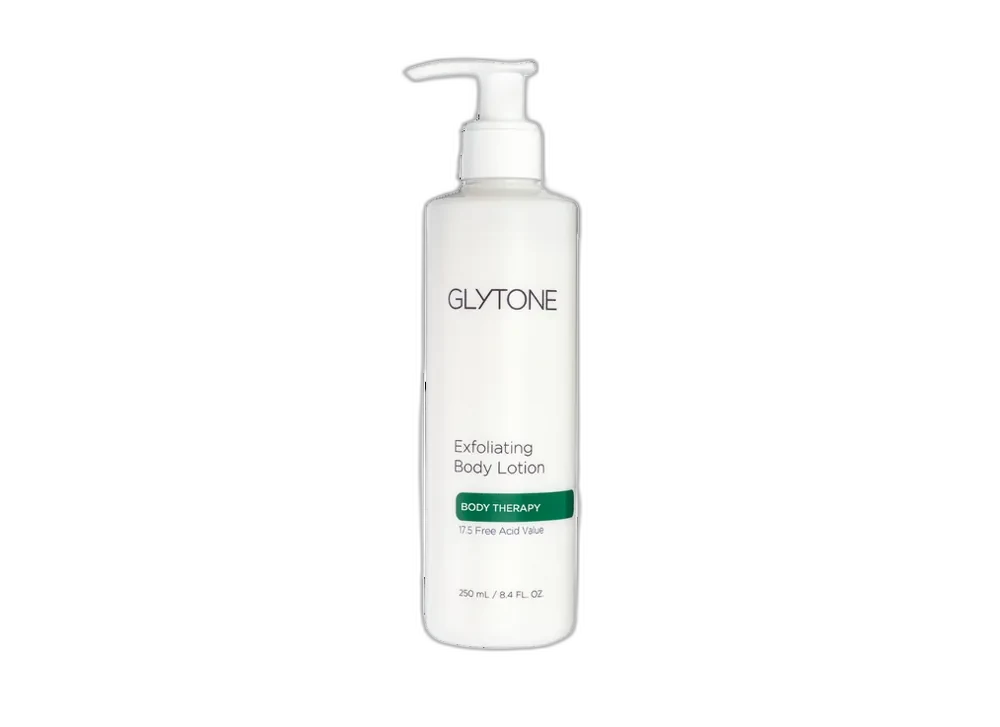
Retexturize Body Lotion
Keratosis Pilaris Derm Office Staple
 Verified reviewer
Pros & cons.
- +Genuinely clinical-strength 17.5% glycolic acid concentration rare in OTC body products
- +Well-buffered formulation with occlusive base makes the high concentration usable
- +Over 20 years of dermatologist office use and clinical validation
- +Visible improvements in keratosis pilaris, body hyperpigmentation, and texture
- +Pump dispenser packaging for controlled hygienic application
- +Strong results where lower-concentration products fail on stubborn concerns
- −Contains added fragrance — unusual for a dermatologist-developed sensitive-skin product
- −Uses paraben preservatives that some users avoid regardless of safety data
- −Can sting on first application, especially on thin-skinned areas
- −Price sits at the upper end of the body treatment category
- −Not cruelty-free or vegan — the brand hasn't modernized on these fronts
The full review.
Dermatologists hear about keratosis pilaris constantly; it is also one of the most stubborn conditions. Excess keratin buildup in hair follicles creates small bumps on the upper arms, thighs, and sometimes cheeks. It is not dangerous or uncomfortable beyond mild roughness, but it persists, making most over-the-counter body lotions feel inadequate. Daily moisturizer application for months often yields only marginal improvement. Chemical exfoliation at high enough concentrations to break keratin plugs actually works, which is why Glytone’s Retexturize Body Lotion has been known for two decades.
The concentration is the key. 17.5% glycolic acid is aggressive. Most drugstore body lotions cap glycolic acid at 5-10%, and even AmLactin products use 12% lactic acid—a gentler alpha hydroxy acid than glycolic. Glytone’s formulation acts more like a professional chemical peel than a typical moisturizer, and the results show this. For keratosis pilaris specifically, where low-concentration products often fail, this lotion delivers visible improvement that keeps people using it even after the KP clears.
Heavy occlusive content makes this concentration usable on the body. Petrolatum and mineral oil are prominent in the ingredient list and do necessary work. A 17.5% glycolic acid formula without significant occlusion would be intolerable; the body’s stratum corneum, especially on thinner areas like the inner arms, would strip within days and barrier disruption would outpace exfoliation benefits. Glytone pairs the aggressive acid with a moisturizing base. The lotion feels thick and slightly waxy on application but absorbs to a satin finish that keeps skin moisturized rather than stripped. The pH is around 3.8, where glycolic acid is active without being maximally aggressive, and partial neutralization with ammonium hydroxide allows the high concentration to be a leave-on rather than a rinse-off.
Expect a mild to moderate stinging sensation for the first 5-10 minutes upon first use. This is a normal response to high-concentration glycolic acid, especially on thinner-skinned areas like the inner arms or backs of the knees. The sting fades as the skin’s buffering capacity catches up with the acid, and subsequent applications are typically less intense as tolerance builds. Users who start daily use immediately often experience over-exfoliation; instead, start with 2-3 times per week for the first 2 weeks, then ramp up gradually. This follows the same ramp-up logic used for facial retinoids and high-concentration facial acids—compliance and tolerance matter more than maximum frequency.
Results follow a predictable timeline. Within the first 2 weeks, skin texture smooths and characteristic KP bumps feel less pronounced. At 4-8 weeks, bump density and associated redness visibly reduce. At 12 weeks of consistent use, most users see the most substantial improvement possible. KP rarely disappears completely because it is a chronic condition driven by underlying keratinization patterns, but Glytone can make it essentially invisible to anyone not looking for it. For body hyperpigmentation from friction darkening, ingrown hairs, or post-inflammatory marks from body acne, the timeline is similar and results are often more satisfying because pigmentation is more visually dramatic than texture.
The formulation is not flawless; criticisms mostly involve what dates the product rather than active failures. The fragrance inclusion is questionable for a dermatologist-developed body treatment for sensitive and compromised skin. Most modern clinical formulations skip fragrance for this reason; Glytone’s decision to keep it reflects the era of formulation rather than current best practice. The paraben preservative system (methylparaben and propylparaben) is safe and well-tolerated, but it concerns users who prefer paraben-free formulations regardless of safety evidence. Neither is a deal-breaker, but they make the product feel old-fashioned compared to modern competitors like Naturium’s glycolic body wash and lotion combination or Paula’s Choice 10% AHA body treatment.
The comparison is worth addressing. Against CeraVe SA Lotion (which uses salicylic acid) or AmLactin (which uses lactic acid), Glytone’s 17.5% glycolic is more aggressive and typically produces more dramatic results on stubborn KP. Against Paula’s Choice Weightless Body Treatment at 2% BHA, Glytone is a fundamentally different product addressing the same concern through a different mechanism—salicylic acid is lipophilic and suits body acne and blackheads, while glycolic acid is better for overall texture and hyperpigmentation. Against newer brands like Naturium, which offers 10% AHA body treatments, Glytone has a higher concentration but older ingredient aesthetics. These are tradeoffs between concentration, ingredient modernity, and price.
Price is the other limitation. At $42 for 200ml, Glytone sits at the upper end of body treatment pricing, and the per-ounce cost is higher than drugstore alternatives. The premium comes from the dermatologist-developed positioning and the 20+ year track record, but buyers should know what they are paying for. For users with severe keratosis pilaris who failed lower-strength products, the premium is reasonable. For users with mild KP or those trying body exfoliation for the first time, a starter product like AmLactin or CeraVe SA is more appropriate and significantly cheaper.
Overall, Glytone Retexturize Body Lotion remains one of the best body treatments for its specific use case—stubborn keratosis pilaris and persistent body hyperpigmentation—and its dermatologist office presence reflects clinical effectiveness rather than just marketing. The formulation shows its age in the fragrance and preservative choices, and the price requires commitment. But for the right user in the right scenario, it delivers results that lower-concentration alternatives cannot match.
Formula
Ingredient analysis.
Full INCI list · pH 3.8
Water, Glycolic Acid, Ammonium Hydroxide, Cetyl Alcohol, Propylene Glycol, Dimethicone, Mineral Oil, Petrolatum, Glyceryl Stearate, PEG-100 Stearate, Ceteareth-20, Hydrogenated Polyisobutene, Dimethiconol, Carbomer, Methylparaben, Propylparaben, Disodium EDTA, Fragrance
Skin match.
The science.
The Science
Glycolic acid has the smallest molecular weight of any alpha hydroxy acid. This small size lets it penetrate the stratum corneum better than larger AHAs like lactic acid or mandelic acid. Once in the upper epidermis, glycolic acid breaks the desmosomal bonds between keratinocytes. This speeds up corneocyte shedding and thins the hyperkeratotic plugs that cause keratosis pilaris. Research on topical glycolic acid for KP shows consistent improvements in bump texture and follicular plugging at concentrations above 10%. Higher concentrations yield more dramatic results but increase irritation risk.
Formulation pH matters as much as concentration. Glycolic acid works only in its free (protonated) form, and pH determines the ratio of free to salt form. Glytone's formulation has a pH of 3.8, meaning roughly half the glycolic acid is in the free active form. This level drives meaningful exfoliation without the catastrophic barrier disruption a fully unneutralized formulation causes. Ammonium hydroxide in the ingredient list acts as the buffering agent to reach this pH.
The mechanism for keratosis pilaris is straightforward. Abnormal keratinization in hair follicles creates dead skin cell plugs that trap hair and form bumps. Glycolic acid dissolves these plugs over time, allowing follicles to normalize and bumps to flatten. Clinical studies show AHA body treatments at 10% concentrations or higher produce measurable improvements in KP severity over 4-12 weeks of consistent use. Results improve when users combine the treatment with gentle physical exfoliation.
Glycolic acid treats body hyperpigmentation through a different pathway. By accelerating epidermal turnover, glycolic acid moves melanin-containing keratinocytes to the surface faster for shedding. This works well for post-inflammatory hyperpigmentation from ingrown hairs, body acne, or friction darkening—cases where pigmentation sits in the epidermis rather than deeper dermal melanin deposition. Glycolic acid provides less benefit for deeper or structural pigmentation, which sometimes requires more aggressive treatments.
The occlusive base makes the 17.5% concentration usable. Without petrolatum and mineral oil, the acid would strip the body's barrier faster than it could exfoliate. These ingredients help the lotion balance exfoliation and moisturization better than most high-concentration body acids. This is textbook formulation chemistry, which keeps Glytone competitive against newer brands with more modern ingredient aesthetics.
Dermatologist Perspective
Dermatologists often recommend Glytone Retexturize Body Lotion for persistent keratosis pilaris, especially for patients who failed lower-concentration AHA products. Board-certified dermatologists note the 17.5% glycolic concentration is clinically effective and well-tolerated by most patients when used at a reasonable frequency (2-3 times per week initially, then increasing as tolerated). For body hyperpigmentation—including post-inflammatory pigmentation from ingrown hairs or shaving, friction darkening on the inner thighs, and discoloration from healed body acne—doctors commonly recommend this product as a home-use adjunct to in-office treatments. Dermatological cautions focus on contraindications: patients with active eczema, rosacea-prone skin on the chest or arms, or severely compromised barriers should avoid or delay use. All users must apply sunscreen to treated areas because glycolic acid exfoliation increases UV sensitivity.
Where it fits in your routine.
Apply to clean, dry body skin at night. Focus on areas with keratosis pilaris, body hyperpigmentation, or rough texture. Avoid the face, mucous membranes, broken skin, and freshly shaved skin. Use 2-3 times per week for the first 2 weeks to test tolerance, then increase to every other evening or nightly as comfortable. Some stinging occurs during the first few applications, especially on thin-skinned areas. Wait 10-15 minutes before dressing to allow absorption and reduce fabric transfer. Always apply broad-spectrum sunscreen to treated areas in the morning. Glycolic acid increases sun sensitivity, and unprotected sun exposure worsens the pigmentation you want to fade. Do not use with retinoid body products or other high-concentration body acids in the same evening.
At $42 for 200ml, Glytone is at the high end of the body acid category. Drugstore alternatives like AmLactin and CeraVe SA Lotion exfoliate the body for roughly half the price, but usually have lower acid concentrations. Paula's Choice Weightless Body Treatment and Naturium's glycolic body lotions provide modern formulations at similar or slightly lower prices. The Glytone price reflects its dermatologist-office positioning, high concentration, and 20+ year clinical track record — the cost is justified for users who need that concentration and value the clinical heritage. For users with mild KP or first-time body acid users, a cheaper alternative makes more sense. A 200ml bottle lasts 2-3 months with regular targeted use on affected areas.
Use this for persistent keratosis pilaris that resists low-concentration body lotions, or for stubborn body hyperpigmentation from ingrown hairs, friction, or post-acne marks. It works well for users referred by a dermatologist or those seeking a clinical-grade body treatment.
Skip this if you have sensitive skin, active eczema, rosacea-prone skin, or a history of contact dermatitis — the fragrance and high acid concentration can trigger reactions. Skip this if you are new to body acids and want a gentler start, or if fragrance-free formulations matter to you.
Product details.
The classic lotion fragrance is noticeable during application but fades within minutes.
Plastic bottle with pump dispenser — hygienic and controls dispensing for a high-concentration acid product.
Expect mild to moderate stinging on first application, especially on thin-skinned areas like the inner arms or behind the knees. This is normal for a 17.5% glycolic acid formulation and subsides within 5-10 minutes. Do not apply to freshly shaved skin, broken skin, or areas with active dermatitis. Keratosis pilaris results typically appear within 2 weeks, with more substantial improvements at 6-8 weeks.
2-3 months with targeted body use
12 months
fall winter
The backstory.
Glytone was founded in 1999 as a dermatologist-developed glycolic acid-focused brand distributed primarily through dermatology offices and medical spas. The Retexturize Body Lotion has been a staple in keratosis pilaris and body hyperpigmentation protocols for over 15 years and remains one of the most commonly recommended body treatments in dermatological practice for these concerns.
About Glytone
Established Brand (5–20 years)Glytone launched in 1999. Dermatologists developed the brand to specialize in glycolic acid formulations. For over two decades, Glytone has sold through dermatologist offices and medical aesthetics channels. Clinical development and a long track record in professional skincare back the brand.
Common myths.
Higher glycolic acid concentrations always cause more irritation
Irritation depends on the free acid fraction (determined by pH), not total concentration. A well-formulated high-percentage product can be more tolerable than a poorly-buffered low-percentage one.
You should use body acids every day for best results
Most users get better results and less irritation by alternating nights or using it every other day. Daily application on body skin often causes over-exfoliation and barrier damage.
FAQ.
How strong is 17.5% glycolic acid compared to other body products?
This product sits at the upper end of leave-on body products. Its concentration is closer to a professional chemical peel than a typical body moisturizer. Most drugstore body lotions cap glycolic acid at 5-10%, but this 17.5% version is more potent than dermatologist-grade formulas.
Will it work for keratosis pilaris?
Yes — dermatologists frequently recommend this product for keratosis pilaris, and real-world results match the clinical claims. Expect visible improvements in bump texture and redness within 4-8 weeks of consistent use.
How often should I use it?
Start with 2-3 times per week and increase as tolerance builds. Daily use is not necessary and can increase irritation without adding benefit. Every other evening is a common maintenance frequency.
Can I use it on my face?
No — this formula targets body skin, which is thicker and more resilient than facial skin. Applying a 17.5% glycolic product to the face without a facial-specific formulation causes significant irritation.
Is the fragrance a concern?
Users with sensitive skin or fragrance allergies should note the lotion contains added fragrance. This is unusual for a dermatologist-developed product and is a valid critique of the formulation. Fragrance-free alternatives like CeraVe SA Lotion or Amlactin offer similar benefits without the scent.
Will it fade dark spots from ingrown hairs or body acne?
Yes — consistent glycolic acid use over 8-12 weeks treats post-inflammatory hyperpigmentation from ingrown hairs, body acne, or friction darkening. The high concentration in this lotion works well for stubborn body pigmentation.
What the community says.
"dramatic improvement in keratosis pilaris"
"fades body hyperpigmentation"
"effective where lower-concentration products failed"
"professional dermatologist backing"
"stings on application"
"fragrance is noticeable"
"expensive for 200ml"
"paraben preservatives concern some users"