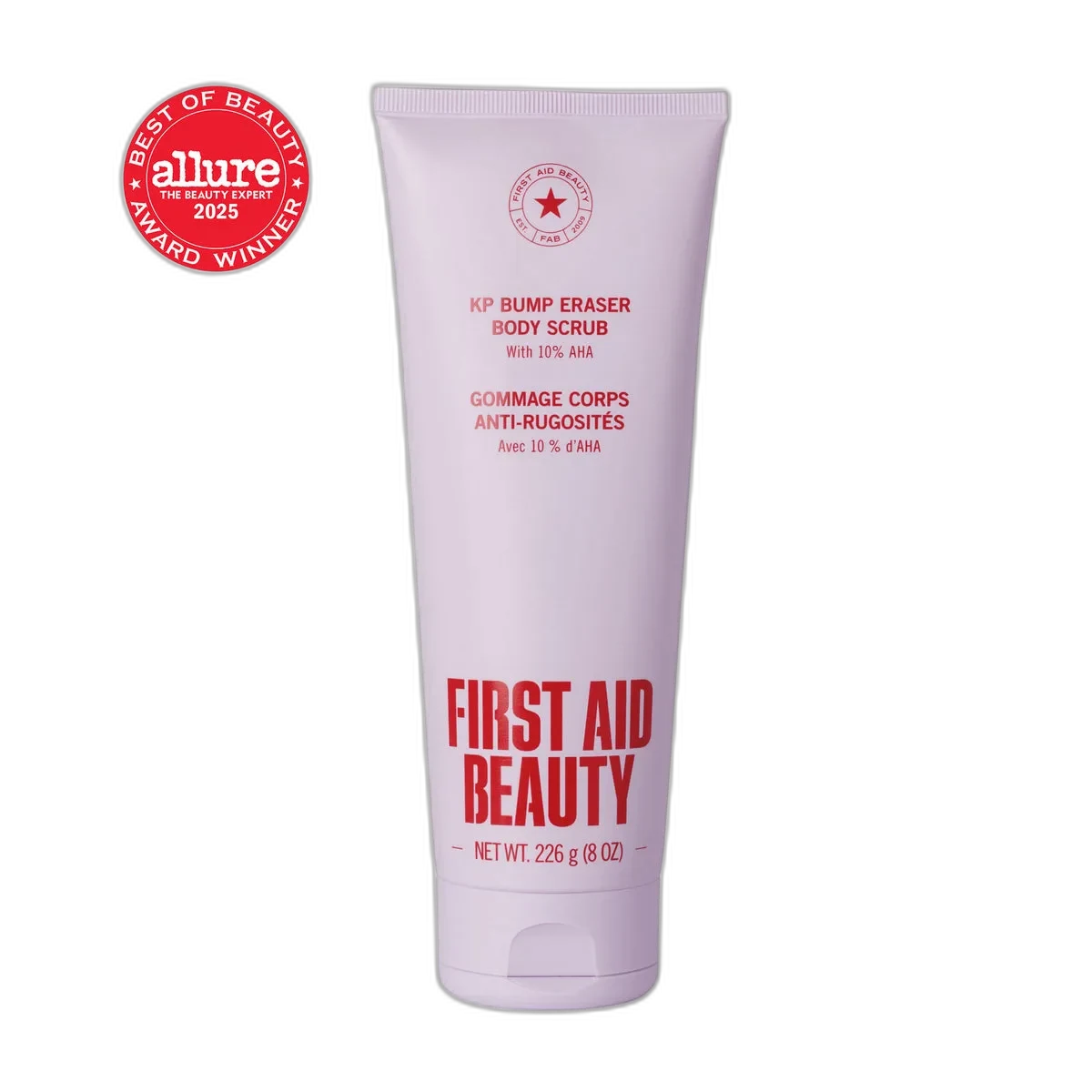
KP Bump Eraser Body Scrub 10% AHA
KP Treatment Gold Standard
 Verified reviewer
Pros & cons.
- +Dual chemical (10% AHA) and physical (pumice) exfoliation provides thorough KP treatment
- +Visibly smoother skin from the very first use, with progressive improvement over weeks
- +Anti-irritation complex (colloidal oatmeal, bisabolol) makes 10% AHA tolerable for sensitive skin
- +Fragrance-free original formula avoids unnecessary irritation for reactive skin
- +Effectively prevents and treats ingrown hairs as a secondary benefit
- +Travel size available for trial before committing to full size
- +PETA cruelty-free, vegan, and dermatologist-tested
- −Tube packaging makes extracting the last portion of product frustratingly difficult
- −Requires consistent ongoing use — KP bumps return when treatment stops
- −Pumice particles can be too abrasive if applied with excessive pressure
- −At $30 for 8 oz, the cost adds up for a wash-off product used regularly
- −Not suitable for facial use — too abrasive and too concentrated for delicate facial skin
- −Product runs out quickly if used on large body areas beyond arms and thighs
The full review.
For decades, keratosis pilaris sat in a skincare limbo. It affects roughly 40% of adults, yet most dermatologists do not prioritize it, and most over-the-counter products fail to fix it. Standard advice was “moisturize and exfoliate,” usually implying little real change. Then First Aid Beauty launched the KP Bump Eraser in 2019, turning that shrug into a Sephora bestseller.
The formula works because keratosis pilaris needs two types of treatment at once. Keratin—the protein in hair and nails—builds up in hair follicle plugs, creating rough, goosebump-like patches on the upper arms, thighs, and sometimes cheeks. Chemical exfoliation dissolves keratin plugs but leaves surface roughness. Physical exfoliation buffs the surface but misses the underlying plugs. The KP Bump Eraser does both.
Pumice—finely ground volcanic rock—is the top ingredient for physical abrasion. This is not a soft sugar scrub. The pumice particles are gritty and persistent. Use light circular pressure to buff bumps efficiently. Use heavy pressure and you will leave skin red and irritated. Technique matters: use gentle pressure for 30-60 seconds per area, not a power-sanding session.
Beneath the pumice is a 10% AHA blend of glycolic and lactic acid. Glycolic acid has the smallest molecule of any alpha hydroxy acid, so it penetrates keratin plugs to break the bonds holding dead skin cells together. Lactic acid provides a second exfoliation pathway and acts as a humectant. It draws moisture into the skin while exfoliating, preventing the dryness typical of aggressive body scrubs.
An anti-irritation complex distinguishes this from a DIY pumice-and-glycolic mix. Colloidal oatmeal—an FDA-recognized skin protectant used in eczema treatments—soothes skin immediately. Bisabolol from chamomile adds anti-inflammatory support. Licorice root, feverfew, and green tea extracts complete a botanical calming team. This allows sensitive skin types to use this 10% AHA scrub 2-3 times per week with comfort.
Results arrive fast. Physical exfoliation makes skin feel smoother after the first use; you can feel the difference on your upper arms after a shower. Within one to two weeks of consistent use, bumps flatten, redness goes down, and skin texture looks more uniform. Maximum results appear around the four-to-six-week mark. Because KP is genetic, keratin plugs will rebuild if you stop. This is a management tool, not a cure.
The fragrance-free original formula earned a cult following by avoiding the heavy scents found in most body scrubs. The faint clinical smell from the AHAs is barely noticeable and rinses away. Scented variants (strawberry, peach, coconut) exist, but the original’s restraint suits the reactive skin often linked to KP.
The price is reasonable for a specialty treatment, though high for a wash-off body item. At $30 for 8 oz, the tube lasts 2-3 months if used 2-3 times weekly on arms and thighs. The 2 oz travel size costs $12 and works for trials. The tube packaging is a design failure; you must cut the tube open to get the last 15-20% of product out.
The KP Bump Eraser solved a problem millions thought was unsolvable. The dual-action exfoliation is smart, the anti-irritation buffering makes it accessible, and the results are real. It is not glamorous or Instagrammable skincare. It is a product that earns loyalty through results.
Formula
Ingredient analysis.
Full INCI list
Pumice, Water/Aqua, Glycolic Acid, Sodium Cocoyl Isethionate, Lactic Acid, Dimethicone, Stearic Acid, Cetearyl Alcohol, Sodium Hydroxide, Palmitic Acid, Glycerin, C12-15 Alkyl Benzoate, Sorbitol, Colloidal Oatmeal, Tocopherol, Chrysanthemum Parthenium (Feverfew) Extract, Camellia Sinensis Leaf Extract, Glycyrrhiza Glabra (Licorice) Root Extract, Salix Nigra (Willow) Bark Extract, Bisabolol, Hydrogenated Coconut Acid, Xanthan Gum, Steareth-20, Steareth-21, Myristic Acid, Sodium Isethionate, Phenoxyethanol, Potassium Sorbate, Sodium Benzoate, Leuconostoc/Radish Root Ferment Filtrate, EDTA
Skin match.
The science.
The Science
This dual-exfoliation approach uses complementary mechanisms to target keratosis pilaris, backed by strong clinical data. Glycolic acid works well for keratinization disorders. A 1996 study by Kakita and Petratos in Dermatologic Surgery shows that 5-12% glycolic acid improves keratosis pilaris by dissolving the inter-keratinocyte bonds that create follicular plugs.
Lactic acid acts as both an exfoliant and a humectant. Smith (1996) in the Journal of the American Academy of Dermatology confirmed lactic acid's dual mechanism: it exfoliates by dissolving desmosomes and increases ceramide production in the stratum corneum. This improves the barrier function that chronic inflammation often compromises in KP-affected skin.
Pumice provides physical exfoliation to mechanically remove surface debris that AHAs have loosened. This two-stage process—chemical loosening then physical removal—is more efficient than using one method alone. The AHAs reduce the mechanical force needed for exfoliation, which minimizes micro-tear risks.
The FDA recognizes colloidal oatmeal as an anti-irritant for skin protection and itch relief. A 2012 study by Fowler and colleagues in the Journal of Drugs in Dermatology confirmed that colloidal oatmeal formulations reduce skin irritation markers and improve barrier function. This balances the aggressive exfoliation in this formula. Bisabolol (alpha-bisabolol from chamomile) adds anti-inflammatory activity by inhibiting cyclooxygenase and lipoxygenase pathways.
References
- The use of glycolic acid in the treatment of keratosis pilaris — Dermatologic Surgery (1996)
Dermatologist Perspective
Dermatologists view the KP Bump Eraser as a top over-the-counter option for keratosis pilaris management. Board-certified dermatologists note the dual chemical-physical approach mirrors clinical protocols, such as combining chemical peels and microdermabrasion for keratinization disorders. The 10% AHA concentration is clinically meaningful for KP—high enough for efficacy but low enough for home use when buffered. Dermatologists typically recommend starting with once-weekly use, increasing frequency gradually, and always following with a thick moisturizer. They note that while this product manages KP symptoms, it does not change the underlying genetic predisposition; the condition will recur if treatment stops.
Where it fits in your routine.
Use 2-3 times per week in the shower on wet skin. Apply to KP-affected areas (typically upper arms, thighs, buttocks) using gentle circular motions for 30-60 seconds per area. Use light pressure; let the AHAs and pumice work. Rinse thoroughly. Follow immediately with a thick body moisturizer or lotion to seal hydration into freshly exfoliated skin. If you have sensitive skin, start once per week and increase frequency gradually. Avoid use on broken skin, active eczema, or sunburned areas.
At $30 for 8 oz, the price is premium for a wash-off body product but reasonable for a specialty KP treatment. One tube lasts 2-3 months when used on target areas. This makes the monthly cost roughly $10-15 — similar to dermatologist-recommended AHA body lotions like AmLactin but with dual-action exfoliation. The $12 travel size (2 oz) allows for a low-commitment trial. The main value concern is that KP management requires ongoing, indefinite use — this is a recurring cost, not a one-time purchase.
This works for anyone with keratosis pilaris seeking effective over-the-counter management. It also treats rough, bumpy body texture, ingrown hairs, and general body dullness. Most skin types can use it at appropriate frequency, including sensitive skin that reacts to harsher exfoliants.
Avoid this if you have active eczema or psoriasis on target areas, very sensitive skin that reacts to physical exfoliation, or open wounds and sunburned skin. It is also not a daily body wash; the 10% AHA concentration requires spacing between uses.
Product details.
The original formula is fragrance-free. It has a faint, slightly acidic clinical smell from the glycolic and lactic acids. It contains no added fragrance or essential oils. Scented variants (strawberry, peach, coconut) sell separately.
White squeeze tube with First Aid Beauty's signature red cross logo and flip-top cap. The tube format stays hygienic in the shower, but squeezing becomes harder as product runs low. Many users cut the tube open to reach the remaining product. Recyclable.
The first use provides immediate smoothing — run your hand over KP-affected areas post-shower to feel the difference. The pumice scrub feels gritty but not painful with light pressure. The 10% AHA causes a mild tingling sensation that the colloidal oatmeal and bisabolol manage. Skin feels polished, soft, and smoother after rinsing.
2-3 months with 2-3 times weekly use on arms and thighs
12 months
All Year
The backstory.
Launched in 2019 to address the surprisingly underserved keratosis pilaris market, the KP Bump Eraser quickly became one of First Aid Beauty's bestselling products and a consistent top seller at Sephora. KP affects roughly 40% of adults but had few dedicated treatments — most sufferers were making do with generic body scrubs or pharmacy-brand AHA lotions. FAB's innovation was combining both exfoliation methods in a single product with enough soothing ingredients to keep it sensitive-skin-friendly, creating a category-defining product that spawned numerous imitators.
About First Aid Beauty
Established Brand (5–20 years)First Aid Beauty was founded in 2009 by Lilli Gordon to bridge clinical and prestige skincare, with a focus on sensitive-skin-safe formulations. Acquired by Procter & Gamble in 2018, the KP Bump Eraser has become one of FAB's bestselling products and a consistent top seller at Sephora.
Common myths.
Scrubbing harder will clear KP bumps faster
The 10% AHA dissolves keratin plugs. The pumice smooths the surface without aggressive abrasion. Applying too much pressure with the scrub causes micro-tears and irritation, which worsens KP by triggering inflammation. Use light, circular motions for 30-60 seconds per area.
KP can be permanently cured with the right product
Keratosis pilaris is a genetic condition. You can manage it, but you cannot cure it. This scrub reduces the appearance of bumps with consistent use, but keratin plugs rebuild if you stop treatment. It is maintenance, not a one-time fix.
FAQ.
How often should I use the KP Bump Eraser?
Start once per week. Increase to 2-3 times per week as your skin adjusts. Daily use causes over-exfoliation and irritation, despite the formula's soothing botanicals. The 10% AHA concentration is potent; 2-3 weekly sessions provide optimal results.
Can I use this on my face?
No — this product targets body use. The pumice physical exfoliant is too abrasive for facial skin. The 10% AHA concentration at the scrub's pH is more aggressive than most facial exfoliants. FAB offers separate facial exfoliating products for the more delicate skin on your face.
Will my KP come back if I stop using this?
Yes — keratosis pilaris is genetic, not a one-time fix. Keratin plugs rebuild once you stop exfoliating. Most users control KP with consistent use 2-3 times per week; occasional breaks for a week or two are fine.
Is this safe during pregnancy?
The 10% glycolic and lactic acid concentration is moderate. Because this is a wash-off product, absorption is low. Healthcare providers disagree on AHA use during pregnancy, especially with high concentrations on large body areas. Consult your doctor for personalized guidance.
Can I use this with a retinoid body lotion?
Don't use both on the same day to avoid over-exfoliation. Instead, alternate: use the KP Bump Eraser 2-3 times per week and the retinoid body lotion on other days. Always follow with a thick body moisturizer.
What should I apply after using this scrub?
Always follow with a moisturizing body lotion or cream. Freshly exfoliated skin absorbs hydration better, and the moisturizer seals in smoothing benefits. Urea-based body lotions work well for KP because urea provides extra gentle keratolytic activity.
Does this help with ingrown hairs?
Yes — the dual chemical and physical exfoliation effectively prevents and addresses ingrown hairs by clearing the dead skin and keratin buildup that traps hair beneath the surface. Many users use this on legs, bikini line, and underarms specifically for ingrown hair prevention.
Community
What the community says.
"Dramatically smooths KP bumps, often visibly improved within a few uses"
"Dual chemical and physical exfoliation provides thorough, effective results"
"Gentle enough for sensitive skin despite being a 10% AHA scrub"
"Fragrance-free original formula is great for reactive skin"
"Helps prevent ingrown hairs and smooths post-shave texture"
"Expensive for a wash-off body product at $30 for 8 oz"
"Tube packaging makes it difficult to extract the last portion of product"
"Pumice particles can feel too abrasive if pressed too hard"
"Requires consistent ongoing use — bumps return when you stop"
"Product runs out quickly with regular full-body application"