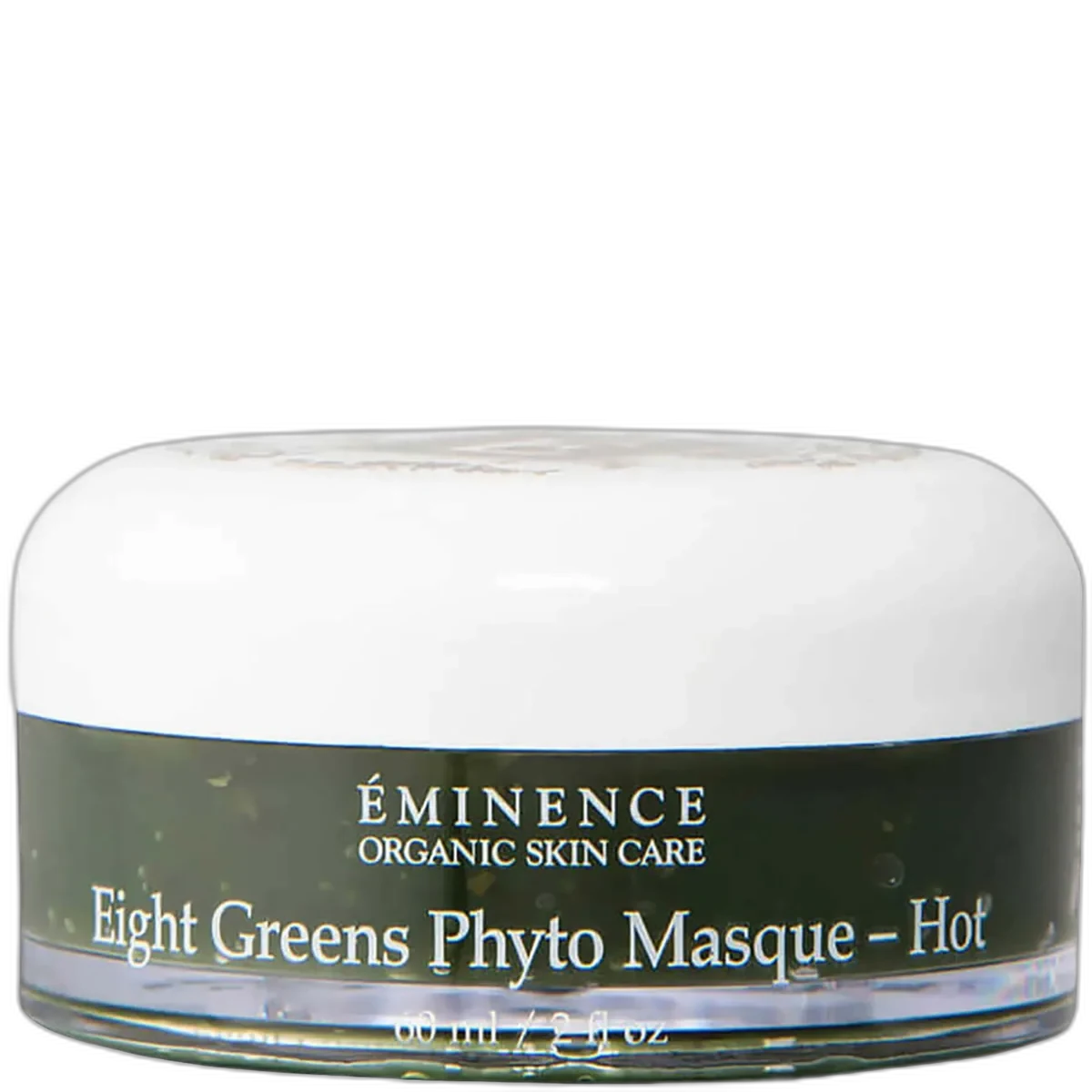
Eight Greens Phyto Masque
Spa Ritual Herbal Mask
 Verified reviewer
Pros & cons.
- +Distinctive warming sensation creates a memorable sensory experience
- +Kaolin clay base delivers genuine smoothing and cleansing benefits
- +Green tea, rosemary, and chamomile add real antioxidant support
- +Aloe vera and glycerin prevent the mask from feeling overly drying
- +Vegan, cruelty-free, and certified organic ingredient sourcing
- +Spa ritual aesthetic makes weekly self-care feel intentional
- −Phyto-estrogen anti-aging claims outpace the evidence base
- −Expensive for what's fundamentally a botanical clay mask
- −Strong herbal scent and added fragrance rule out sensitive skin
- −Warming sensation can feel intense for reactive skin types
- −Black cohosh content raises pregnancy concerns for some users
- −Similar mechanical benefits available in cheaper kaolin masks
The full review.
Some skincare products rely on clinical results. Others rely on sensory experience. The Eminence Eight Greens Phyto Masque falls into the second category. Knowing this distinction helps decide if this $58 herbal mask is worth the money. If you have had an Eminence facial at a spa, you likely know this mask as the warming treatment step—the part where the esthetician applies a greenish botanical cream that heats up on your skin to create a memorable sensory beat. That warming sensation is the product’s signature. It is why people love it and why it costs a premium that its ingredient list does not fully justify.
The brand markets phyto-estrogens—plant compounds from black cohosh, kudzu, and peony—as anti-aging actives for premature aging. Phyto-estrogens have a history in oral supplementation for hormonal support, though research there is mixed. In topical applications, evidence that these compounds meaningfully affect skin aging is much more limited. Plant extracts applied to the skin at cosmetic concentrations lack the bioavailability of oral intake. The leap from “phyto-estrogens may affect hormonal processes” to “this mask slows premature aging” lacks scientific literature support. If that is your primary reason for buying this product, pause.
Mechanically, the formula uses a kaolin clay base. Kaolin is a standard mask ingredient that absorbs oil, cleanses the surface, and mildly smooths skin texture. Combined with the aloe vera juice and glycerin in the water phase, the mask produces the refreshed, softer skin typical of any good clay-based mask. The eight greens—parsley, spinach, kale, alfalfa, watercress, green tea, basil, and rosemary—provide antioxidant polyphenols; green tea and rosemary specifically show evidence for topical antioxidant activity. The peony, black cohosh, and kudzu provide the phyto-estrogen positioning, but their functional contribution at this concentration is hard to distinguish from traditional herbal inclusions. Treat the eight greens as an antioxidant blend rather than a clinical anti-aging mechanism.
The mask behaves as expected upon application. The green paste spreads easily. Within one or two minutes, the warming sensation begins—subtle at first, then building into a distinct warmth that is between pleasant and noticeable. This is the product’s signature, caused by specific botanical extracts reacting with surface moisture. Warmth does not indicate ingredient penetration or efficacy; many effective skincare actives produce no sensation, while many products that produce intense sensations lack clinical efficacy. However, sensation makes skincare feel like skincare. For users who enjoy the ritual of masks, the warming effect is a legitimate feature. Spa clients remember this product because it creates a distinct beat in the facial experience.
Rinse after 10-15 minutes to reveal skin that looks slightly clearer and feels softer—the same result from any well-formulated kaolin mask. Used weekly, it contributes to the gentle clarity improvements seen with consistent masking. Whether it does more than a $20 drugstore kaolin mask at this price is harder to answer, and the answer is likely no in purely clinical terms. Beyond the $20 mask, you pay for the botanical profile, the warming sensory effect, the spa-channel credibility, and the Eminence aesthetic experience.
The fragrance is strong. This is a distinctly herbal product where parsley, rosemary, and basil notes dominate, plus added parfum on top of the natural botanical smell. Users who love spa aesthetics will enjoy the fragrance; users with fragrance sensitivity or reactive skin should avoid it. The warming effect may feel too intense on sensitized skin. The combination of a warming sensation and a botanical scent is not suitable for rosacea or eczema-prone users. Pregnant users should consider skipping this mask due to the black cohosh content, which has traditional associations with hormonal effects that are more concerning in pregnancy, even at topical concentrations.
As a ritual product, it has appeal. If you want a weekly self-care routine with a mask that feels intentional and memorable, the warming sensation and green herbal aesthetic are pleasant. The jar is attractive enough for a bathroom, the texture is satisfying, and removing it with warm water and a washcloth feels spa-like. For buyers who value ritual alongside clinical value, this is a legitimate choice at its price point.
The value math is difficult if you shop purely for results. At $58 for 60ml, you pay significantly more than for comparable clay-based masks from brands like Kiehl’s, Origins, or Paula’s Choice, which deliver similar mechanical benefits without the spa premium. The warming sensation is distinctive and hard to replicate in this category, but whether that sensation is worth $38 more than a comparable kaolin mask is a personal choice. For Eminence fans or spa-ritual enthusiasts, yes. For buyers focused on price-to-efficacy, probably not.
Ingredient analysis.
Full INCI list
Aqua (Water), Kaolin, Glycerin, Aloe Barbadensis Leaf Juice, Petroselinum Crispum (Parsley) Leaf Extract, Spinacia Oleracea (Spinach) Leaf Extract, Brassica Oleracea Acephala (Kale) Leaf Extract, Medicago Sativa (Alfalfa) Extract, Nasturtium Officinale (Watercress) Extract, Camellia Sinensis Leaf Extract, Ocimum Basilicum (Basil) Leaf Extract, Rosmarinus Officinalis (Rosemary) Leaf Extract, Paeonia Albiflora Root Extract, Anthemis Nobilis (Chamomile) Flower Extract, Cimicifuga Racemosa Root Extract, Pueraria Lobata Root Extract, Tocopheryl Acetate, Xanthan Gum, Phenethyl Alcohol, Ethylhexylglycerin, Parfum (Fragrance)
Skin match.
The science.
The Science
The evidence for this mask falls into two categories. The kaolin clay base has established cosmetic-chemistry backing for oil absorption, surface cleansing, and mild texture refinement — kaolin is one of the industry's most studied masking ingredients and does what a quality clay mask should. Aloe vera juice provides polysaccharides with documented hydrating and mild soothing effects. Green tea extract, rosemary extract, and chamomile have literature supporting topical antioxidant activity, using polyphenol compounds that scavenge free radicals at cosmetic concentrations. The phyto-estrogen positioning is harder to verify. Cimicifuga racemosa (black cohosh) and Pueraria lobata (kudzu) contain compounds classified as phyto-estrogens; oral-supplementation research examines their effects on menopausal symptoms, but even that literature is mixed. The leap from oral phyto-estrogen research to topical anti-aging efficacy in a cosmetic mask lacks support — the compounds' bioavailability through skin at cosmetic concentrations is limited, and peer-reviewed evidence for topical skin-aging benefits from these ingredients is scarce. Paeonia albiflora (white peony) has traditional use in East Asian cosmetic formulations but also lacks robust clinical evidence for structural anti-aging mechanisms. The product is internally coherent as a botanical clay mask with antioxidant support, but the anti-aging positioning reflects the brand's botanical philosophy more than dermatologically established science. Users should calibrate expectations accordingly.
Dermatologist Perspective
Dermatologists generally view botanical clay masks like this as pleasant adjunct products rather than treatment-level interventions. Board-certified dermatologists note that for patients interested in anti-aging benefits, the evidence supports retinoids, peptides, antioxidant serums with vitamin C, and consistent sun protection much more strongly than topical phyto-estrogen formulations. That said, dermatologists are not dismissive of ritual-focused products for patients who enjoy the experience of masking and want a supplementary weekly treatment that won't conflict with their active regimen. The warming sensation and fragrance profile are what dermatologists commonly flag for reactive-skin patients, particularly those with rosacea or sensitized skin, who may find the effect too intense.
Where it fits in your routine.
Apply a thin, even layer to clean skin once or twice weekly. Leave it on for 10-15 minutes. The mask feels warm within two minutes and stays wet. If it cracks or feels tight, rinse it off early. Use lukewarm water and a soft washcloth to rinse. Apply a hydrating serum and moisturizer to replace the moisture the kaolin absorbs. Do not use on the same day as strong exfoliants or acid treatments.
At $58 for 60ml, this clay-based mask costs more than most. Kaolin masks from drugstore and mid-range brands cost $15-35 and provide similar mechanical benefits without the warming sensation or spa-channel positioning. A 250ml professional size exists for spa use; it has better per-unit value for heavy users but consumer retailers do not stock it. The premium is defensible for spa enthusiasts, Eminence fans, and buyers who value ritual experience. Buyers focused on price-to-efficacy can find a less expensive kaolin mask that delivers most of the same clinical benefit without the warming sensation or branded positioning.
Normal, combination, and oily skin types seeking a weekly herbal clay mask with a spa ritual experience. Eminence and botanical skincare fans who like the warming sensation. Users who use masking for intentional self-care and value sensory skincare.
Avoid the warming sensation and botanical fragrance if you have sensitive, rosacea-prone, or barrier-compromised skin. Invest in retinoids, peptides, or antioxidant serums for evidence-based anti-aging. Pregnant users may avoid the black cohosh content. Price-to-efficacy shoppers can find similar clay benefits for less.
Product details.
Thick greenish clay-based mask with a distinctly herbal appearance
Strong green herbal scent — parsley, spinach, basil, rosemary — smells like a garden.
Glass jar with cork-style lid, characteristic spa aesthetic
The product's signature feature is a noticeable warming sensation within one to two minutes of application, caused by the specific botanical blend. This warmth feels pleasant for most but can feel intense on reactive skin. After 10-15 minutes of wear, the mask rinses off to leave skin softer and slightly brighter.
About 6-8 months with weekly use
6 months
All Year
The backstory.
Launched in 2010 as part of Eminence's Eight Greens collection, which was developed around the concept of phyto-estrogens from plants like black cohosh and kudzu. The mask has become one of the brand's signature products in the spa channel, particularly among estheticians who incorporate the warming sensation into facial treatments as a memorable sensory moment for clients.
About Eminence Organic Skin Care
Established Brand (5–20 years)Eminence Organic Skin Care started in Hungary in 1958, focusing on botanical formulations. The Eight Greens collection is one of the brand's long-standing hot/cold phyto-estrogen lines for premature aging concerns.
Common myths.
The warming sensation shows active ingredients penetrate the skin.
Specific plant extracts react with skin surface moisture to create a warming sensory effect. This sensation is pleasant but does not show ingredient absorption or efficacy. Many active ingredients that penetrate skin deeply produce no sensation.
Phyto-estrogens in a topical mask prevent hormonal aging.
Limited evidence shows topical phyto-estrogens meaningfully affect skin aging, and oral phyto-estrogen effects do not translate to skincare. View the anti-aging positioning as traditional herbal use, not clinical evidence.
FAQ.
How often should I use this mask?
Use this weekly or biweekly. Daily use is unnecessary and the kaolin content may dry skin. Use a hydrating serum and moisturizer after removal.
Does it really have anti-aging benefits?
kaolin and antioxidant botanicals provide modest skin benefits: smoother surface, less oil, and antioxidant protection. Phyto-estrogen anti-aging claims lack clinical evidence; treat this as traditional herbal use rather than an evidence-based mechanism.
Is it safe for sensitive skin?
Unlikely — the warming sensation is intense for reactive skin. The strong botanical profile and added fragrance increase sensitization risk. If you have rosacea, eczema, or known botanical allergies, use a gentler clay mask.
Is it pregnancy safe?
Black cohosh (Cimicifuga racemosa) has traditional hormonal effects and oral forms are not typically recommended during pregnancy. Topical application poses lower risk, but you can avoid this specific product during pregnancy and choose a simpler clay mask instead.
How long do I leave it on?
Standard use is 10-15 minutes. Do not let the mask dry fully on the skin. If it cracks or feels tight, rinse it off immediately to prevent dehydration. Follow with a hydrating serum and moisturizer.
What the community says.
"distinctive warming sensation"
"smoother skin after use"
"natural herbal scent"
"spa-like experience"
"expensive for a clay mask"
"warming effect can feel intense"
"strong botanical scent"
"benefits hard to attribute to phyto-estrogens"
People also looked at.