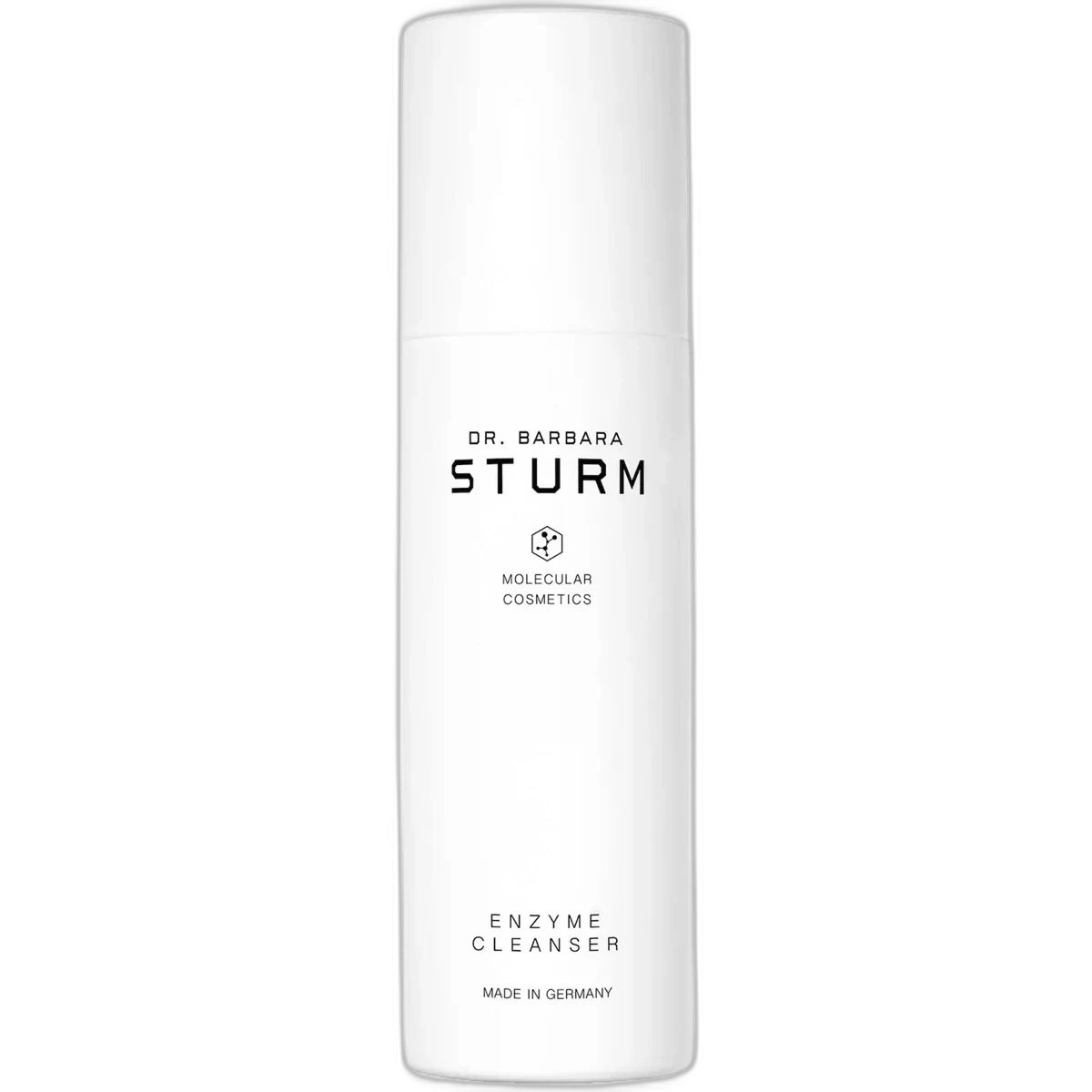
Enzyme Cleanser
Cult Gentle Exfoliant
 Verified reviewer
Pros & cons.
- +Immediate tactile improvement in skin smoothness
- +Powder format keeps enzymes stable and active
- +Gentle enough for sensitive and reactive skin
- +Real exfoliating action without acid pH concerns
- +Broad suitability across most skin types
- +Fragrance-free and non-stripping formulation
- +Pregnancy-compatible and low-risk overall
- −Expensive for a cleanser at any price point
- −Powder format has a learning curve
- −75g runs down faster than it looks
- −Jar format less ideal for wet-bathroom storage
- −Mid-tier enzyme cleansers exist at far lower prices
The full review.
Most cleansers leave no tactile impression. They clean skin by either over-stripping or failing to do so, and you move to serums a minute later, forgetting the experience. The Sturm Enzyme Cleanser belongs to a small category of cleansers that make you notice your skin’s post-use feel. In luxury skincare, this is unusual enough to explain why this product has been the brand’s best-known item since its 2016 launch.
The format sets it apart first. It is a fine white powder in a frosted glass jar, which requires adjustment if you have never used a powder cleanser. Shake a small amount into wet palms, work it into a light foam with water, and massage it onto damp skin for thirty to sixty seconds before rinsing. The powder format is not a gimmick; it keeps proteolytic enzymes stable. In water-based gel or cream cleansers, enzymes like subtilisin and papain degrade quickly and lose exfoliating activity, causing most enzyme cleansers to underperform. Powders keep enzymes dormant until water activates them on the skin, providing a brief window of full enzymatic activity during the cleanse.
The active stack also sets this cleanser apart. Subtilisin is the main enzyme—a proteolytic enzyme that breaks protein bonds holding dead skin cells together—supported by papain from papaya fruit extract for a second enzymatic pathway. Together, the two enzymes deliver gentle chemical exfoliation that competes well with low-percentage AHA cleansers without pH-dependent irritation risks. Sodium cocoyl isethionate provides surfactant action and is milder than sulfates. Kaolin clay adds light oil absorption and contributes to the brightening effect users notice immediately after rinsing. Purslane—the brand’s anti-inflammatory signature—offsets low-level enzyme stimulation, making this cleanser unusually well-tolerated by sensitive skin.
The sensory experience is understated. The powder-to-foam transition is satisfying, the lather is light and airy, and there is no fragrance. Skin rinses clean without squeaky tightness, leaving a soft, smooth, and faintly brightened finish that almost no other cleanser achieves on first use. This first-use payoff drives its loyal following; most skincare takes weeks to show progress, but anything delivering a clear benefit within thirty seconds earns hard-to-engineer customer trust.
With regular use, the cleanser works as a replacement for harsher exfoliants. Users with sensitive skin, rosacea-prone skin, or compromised barriers who cannot tolerate AHAs, BHAs, or retinol-heavy routines find this cleanser improves texture without triggering flare-ups. For combination and oily skin, it pairs with acid serums a few nights a week without overlap irritation. For dry and mature skin, the enzymes are gentle enough for daily use while delivering smoothing.
Price remains the honest conversation. Eighty dollars for 75 grams is expensive for a cleanser. You can find enzyme cleansers from mid-tier brands—The Inkey List, Dermalogica, and several Korean and Japanese brands—that use comparable formulation logic at one-quarter to one-third the cost. Those alternatives are good and worth trying if the Sturm price is a deal-breaker. The Sturm version offers sensory polish, brand coherence for users of other Sturm products, and specific quality control for enzyme stability.
If you pay luxury prices for one Sturm product, this is the most defensible choice in the brand’s lineup. The formula works, the format is thoughtful, and its broad skin-type suitability makes it more versatile than the brand’s targeted creams. It is not a budget pick, but unlike some Sturm products that rely on brand positioning, this one earned its cult status through performance.
Formula
Ingredient analysis.
Full INCI list
Sodium Cocoyl Isethionate, Carica Papaya (Papaya) Fruit Extract, Subtilisin, Sodium Bicarbonate, Cellulose, Kaolin, Aqua, Tocopheryl Acetate, Panthenol, Allantoin, Portulaca Oleracea Extract, Bisabolol, Maltodextrin, Citric Acid, Silica
Skin match.
The science.
The Science
Proteolytic enzymes, specifically subtilisin and papain, drive this cleanser's exfoliating action. Subtilisin is a serine protease from Bacillus subtilis; it has a long history in biotechnology and cosmetics for breaking down keratin and structural proteins. Papain comes from papaya and has been studied in dermatology since the mid-twentieth century for its keratolytic activity. Published work shows papain digests desmosomal proteins that hold dead corneocytes together. Enzymatic exfoliation has a clinical advantage over acid-based exfoliation: enzymes work at near-neutral pH with water rather than relying on low pH. This means they do not disrupt the skin's acid mantle or cause the pH-dependent irritation AHAs produce in sensitive skin. Enzymes degrade quickly in water, so the powder format is critical for this formulation. Keeping the enzymes dry until use preserves full enzymatic activity throughout its shelf life. Sodium cocoyl isethionate is one of the mildest derived surfactants in cosmetic formulation and is well-documented for compatibility with sensitive skin. Kaolin clay absorbs mild oil without the drying impact of stronger clays like bentonite. Early-stage research shows promising but not definitive results for Purslane's anti-inflammatory activity. The formulation logic—gentle enzymatic exfoliation, mild surfactant, low-level oil absorption, and anti-inflammatory support—reflects current dermatologic thinking for cleansing compromised or reactive skin barriers.
Dermatologist Perspective
Dermatologists often recommend enzyme cleansers to patients with sensitive, rosacea-prone, or reactive skin who cannot tolerate AHA or BHA exfoliants. Board-certified dermatologists note that proteolytic enzymes like subtilisin and papain offer a gentler path to textural improvement without compromising the skin barrier. This is useful for patients managing inflammatory conditions or recovering from procedures. The Sturm Enzyme Cleanser is a frequently cited luxury enzyme cleanser in dermatology commentary. Its powder format preserves enzyme activity better than competing formulations, and its overall mildness makes it a safe recommendation for many patients. The main caveat dermatologists raise is cost: excellent enzyme cleansers exist at far lower price points with comparable clinical outcomes. For patients who value the luxury position and this specific formulation, it is a solid, frequently-recommended option in that tier.
Where it fits in your routine.
Wet your face and hands with warm water. Shake a nickel-sized portion of powder into wet palms, add a few more drops of water, and rub your hands together to make a light foam. Massage the foam onto damp skin for thirty to sixty seconds, focusing on the forehead, nose, and chin where dullness builds. Rinse well with warm water and pat dry. Use toner, serum, and moisturizer next. Use the cleanser daily in the evening, or every other day if your skin is very reactive. Do not use it directly before or after high-percentage AHA or retinol application to prevent exfoliation overlap. Store the jar in a dry area. Keep water out of the powder to prevent premature enzyme activation.
At 80 dollars for 75 grams, this cleanser is expensive for an enzyme cleanser but fits the luxury tier. Using it every evening lasts about two months, making the monthly cost around 40 dollars. This price is high for a cleanser, but the powder format and enzyme delivery system justify it. The lack of a smaller trial size is a downside for first-time buyers. Within the Sturm range, the formulation quality makes this product easy to justify. The enzyme stability, broad suitability, and immediate tactile payoff differentiate it from cheaper options, even if mid-tier enzyme cleansers from brands like The Inkey List or Dermalogica provide 70 to 80 percent of the benefit at 30 percent of the price.
This works for almost any skin type needing a gentle daily exfoliating cleanser. It is especially useful for sensitive, reactive, or compromised skin that cannot tolerate acid-based exfoliation. It is also the most defensible Sturm product for customers new to the brand who want to understand its cult following.
Skip this if you have a tight budget — mid-tier enzyme cleansers work well for less. Skip it if you prefer wet cleansers or find powder formats inconvenient for daily use.
Product details.
Fine white powder that foams into a light, airy lather
Essentially odorless
Frosted glass jar with screw lid
The powder-to-foam transition is the selling point. Users report smoother, brighter skin after the first use. It leaves no tingling or tightness, only a clean, soft finish.
About 2 months with daily evening use, or 3 months with every-other-day use
12 months
All Year
The backstory.
The Enzyme Cleanser is one of the original products in the Sturm line and has been the brand's most recognizable product since its launch. It became the gateway item for many first-time customers because its effect is immediate and tactile — skin genuinely feels smoother after one use, which rarely happens with cleansers at any price point.
About Dr. Barbara Sturm
Established Brand (5–20 years)The Enzyme Cleanser has been a core Sturm product since roughly 2016 and ranks among the brand's most recognizable bestsellers. It has heavy editorial and retailer review coverage, but independent clinical validation of the specific formulation is limited.
Common myths.
Enzyme cleansers are too gentle to do anything useful.
Proteolytic enzymes like subtilisin and papain break protein bonds between dead cells. They exfoliate more gently than acids but improve texture, making them better for sensitive skin that cannot tolerate AHAs or BHAs.
FAQ.
How do I use a powder cleanser?
Pour a small amount (about a nickel-sized portion) into wet palms. Add a few drops of water and rub your hands together to make a light foam. Massage onto damp skin for 30-60 seconds, then rinse thoroughly. The enzymes activate when they touch water.
Can I use it daily?
Yes — enzyme cleansers are gentler than acid-based exfoliants and work for daily use. Most users use them every day or every other day without irritation.
Will it replace my chemical exfoliant?
This works well, especially for sensitive skin that reacts to AHAs or BHAs. It lacks the intensity of a high-percentage acid, but the gentler action suits reactive skin types.
Is it worth 80 dollars?
That is a premium price for a cleanser. The format and immediate textural benefit build loyalty, and one bottle lasts about two months with daily use. Deciding if it is worth twice the price of a comparable enzyme cleanser is a personal choice.
Is it pregnancy-safe?
Yes — this formulation contains no pregnancy-contraindicated actives.
Can I use it with other exfoliants?
Yes, but space them out. If you use acids or retinol, do not layer them on the same day you use the enzyme cleanser — give the skin a rest window.
What the community says.
"skin feels soft and smooth immediately"
"gentle enough for sensitive skin"
"replaces harsh acids"
"luxurious powder format"
"very expensive for a cleanser"
"powder format takes getting used to"
"short longevity with daily use"
People also looked at.