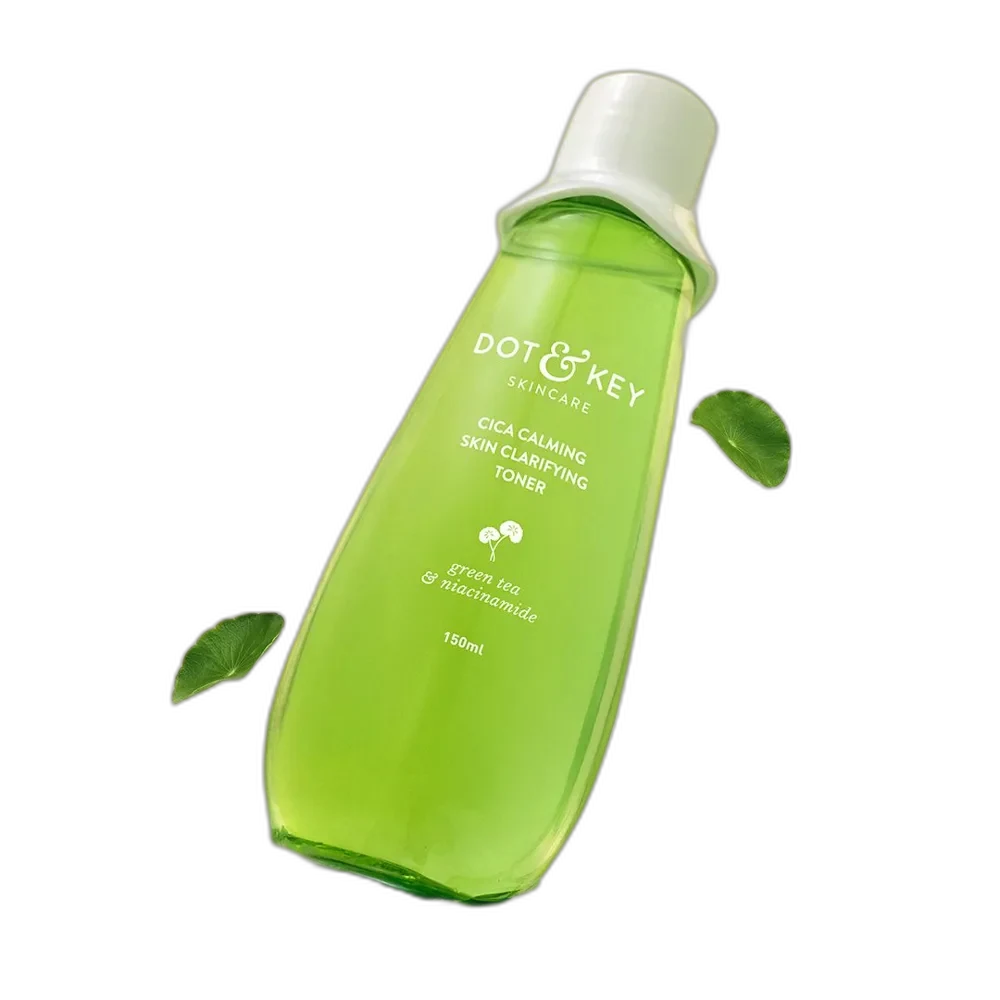
Cica Calming Skin Clarifying Toner
Budget BHA Workhorse
 Verified reviewer
Pros & cons.
- +2% salicylic acid at an effective pH for genuine blackhead and pore-clearing action
- +Centella, niacinamide, and panthenol make daily BHA use tolerable for oily skin
- +Excellent value at around $9 for a 200ml bottle
- +Works well on both facial and body acne
- +Reduces visible oiliness and congestion within the first few weeks
- +Formulated specifically for hot, humid climate conditions
- +Lightweight, fast-absorbing texture that layers under anything
- −Added fragrance is a sensitization risk for reactive skin
- −Tea tree oil is another potential irritant at the formulation level
- −Not fungal-acne safe due to tea tree and other lipid components
- −Salicylic acid at 2% is not recommended during pregnancy
- −Cannot be layered with retinol, AHAs, or vitamin C in the same routine
The full review.
Most online BHA toners target temperate climates and middle-income global markets. Dot & Key’s Cica Calming Skin Clarifying Toner targets the Indian market specifically. It addresses skin in hot, humid cities like Mumbai, Delhi, and Chennai, where sebum production stays high year-round, acne is common, and price sensitivity dictates product design. This context drives the formula. Salicylic acid targets the dominant blackheads and comedones in this demographic. Centella asiatica and niacinamide ensure the BHA remains tolerable for daily year-round use. Tea tree oil satisfies the value placed on traditional antimicrobial ingredients in Indian skincare culture. The price reflects Dot & Key’s thesis that effective, ingredient-forward skincare should not cost a week’s salary.
This context-specific strategy also works well outside the intended market. Anyone with oily or combination skin seeking a 2% salicylic acid toner that does not strip the skin will find this a legitimate option. The ingredient profile meets Western scrutiny better than most drugstore BHA products.
The toner is a thin, water-weight liquid with a faint herbal-floral scent from the tea tree and added fragrance. Apply it with a cotton pad or press it into the skin with clean fingers. You will feel a mild cooling sensation as the salicylic acid penetrates. The tea tree scent lasts about one minute before fading. The product absorbs in seconds, leaving skin feeling refreshed and lightly refined.
The active profile is straightforward. Salicylic acid at 2% in a pH range of 3.5-4.0 is the industry standard for acne treatment, and this formula hits that spec. What distinguishes it from cheap 2% BHA toners is the supporting formulation. Niacinamide is high on the list to regulate sebum and reduce post-inflammatory pigmentation. Centella asiatica extract, including the standardized compounds madecassoside and asiaticoside, provides an anti-inflammatory layer to reduce the redness and dryness a straight BHA causes. Panthenol, allantoin, and glycerin add comfort. Zinc PCA aids sebum regulation and antibacterial support. Tea tree oil at a low concentration adds antimicrobial support. Together, these non-BHA ingredients form a buffering system that turns a harsh acid toner into a product for daily use.
On oily and combination skin, results follow a predictable BHA pattern. Within the first few uses, you will feel the deep-cleaned sensation from the salicylic acid. Some users experience brief purging as clogged pores surface during the first one to two weeks. By week two, baseline oil production drops and blackheads visibly reduce. By week four to six, active breakouts decrease, texture smooths, and pores around the nose and chin look cleaner. This is the standard trajectory for a well-formulated 2% salicylic acid product.
This product is not for everyone. First, the added fragrance and tea tree oil are concerns for sensitive, reactive, or rosacea-prone skin. Fragrance is a known contact sensitizer, and tea tree oil is an essential oil with documented sensitization potential. These are not problems for most oily skin, but avoid this toner if you have fragrance sensitivities or barrier issues. Second, 2% BHA can dry skin if used twice daily or combined with retinol, AHAs, or vitamin C; the soothing ingredients buffer but do not stop the dehydrating effect of acid exfoliation. Third, tea tree oil and other fatty ingredients make this not fungal-acne safe; those with Malassezia-driven conditions should look elsewhere. Fourth, avoid this salicylic acid concentration during pregnancy as a precaution.
Value is a strength. At roughly $9 for a 200ml bottle, this BHA toner costs about a quarter of comparable Western products. The per-use cost is low, and one bottle lasts three to five months with daily cotton-pad application. For oily and combination skin adding a daily BHA without a premium brand, this is a highly cost-effective option. The ingredient quality exceeds the price tier, and Dot & Key’s transparency on Indian skincare forums has built brand credibility.
The bottom line: if you have oily or combination skin, want a daily 2% salicylic acid toner, and lack fragrance or tea tree sensitivities, this is an excellent, affordable option. If you have sensitive, dry, or rosacea-prone skin, find a fragrance-free BHA alternative. If you live in a hot, humid climate on a tight budget, this toner was made for you.
Ingredient analysis.
Full INCI list · pH 4
Water (Aqua), Butylene Glycol, Propanediol, Niacinamide, Salicylic Acid, Centella Asiatica Extract, Glycerin, Panthenol, Allantoin, Madecassoside, Asiaticoside, Hyaluronic Acid, Zinc PCA, Aloe Barbadensis Leaf Extract, Green Tea Extract, Tea Tree Leaf Oil, Sodium Citrate, Citric Acid, Phenoxyethanol, Ethylhexylglycerin, Fragrance
Skin match.
The science.
The Science
The scientific case for 2% salicylic acid as an effective treatment for comedonal acne, blackheads, and mild-to-moderate inflammatory acne is one of the strongest in cosmetic dermatology. Salicylic acid is a lipophilic beta-hydroxy acid. It penetrates sebum-filled pores better than water-soluble alpha-hydroxy acids, making it the standard-of-care over-the-counter acne active for decades. Peer-reviewed research, including multiple trials in the Journal of the American Academy of Dermatology, shows that leave-on 2% salicylic acid formulations at a pH below 4.0 reduce comedone count, visible blackheads, and overall acne severity over 4-12 weeks of consistent use. The mechanism uses keratolytic action inside the pore, mild anti-inflammatory effects, and modest antibacterial contribution. The supporting cast makes this specific formulation thoughtful. Niacinamide has well-documented effects on sebum regulation and post-inflammatory pigmentation, both of which matter for acne-prone skin. Centella asiatica, specifically its triterpenoid compounds madecassoside and asiaticoside, has research support for wound healing and anti-inflammatory effects in compromised skin; this helps offset irritation from BHA exfoliation. Zinc PCA has emerging research for sebum regulation and antibacterial activity. Tea tree oil has clinical trials, including one study in the Medical Journal of Australia, showing efficacy comparable to benzoyl peroxide for mild-to-moderate acne, though it acts slower. The fragrance is the one weak point for clean-formulation standards, but the rest of the ingredient strategy is evidence-literate and well-constructed. This is not luxury-tier formulation, but it is competent acne science at a price point that makes daily use sustainable.
Dermatologist Perspective
Dermatologists recognize 2% salicylic acid as one of the most effective over-the-counter tools for comedonal acne, blackheads, and mild inflammatory acne. Board-certified dermatologists often recommend well-formulated BHA toners as a daily or alternating-day treatment for oily and combination skin types, especially in hot, humid climates with high sebum production. A formula like Dot & Key Cica Calming Toner is appropriate for patients building their first routine around a BHA, because the centella and niacinamide buffer reduces the dryness and flaking that causes patients to stop salicylic acid treatments. Dermatologists offer familiar cautions: avoid layering with retinoids in the same routine, always use sunscreen during the day, and patch test the fragrance and tea tree oil if you have a history of contact allergy. Dermatologists typically recommend this class of product alongside a gentle cleanser and a ceramide moisturizer for optimal results.
Where it fits in your routine.
After cleansing, apply a small amount to a cotton pad or clean fingertips. Sweep it over the face and neck, but avoid the eye area. Do not rinse. Follow with hydrating serums and moisturizer, and always use sunscreen during the day. Use it every other evening for the first week to build tolerance, then move to once or twice daily if well tolerated. Do not layer with retinoids, AHAs, vitamin C, or benzoyl peroxide in the same routine; use this toner on alternating nights with those actives instead. You can also apply it to body acne on the back, chest, and shoulders.
At roughly $9 for 200ml, this BHA toner offers top value in any price tier. The formulation quality exceeds its price, and daily use costs very little — one bottle lasts three to five months. The ingredient stack matches or beats Western BHA toners from Paula's Choice or The Ordinary on soothing properties, though it adds fragrance. For readers in markets where Dot & Key is available directly (India, Southeast Asia, parts of the Middle East), the value is almost unbeatable. Western buyers can find it on Amazon India or specialty importers; shipping costs reduce the value, but it remains a competitive option.
Oily and combination skin types with blackheads, active acne, or congested pores, particularly in hot, humid climates. Budget-conscious readers wanting a well-formulated daily BHA toner. Dot & Key customers in India and neighboring markets building accessible acne-care routines. Body-acne sufferers seeking affordable, large-size BHA treatments.
Sensitive, dry, or rosacea-prone skin that reacts to fragrance and tea tree oil. Pregnant readers, who should avoid 2% salicylic acid as a precaution. Fungal-acne sufferers, as tea tree oil triggers breakouts. Anyone using strong actives like tretinoin who cannot add a daily BHA without over-exfoliating.
Product details.
This thin, water-weight liquid has a faint cushiony feel from the glycerin and propanediol. It absorbs within seconds.
The added fragrance and tea tree oil create a mild herbal-floral scent. It is noticeable at first application but fades within minutes.
A frosted plastic bottle with a flip-top cap. Budget-friendly but functional.
The first application feels cool and slightly tingly as the salicylic acid works. The tea tree scent lasts for one or two minutes, then fades. Expect mild adjustment during the first week—a brief period of increased skin turnover and purging as clogged pores surface.
3-5 months with daily use applied via cotton pad.
12 months
All Year
The backstory.
Dot & Key launched in 2018 as one of India's early direct-to-consumer skincare brands, with the goal of providing ingredient-forward products at prices accessible to middle-class Indian consumers. The Cica Calming Skin Clarifying Toner became one of the brand's breakout products on Nykaa and has remained a top-seller in the Indian acne-care category, with steady cross-border interest from Southeast Asian and Middle Eastern markets.
About Dot & Key
Emerging Brand (2–5 years)Dot & Key is an Indian direct-to-consumer skincare brand founded in 2018. It makes accessible, ingredient-forward products for the Indian market and climate. The brand has thousands of reviews per product on Nykaa and Amazon India, but its regional focus and short history mean independent clinical validation is limited.
Common myths.
All BHA toners are too harsh for daily use.
Well-formulated salicylic acid toners — like this one — include enough buffering ingredients (centella, niacinamide, panthenol, glycerin) for daily use on oily and combination skin. Alcohol and a lack of humectants in cheaper BHA formulas cause harshness, not the salicylic acid itself.
FAQ.
How often should I use Dot & Key Cica Calming Toner?
Use it every other day during the first week to build tolerance, then switch to once daily if comfortable. Oily skin types can use it twice daily, but most users do not need morning-and-night application; using it more often increases dryness risk.
Can I layer this with retinol or vitamin C?
Do not use this in the same routine. Layering salicylic acid with retinol, AHAs, vitamin C, or benzoyl peroxide causes irritation. Use this toner on alternating nights with your retinoid, or use this toner in the morning and your retinoid at night.
Will the tea tree oil or fragrance irritate my skin?
For most oily and combination skin types, the tea tree and fragrance levels are tolerable and do not cause irritation. For sensitive, reactive, or rosacea-prone skin, both ingredients trigger reactions; choose a fragrance-free BHA alternative instead.
Is this toner safe during pregnancy?
No — salicylic acid at 2% in a leave-on toner is generally avoided during pregnancy as a precaution, even though topical absorption is minimal. Dermatologists typically recommend azelaic acid or gentle physical exfoliation during pregnancy instead. Consult your OB for personalized guidance.
Can I use it on body acne?
Yes — this toner works on back, chest, and shoulder acne if you apply it with a cotton pad after showering. Body skin usually has higher tolerance than facial skin, so daily application is typically safe. Use SPF on exposed areas during the day.
Is it worth it at this price?
Yes — at about $9 for 200ml, this is one of the best-value 2% salicylic acid toners available, particularly for the Indian and South Asian price tier. The centella and niacinamide make the formula better than most budget BHA toners, and the price allows for daily use.
What the community says.
"Clears blackheads quickly"
"Affordable for the ingredient list"
"Reduces oiliness noticeably"
"Soothing feel despite the BHA"
"Contains fragrance"
"Can dry out skin if overused"
"Tea tree scent can be strong"
"Not suitable for sensitive skin"