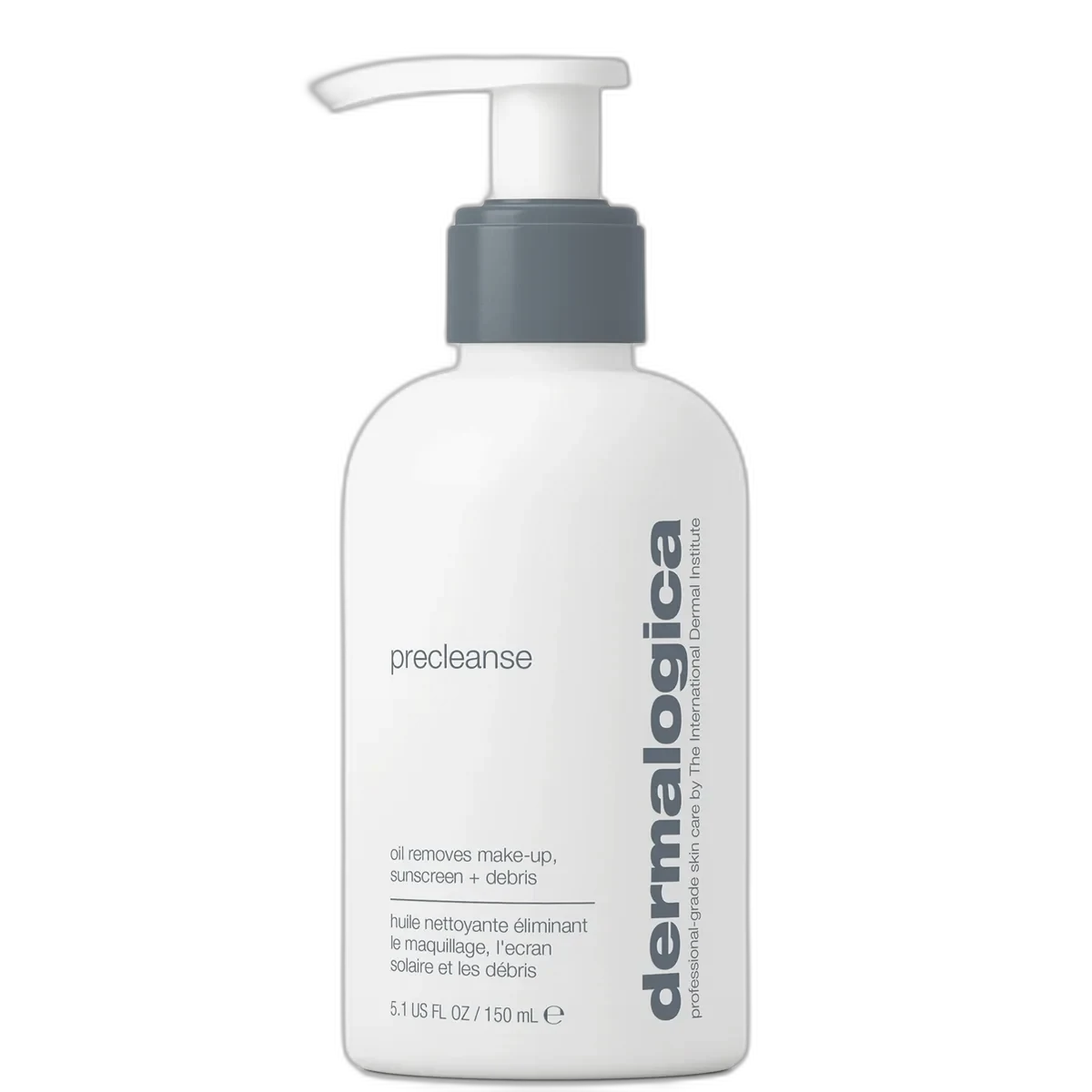
Precleanse
The Original Double Cleanse
 Verified reviewer
Pros & cons.
- +Dissolves waterproof makeup, heavy sunscreen, and stubborn sebum with minimal effort
- +Plant oil blend (borage, kukui, rice bran) conditions skin during cleansing — never leaves tightness
- +Emulsifies cleanly into a milky rinse without leaving greasy residue on skin
- +Lightweight oil texture spreads easily — one pump covers the entire face
- +Available in three consumer sizes including a cost-effective 10 oz jumbo option
- +Two-decade track record with 7,500+ reviews and multiple Allure Best of Beauty awards
- +Safe and gentle around the eye area for removing stubborn eye makeup
- −Strong herbal-citrus essential oil scent is polarizing — some users actively dislike it
- −Multiple essential oils and fragrance allergens serve no cleansing function but add sensitization risk
- −Premium pricing in a category where effective alternatives exist at lower price points
- −Pump bottle packaging is not easily recyclable
- −Requires proper emulsification technique — insufficient water leaves an oily film
The full review.
About Dermalogica
Before Dermalogica Precleanse hit esthetician shelves around 2004, most Western consumers found the idea of using oil to clean their face unintuitive. Double cleansing was standard in Korean and Japanese skincare, but American and European treatment rooms still relied on soap-and-water or foaming cleansers. Precleanse changed that via a massive professional distribution network: over 100,000 trained estheticians who used it during facials, explained the science, and sold bottles to clients.
Myth
The concept is simple. Oil dissolves oil. Your sebum, sunscreen, waterproof mascara, and the environmental grime on your skin’s lipid layer are all oil-soluble. Water-based cleansers cannot fully dissolve what they cannot mix with. A 2020 study in the Journal of Cosmetic Dermatology shows oil-based cleansers leave only 5.8% of sunscreen residue on skin, while foaming cleansers used alone leave 36.8%. Precleanse uses this chemistry: pump, massage, add water, watch the clear golden oil turn into a milky emulsion, rinse, and then cleanse again with your usual face wash.
Reality
The plant oil blend goes beyond the basic concept. Caprylic/capric triglyceride forms the lightweight, fast-spreading base—a coconut-derived triglyceride chosen for its thin texture and clean emulsification instead of heavy mineral oil. Dermalogica also added conditioning oils that benefit the skin during cleansing. Borage seed oil, a rich source of gamma-linolenic acid, deposits anti-inflammatory lipids while removing debris. Kukui nut oil and rice bran oil add emollient conditioning through fatty acids and antioxidants. Apricot kernel oil provides smoothing linoleic acid. Skin feels soft and conditioned after Precleanse, not stripped like the tight, squeaky-clean feeling from aggressive cleansers.
Texture
The texture is lighter than many oil cleansers. While some competitors feel heavy or sluggish, Precleanse has a fluid, water-like viscosity that spreads quickly and melts into pores on contact. One pump covers the entire face. The emulsification—when water turns the clear oil into a white milk—is smooth and complete, rinsing away without the greasy film found in cheaper formulas. The PEG-40 sorbitan peroleate emulsifier works well here.
Scent
Opinions on the scent diverge, and the formula shows its age. Lavender, grapefruit, orange, mandarin, lemongrass, and rosemary create a blend some call a relaxing botanical scent and others compare to household cleaning products. After twenty years, using essential oils for scent feels dated. Modern oil cleansers use fragrance-free formulas or subtler scents. The aggressive herbal-citrus punch of Precleanse feels like a relic from an era when ‘natural fragrance’ was considered better than no fragrance.
Common Complaints
Practically, the essential oils increase sensitization risk without aiding cleansing. Citral, limonene, and linalool are EU-regulated fragrance allergens in this formula. Even though the rinse-off nature of an oil cleanser limits exposure, it still contacts the skin. For a brand focused on professional-grade education and skin health, these fragrance choices feel like legacy decisions that lack modern updates.
Packaging
At forty-nine dollars for 5.1 ounces—with a 10-ounce jumbo at seventy-nine—the price is premium but reasonable for a product that lasts three to four months. The per-use cost is low because one pump per application suffices. The jumbo size offers about 23% better value per ounce, making it the smarter buy for regular users. However, the market has matured since Precleanse launched, and competitors now offer effective oil cleansers at lower prices.
Works for
Precleanse stays relevant after two decades due to consistency and reliability, not a single ingredient or new technology. This oil cleanser works the same on the seven-thousandth pump as it did on the first. It dissolves everything, rinses clean, and (for most people) does not cause breakouts. It leaves skin ready for the next step. The product has solved the same problem for twenty years and has seven thousand five-star reviews.
Common Praise
The Allure Best of Beauty wins in 2023 and 2025 confirm the product still competes at the top of its category. For beginners, Precleanse is a reliable introduction to double cleansing. For long-time users, it is a reliable workhorse—the highest compliment a cleanser can receive.
Ingredient analysis.
Full INCI list
Caprylic/Capric Triglyceride, Prunus Armeniaca (Apricot) Kernel Oil, PEG-40 Sorbitan Peroleate, Helianthus Annuus (Sunflower) Seed Oil, Citrus Aurantium Dulcis (Orange) Peel Oil, Citrus Grandis (Grapefruit) Peel Oil, Cymbopogon Schoenanthus Oil, Borago Officinalis Seed Oil, Lavandula Angustifolia (Lavender) Oil, Rosmarinus Officinalis (Rosemary) Leaf Extract, Solanum Lycopersicum (Tomato) Extract, Lavandula Hybrida Oil, Citrus Nobilis (Mandarin Orange) Peel Oil, Oryza Sativa (Rice) Bran Oil, Carthamus Tinctorius (Safflower) Seed Oil, Aleurites Moluccana Seed Oil, Cetyl Ethylhexanoate, Dicaprylyl Carbonate, Tocopheryl Acetate, Tocopherol, C12-15 Alkyl Benzoate, Citral, Limonene, Linalool
Skin match.
The science.
The Science
The cleansing mechanism uses the 'like dissolves like' principle of chemistry — oil-based solvents dissolve oil-based substances (sebum, sunscreen, makeup) better than water-based surfactants. A 2020 study by Chen et al. in the Journal of Cosmetic Dermatology quantified this: oil-based cleansers left only 5.8% of waterproof sunscreen residue on skin, compared to 36.8% for foaming cleansers and 15.8% for plain water. The study also shows oil cleansers cause less skin dryness — only 1 of 20 participants experienced post-cleanse dryness with the oil method versus 8 of 20 with foaming cleansers.
The conditioning oil blend adds value beyond cleansing. A 2018 review by Lin et al. in the International Journal of Molecular Sciences examined 19 plant oils and documented anti-inflammatory, antioxidant, wound-healing, and skin barrier repair effects from topical application. Borage seed oil, a rich source of gamma-linolenic acid (GLA), reduces transepidermal water loss (TEWL) in double-blind trials without adverse effects — making it a functional ingredient to protect the barrier during cleansing.
Rice bran oil provides gamma-oryzanol, a ferulic acid ester with antioxidant and UV-protective properties, while kukui nut oil provides a balanced omega-3 and omega-6 fatty acid profile. These oils ensure the first cleanse step deposits barrier-supportive lipids instead of depleting them — a formulation philosophy that aligns with modern barrier-conscious cleansing.
References
- The optimal cleansing method for the removal of sunscreen: Water, cleanser or cleansing oil? — Journal of Cosmetic Dermatology (2020)
- Anti-Inflammatory and Skin Barrier Repair Effects of Topical Application of Some Plant Oils — International Journal of Molecular Sciences (2018)
Dermatologist Perspective
Dermatologists recommend oil-based first cleansers to remove sunscreen and makeup — especially waterproof formulations that resist water-based surfactants. Board-certified dermatologists note Precleanse's plant oil base is gentler on the skin barrier than many surfactant-heavy cleansers, which suits patients with barrier concerns or those undergoing treatments that increase skin sensitivity. The double-cleanse method this product supports is standard dermatological advice for patients who wear daily sunscreen (as they should). However, dermatologists treating contact-dermatitis-prone or fragrance-sensitive patients typically recommend fragrance-free oil cleansers over this particular formula because of its essential oil content.
Where it fits in your routine.
Apply 1-2 pumps to dry hands. Massage onto dry skin for 30-60 seconds using circular motions to dissolve makeup, sunscreen, and sebum. Focus on the eye area (safe for lash line) and areas with heavy product buildup. Add a small amount of water and massage; the oil turns into a milky emulsion. Rinse with lukewarm water. Follow immediately with a water-based cleanser (gel, foam, or cream) to complete the double cleanse.
Precleanse costs $49 for 5.1 oz (or $79 for a 10 oz jumbo), placing it at the high end of the oil cleanser market. One pump per use makes the standard bottle last 3-4 months, and the jumbo size provides 23% better per-ounce value. The plant oil blend is more sophisticated than many competitors, and the emulsification quality is excellent. However, the oil cleanser category has grown since Precleanse launched; K-beauty and Western brands now offer similar cleansing performance for less. The value rests on the product's proven track record, the quality of the botanical oils, and the reliability of the emulsification system.
This works for daily sunscreen wearers, makeup users, or anyone wanting a thorough evening cleanse that removes everything without stripping the skin. It suits dry, normal, and combination skin types seeking a conditioning first-cleanse step. It is an ideal introduction to double cleansing for newcomers.
People with fragrance allergies or contact dermatitis from essential oils should use fragrance-free oil cleansers. Budget-conscious consumers find effective oil cleansers at lower price points. Users who prefer balm cleansers or micellar water for their first cleanse may dislike the liquid oil format.
Product details.
The essential oil cocktail has a strong herbal-citrus scent. You can detect lavender, grapefruit, orange, mandarin, lemongrass, and rosemary. Users disagree on the smell: some find it pleasant and spa-like, while others say it smells like household cleaners. ***
Clear plastic pump bottle with Dermalogica's signature clean gray-white labeling. The pump dispenses measured doses. Available in travel (30 mL), standard (150 mL), and jumbo (295 mL) sizes. Not easily recyclable. ***
It dissolves makeup on contact. The 'melting' effect shows within seconds of massaging onto dry skin. First-time users often find it breaks down waterproof products effectively. The scent is the most noticeable part during first use. Adding water creates a smooth, satisfying emulsification. ***
3-4 months with nightly use of 1-2 pumps (standard 150 mL size) ***
12 months ***
All Year ***
The backstory.
Dermalogica launched Precleanse as the first step in what would become their signature Double Cleanse method — a professional treatment-room technique adapted for home use. At a time when oil cleansing was still largely an East Asian practice unfamiliar to Western consumers, Dermalogica's esthetician network helped normalize the concept that oil could clean skin better than soap. Two decades and multiple awards later, it remains one of the most recognized oil cleansers in professional skincare.
About Dermalogica
Legacy Brand (20+ years)Jane Wurwand founded Dermalogica in 1986 with the International Dermal Institute. The brand popularized the double-cleanse concept in Western professional skincare and over 100,000 skin therapists in 100+ countries use it.
Common myths.
Oil cleansers worsen oily skin and cause breakouts.
The 'like dissolves like' principle means oil cleansers dissolve excess sebum better than foaming cleansers. This formula uses a lightweight caprylic/capric triglyceride base and emulsifies with water to rinse clean. Research shows oil-based cleansers leave less sunscreen residue than foaming alternatives.
Skip a precleanse step if your regular cleanser is strong enough.
A 2020 study in the Journal of Cosmetic Dermatology shows oil-based cleansers leave only 5.8% sunscreen residue, compared to 36.8% for foaming cleansers alone. Even effective water-based cleansers struggle to dissolve oil-based sunscreens and long-wear makeup; the precleanse step solves this.
FAQ.
How do you use Dermalogica Precleanse?
Massage 1-2 pumps onto dry skin for 30-60 seconds to dissolve makeup, sunscreen, and sebum. Add a little water and massage more; the oil turns into a milky emulsion. Rinse well, then use your regular water-based cleanser for a complete double cleanse.
Can you use Dermalogica Precleanse on oily skin?
Yes — oil cleansers work via the "like dissolves like" principle to dissolve excess sebum. Proper emulsification is key: add water and massage until the oil turns milky, then rinse thoroughly. Use a gel or foam cleanser after to remove all residue from oily skin.
Is Dermalogica Precleanse fragrance-free?
No — this formula contains essential oils like lavender, grapefruit, orange, mandarin, lemongrass, and rosemary, plus EU-regulated fragrance allergens (citral, limonene, linalool). If you have fragrance sensitivities, use a fragrance-free oil cleanser alternative.
Do I need to double cleanse if I use Dermalogica Precleanse?
Yes — Precleanse works as the first step in a double cleanse. It dissolves oil-based impurities (makeup, sunscreen, sebum), but you need a water-based cleanser afterward to remove water-based impurities and any residual emulsified oil. Skipping the second cleanse leaves a film on the skin.
How long does a bottle of Dermalogica Precleanse last?
The standard 5.1 oz bottle lasts about 3-4 months if you use 1-2 pumps nightly. The jumbo 10 oz size lasts roughly 6-8 months and saves about 23% per ounce. A little goes a long way — most users find one pump cleanses the full face.
Can Dermalogica Precleanse remove waterproof mascara?
Yes — this is a primary use case. The oil-based formula dissolves waterproof and long-wear eye makeup. Apply a small amount to closed eyes, massage gently, emulsify with water, and rinse. Users consistently name waterproof makeup removal as a top feature.
What the community says.
"Dissolves waterproof makeup and heavy sunscreen effortlessly in seconds"
"Leaves skin soft and conditioned, never stripped or tight after use"
"Emulsifies cleanly into a milky rinse without greasy residue"
"A little goes a long way — one pump per use for most people"
"Long-time repurchase product for many users — decades of loyalty"
"Safe and effective around the delicate eye area"
"Premium price compared to other oil cleansers with similar performance"
"Strong herbal-citrus scent is polarizing — some find it unpleasant"
"Multiple essential oils can irritate fragrance-sensitive skin"
"Pump bottle packaging is not easily recyclable"
"Oily skin types may notice residual film if not properly emulsified with water"
People also looked at.