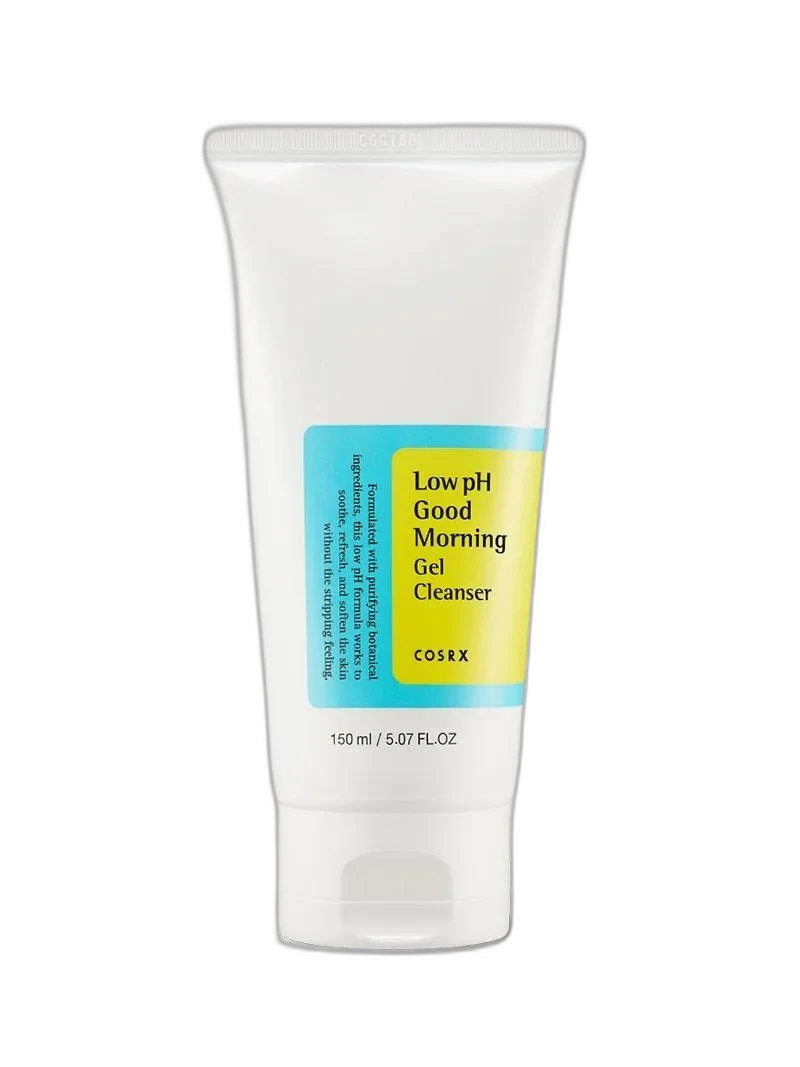
Low pH Good Morning Gel Cleanser
K-Beauty OG Cleanser
 Verified reviewer
Pros & cons.
- +pH 5.0-5.5 respects the skin's acid mantle — one of the first widely accessible low-pH cleansers
- +Betaine salicylate provides mild BHA exfoliation that helps keep pores clear over time
- +Tea tree oil delivers proven antimicrobial benefits relevant for acne-prone skin
- +Exceptional value at $14 for 150ml with three size options including a 400ml jumbo
- +Gentle surfactant system (cocamidopropyl betaine + sodium lauroyl methyl isethionate) won't strip the barrier
- +Over a decade of market history and 25,000+ reviews confirm long-term reliability
- −Tea tree oil scent is medicinal and noticeable — polarizing among users
- −Can feel drying or tight on dry, very sensitive, or barrier-compromised skin
- −Not effective as a standalone remover for heavy makeup or waterproof sunscreen
- −Produces only a light, minimal foam that may feel insufficient to lather-loving users
- −Tea tree oil is a known allergen for a subset of users — patch test recommended
The full review.
In 2015, cleanser pH mattered little to most people. Consumers chose face washes based on scent, foam, or packaging. Few knew a cleanser’s acidity could damage the skin’s protective acid mantle, causing the breakouts and sensitivity they tried to prevent.
COSRX changed this. The Low pH Good Morning Gel Cleanser put its low pH directly in the name. In three words, it taught millions that cleanser pH matters. This made it one of the most consequential products in K-beauty history.
A decade later, the conversation has shifted. Low-pH cleansers are now everywhere. The concept COSRX popularized is standard. This raises a question: does this cleanser still deserve its legendary status, or does it rely on reputation?
The answer is simple: it still works. Very well.
Texture
The surfactant system uses cocamidopropyl betaine and sodium lauroyl methyl isethionate. These are two of the gentlest surfactants available; neither strips skin like SLS or SLES. They create a light, gel-like lather. This won’t satisfy users who want high foam volume, but they dissolve sebum and daily grime without disturbing the skin’s lipid barrier. The pH is approximately 5.0-5.5 from the tube, rising to about 6.0-6.5 when foamed with tap water—still within the range that respects the acid mantle.
Works for
Betaine salicylate adds functionality most basic cleansers lack. This BHA derivative is gentler than standard salicylic acid; manufacturer research suggests it has approximately half the potency at equivalent concentrations and significantly lower irritancy. In a rinse-off product, it won’t provide the chemical exfoliation of a leave-on BHA toner or serum. However, it helps surfactants clear sebum from pores during cleansing, which helps reduce oiliness and blackheads over weeks of use.
Scent
Tea tree oil gives this cleanser its character and its most divisive trait. The scent is herbal and medicinal—some find it refreshing, others find it off-putting. But tea tree oil is a functional antimicrobial, not just fragrance. A 1990 study in the Medical Journal of Australia showed that 5% tea tree oil reduced acne lesions similarly to 5% benzoyl peroxide, with fewer side effects. A 2015 systematic review by Hammer in the International Journal of Antimicrobial Agents confirmed its anti-acne efficacy across multiple studies. For a daily morning cleanser for acne-prone skin, it is a legitimate inclusion.
Not ideal for
Tea tree oil also means this cleanser isn’t for everyone. Dry skin types or those with sensitive or compromised barriers may find the tea tree and BHA too active for a daily wash. Users with eczema, rosacea, or severe sensitivity should use it with caution. COSRX offers gentler options—the Hydrium cleanser for dry skin and the Snail Mucin cleanser for sensitive skin. This product works best when you know it fits your skin type.
Pairs Well With
Allantoin provides a calming counterweight. This FDA-recognized skin protectant has anti-irritant and cell-renewal properties that buffer the tea tree and BHA, helping create the ‘clean but not stripped’ feeling users praise. Saccharomyces ferment filtrate and botanical extracts (lotus leaf, evening primrose, pine leaf) provide mild antioxidant and skin-conditioning support, though their impact is supplementary in a rinse-off product.
How to Use
The experience is excellent. A pea-sized amount creates a modest, sufficient lather. The gel has enough slip to spread without feeling slippery or filmy. It rinses clean with no residue or tightness for the right skin types. Skin feels refreshed, slightly matte, and clean without the squeaky sensation that signals barrier damage.
Best for
The cleanser excels in value. At $14 for 150ml, it is one of the most affordable well-formulated cleansers. The 50ml travel size at $8-10 makes it easy to try, and the 400ml jumbo at $22-25 offers better per-unit economics. A 150ml tube lasts three to four months with daily morning use. The pricing is hard to argue with.
AM routine
The product has evolved; COSRX has reformulated slightly to remove certain ingredients from their exclusion list, but the core philosophy remains. It is a morning cleanser that cleans, gently exfoliates, fights acne bacteria, and leaves the barrier intact. It is not a night cleanser, a makeup remover, or a treatment. It knows its purpose, its audience, and its time of day. The tube says so.
Common Praise
Ten years later, with over 25,000 reviews and a 4.5-star average, the COSRX Low pH Good Morning Gel Cleanser is a classic. It is not perfect—the tea tree scent limits appeal, the lather won’t please foam enthusiasts, and dry skin types should look elsewhere. But it does exactly what it promises at an easy price, with a pH that respects the skin’s acid mantle. That’s a good morning.
Ingredient analysis.
Full INCI list · pH 5.5
Water, Cocamidopropyl Betaine, Sodium Lauroyl Methyl Isethionate, Sodium Chloride, Polysorbate 20, Styrax Japonicus Branch/Fruit/Leaf Extract, Butylene Glycol, Saccharomyces Ferment, Cryptomeria Japonica Leaf Extract, Nelumbo Nucifera Leaf Extract, Pinus Palustris Leaf Extract, Ulmus Davidiana Root Extract, Oenothera Biennis (Evening Primrose) Flower Extract, Pueraria Lobata Root Extract, Melaleuca Alternifolia (Tea Tree) Leaf Oil, Allantoin, Caprylyl Glycol, Ethylhexylglycerin, Betaine Salicylate, Citric Acid, Ethyl Hexanediol, 1,2-Hexanediol, Trisodium Ethylenediamine Disuccinate, Sodium Benzoate, Disodium EDTA
Skin match.
The science.
The Science
This cleanser has a pH of approximately 5.0-5.5, which matches the skin's natural acid mantle (pH ~5.5). Research shows that cleansing at or near the skin's natural pH minimizes stratum corneum and resident microbiome disruption. Traditional soap-based cleansers with pH 8-10 raise skin pH for hours after washing, which temporarily compromises barrier function and increases susceptibility to irritants and pathogens.
Betaine salicylate, the formula's BHA component, is a salicylic acid derivative complexed with the amino acid trimethylglycine (betaine). The ingredient manufacturer's research shows efficacy comparable to salicylic acid at approximately double the concentration, with lower irritancy and cytotoxicity. A 2024 study in PMC (PubMed ID: 40027344) examined betaine-salicylic acid cocrystal formulations and showed enhanced anti-inflammatory, antioxidant, and moisturizing properties. In a rinse-off context, betaine salicylate primarily enhances sebum dissolution within pores during the brief cleansing window.
Tea tree oil (Melaleuca alternifolia) has one of the strongest evidence bases of any natural antimicrobial ingredient. Bassett et al.'s 1990 study in the Medical Journal of Australia compared 5% tea tree oil gel to 5% benzoyl peroxide lotion in 124 acne patients; both treatments significantly reduced inflamed and non-inflamed lesion counts, though tea tree oil produced fewer side effects despite a slower onset of action. A 2015 systematic review by Hammer in the International Journal of Antimicrobial Agents evaluated seven publications and concluded tea tree oil products were superior to placebo and equivalent to benzoyl peroxide and topical erythromycin for acne lesion reduction. The antimicrobial mechanism involves non-specific disruption of bacterial cell membranes, as confirmed by a 2023 systematic review in Frontiers in Pharmacology.
References
- A comparative study of tea-tree oil versus benzoyl peroxide in the treatment of acne — Medical Journal of Australia (1990)
- Treatment of acne with tea tree oil (melaleuca) products: a review of efficacy, tolerability and potential modes of action — International Journal of Antimicrobial Agents (2015)
- Betaine-salicylic acid cocrystal for enhanced skincare and acne treatment — PMC (PubMed Central) (2024)
Dermatologist Perspective
Dermatologists widely recommend low-pH cleansers for healthy skin, and this product follows that guidance. Board-certified dermatologists note that maintaining the acid mantle during cleansing supports barrier integrity and the skin's beneficial microbiome. The betaine salicylate provides a mild BHA effect that dermatologists consider appropriate for daily use in acne-prone patients, while the tea tree oil offers supplementary antimicrobial activity. Dermatologists caution that patients with dry skin, rosacea, or contact sensitivity to tea tree oil should choose a gentler alternative — the tea tree oil makes this cleanser best for oily and combination skin types with active or blackhead-prone acne.
Where it fits in your routine.
Splash your face with lukewarm water. Squeeze a pea-sized amount into damp hands and lather. Massage the face gently for 30-60 seconds, focusing on the T-zone and oily or congested areas. Rinse well with lukewarm water. Use this as a morning cleanser to remove overnight sebum. For PM use, use it as a second cleanser after an oil-based first cleanser to remove makeup and sunscreen.
At $14 for 150ml, this is a top-value cleanser in K-beauty and likely any market. Three sizes offer accessibility: the $8-10 travel size removes purchase risk, the standard tube lasts 3-4 months with daily use, and the $22-25 jumbo size costs roughly $0.06/ml for regular users. A daily morning cleanser costs about $0.12 per use, respects barrier pH, and includes BHA and tea tree. COSRX's decade-long track record and high volume of positive reviews make this a safe value bet in skincare.
This cleanser works for oily, combination, and acne-prone skin types needing a daily morning wash that cleans, mildly exfoliates, and fights breakout-causing bacteria without stripping the barrier. It suits K-beauty beginners seeking an affordable entry point, anyone concerned about cleanser pH, and those building an anti-acne routine on a budget.
Dry, dehydrated, or eczema-prone skin types will find this cleanser too drying for daily use. Avoid this if you are sensitive or allergic to tea tree oil. If you dislike herbal or medicinal scents, use COSRX's fragrance-free alternatives like the Hydrium or Snail Mucin cleansers.
Product details.
All Year Certifications cruelty-freedermatologist-testedhypoallergenic
The backstory.
Launched in 2015 as one of COSRX's earliest products, the Low pH Good Morning Gel Cleanser arrived during the peak of the K-beauty wave and became a gateway product for millions of Western consumers discovering Korean skincare. It helped popularize the then-radical idea that cleanser pH matters — and that your morning wash shouldn't strip your skin's protective acid mantle. Over a decade later, it remains COSRX's best-selling cleanser and one of the most reviewed K-beauty products in existence.
About COSRX
Established Brand (5–20 years)COSRX launched in South Korea in 2013 and is now a trusted K-beauty brand. The Low pH Good Morning Gel Cleanser was an early hero product. It helped build the brand's reputation for effective, no-frills skincare, backed by 25,000+ reviews and over a decade of consumer trust.
Common myths.
A cleanser that doesn't foam much isn't cleaning properly.
Foam volume does not correlate with cleaning efficacy. This gel cleanser uses cocamidopropyl betaine and sodium lauroyl methyl isethionate. These gentle surfactants dissolve sebum and impurities without the excessive foam SLS-based cleansers produce. The light lather comes from the gentle surfactant system, not weak cleaning power.
The BHA (betaine salicylate) in this cleanser exfoliates.
In a rinse-off product with 30-60 seconds of skin contact, betaine salicylate provides only mild, supplementary exfoliation. It does not compare to a leave-on BHA treatment like a toner or serum. Here, it helps surfactants clear sebum from pores during cleansing rather than delivering standalone chemical exfoliation.
FAQ.
What is the pH of the COSRX Good Morning Gel Cleanser?
The product out of the tube has a pH of ~5.0-5.5, near the skin's natural pH of ~5.5. Foaming it with water raises the pH to about 6.0-6.5, depending on your tap water's alkalinity. This pH is lower and gentler than traditional cleansers, which typically have a pH of 8-10.
Is this cleanser good for dry skin?
This cleanser targets oily and combination skin. Users with normal-to-dry skin tolerate it well, but tea tree oil and BHA can dry out very dry or compromised skin. For dry skin, the COSRX Hydrium Triple Hyaluronic Moisturizing Cleanser is a more hydrating alternative from the same brand.
Can I use this as my only cleanser at night?
This cleanser works for light makeup and daily grime alone. It does not remove heavy makeup, waterproof sunscreen, or oil-based products. For PM use, use it as a second cleanser after an oil-based first cleanser or cleansing balm for thorough removal.
Does the BHA (betaine salicylate) in this cleanser actually exfoliate?
In a rinse-off product with 30-60 seconds of skin contact, betaine salicylate provides mild exfoliation. It assists surfactants in clearing pores rather than acting as a standalone chemical exfoliant. For meaningful BHA exfoliation, use a leave-on product like a BHA toner or serum after cleansing.
Why does this cleanser smell like tea tree oil?
Melaleuca alternifolia (tea tree) leaf oil provides the scent. This is a functional active ingredient, not an added fragrance. Tea tree oil offers antimicrobial and anti-inflammatory benefits for acne-prone skin. The scent disappears from skin after rinsing.
Is this cleanser safe during pregnancy?
Yes — betaine salicylate in a rinse-off product at this concentration is safe during pregnancy. Short skin contact time and low concentration result in negligible systemic absorption. However, consult your healthcare provider if you have specific concerns about any BHA derivative during pregnancy.
What size should I buy?
The 50ml travel size works well for testing the product first. The standard 150ml tube costs $14 and lasts 3-4 months with daily morning use, offering the best balance of value and commitment. The 400ml jumbo size has the best per-unit value for daily users.
What the community says.
"Gentle yet effective cleansing that doesn't strip or dry out the skin"
"Excellent value — affordable price and a small amount goes a long way"
"Low pH formula respects the skin's acid mantle and barrier function"
"Noticeably reduces oiliness and keeps pores cleaner over time"
"Works perfectly as a morning cleanser for oily and combination skin"
"Simple, trustworthy ingredient list without unnecessary additives"
"Tea tree oil scent is noticeable and some users find it unpleasant or medicinal"
"Can feel drying or tight on dry or very sensitive skin types"
"Not effective at removing heavy makeup or sunscreen — needs double cleansing"
"Gel doesn't produce a rich, luxurious foam — lather is minimal and light"
People also looked at.