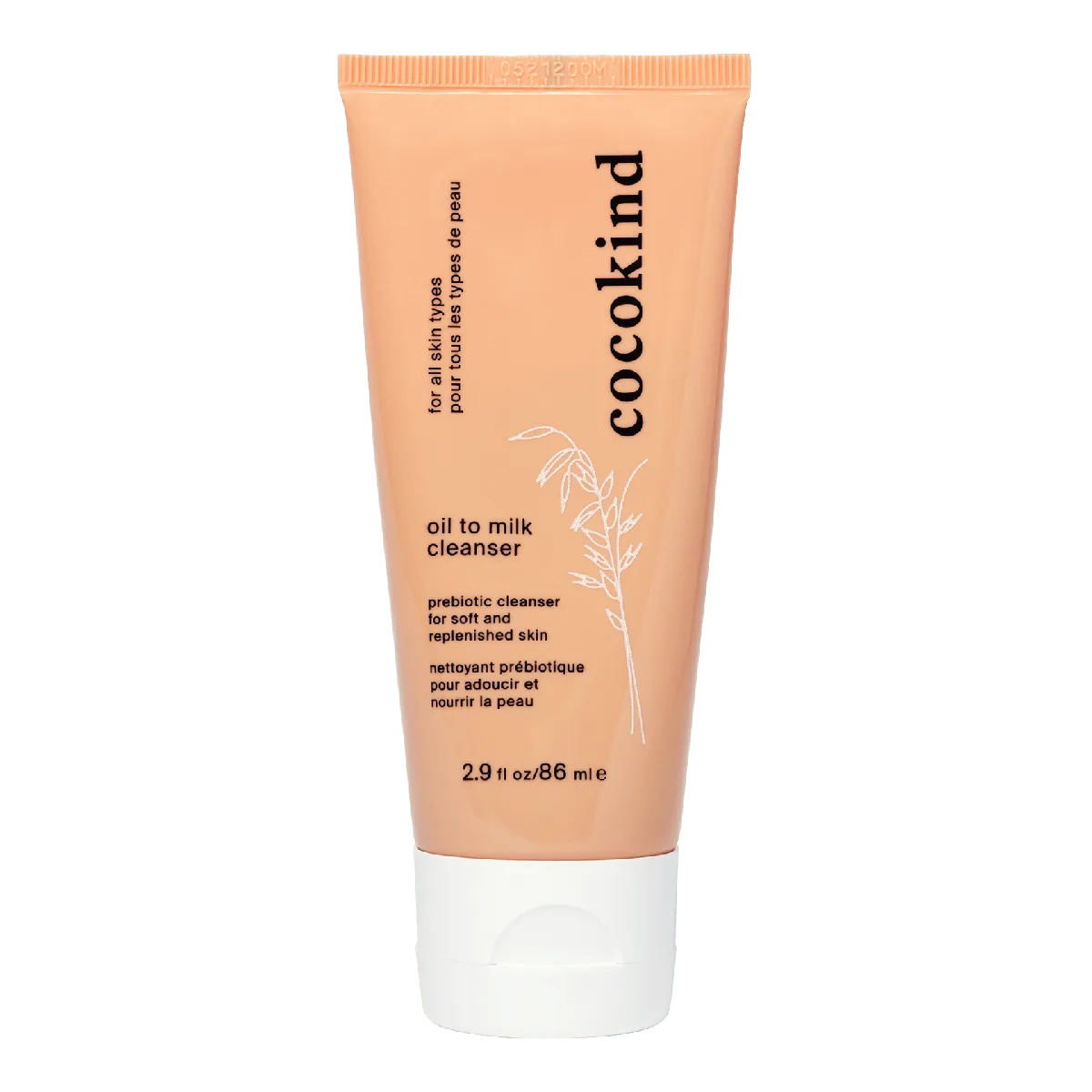
Oil to Milk Cleanser
Microbiome-Friendly Cleanser
 Verified reviewer
Pros & cons.
- +Remarkably short 14-ingredient list with no filler or unnecessary additives
- +Sugar ester emulsifiers provide genuinely gentle oil-to-milk transformation without sulfates
- +Lactobacillus ferment actively supports microbiome health during cleansing
- +Dual oat inclusion (oil and extract) soothes and protects the barrier while cleansing
- +Effectively removes makeup and sunscreen without stripping or leaving greasy residue
- +Skin feels soft and hydrated immediately after cleansing — no post-wash tightness
- +Sustainable sugarcane-based packaging that's recyclable
- +Available in a travel size for easy testing before full commitment
- −Contains geranium and chamomile essential oils that may irritate highly reactive skin
- −Rich oil formula is not ideal for oily or acne-prone skin types
- −Tube packaging can get messy around the cap with repeated use
- −May not fully remove heavy waterproof eye makeup without additional effort
- −Not fragrance-free despite being marketed as clean and gentle
The full review.
Fourteen ingredients. That’s it. In an industry where the average cleanser ingredient list reads like a chemistry final, Cocokind’s Oil to Milk Cleanser arrives with the confidence of someone who showed up to a potluck with one perfect dish instead of seven mediocre ones. Every ingredient has a job, nothing is filler, and the formula reads like a masterclass in restraint.
The concept is deceptively simple: a golden oil balm that melts on contact with dry skin, dissolving makeup, sunscreen, and the accumulated debris of existing. Add water, and the sugar ester emulsifiers trigger a transformation — the oil breaks into a lightweight milk that rinses clean without leaving either a greasy film or that tight, stripped feeling that makes you immediately reach for moisturizer. It’s the Goldilocks zone of cleansing, and Cocokind nails it.
The foundation is certified organic sunflower seed oil, a linoleic acid-rich carrier that’s become the quiet workhorse of modern oil cleansing. Linoleic acid is the fatty acid most commonly deficient in oily and acne-prone skin, and using it as a cleansing base means you’re replenishing while you remove. Grape seed oil and baobab seed oil round out the lipid profile — grape seed brings a lighter, faster-absorbing touch, while baobab contributes omega-3s, -6s, and -9s along with vitamins A, D, and E. It’s a well-curated oil trio that avoids the heaviness of coconut oil-based cleansers while delivering serious nourishment.
The real innovation, though, is in the emulsification system. Instead of relying on polysorbates or PEG compounds — the usual suspects that turn oil cleansers into self-emulsifying formulas — Cocokind uses sucrose laurate, sucrose palmitate, and sucrose stearate. These sugar esters are derived from sucrose and fatty acids, and they’re remarkably gentle. They achieve the oil-to-milk conversion without disrupting the skin barrier or stripping away the natural lipid mantle that most traditional surfactants attack. For anyone who’s ever felt that familiar post-wash tightness, this approach is a revelation.
The oat story deserves special attention. Cocokind includes both oat kernel oil and oat kernel extract — a dual approach that covers complementary ground. The oil contributes ceramide-like lipids and essential fatty acids, while the extract brings beta-glucans and avenanthramides, compounds with well-documented anti-inflammatory and skin-soothing properties. In a cleanser, where the primary risk is irritation and barrier disruption, this dual oat inclusion acts as an insurance policy against the very thing you’re asking the product to do.
Then there’s the lactobacillus ferment — the ingredient that moves this cleanser from ‘thoughtful’ to ‘genuinely forward-thinking.’ Most brands treat the skin microbiome as a marketing buzzword; Cocokind treats it as a design constraint. Including a postbiotic ferment in a cleanser acknowledges a truth that the skincare industry has been slow to address: cleansing is the step most likely to disrupt your skin’s microbial ecosystem. The ferment doesn’t add live bacteria to your face — it provides metabolites that support the existing microbiome community, helping beneficial bacteria survive the cleansing process.
The scent comes from geranium and chamomile essential oils — and this is the one area where the minimalist approach creates a genuine trade-off. The essential oils provide a pleasant, subtle floral aroma that most users enjoy, but they’re also the ingredients most likely to cause issues for highly reactive skin. Chamomile oil contains bisabolol (a proven soother) but also potential allergens like limonene and linalool. For the vast majority of users, this won’t be a problem. For the subset of sensitive skin sufferers who react to essential oils specifically, it’s worth a patch test.
In daily use, the experience is almost meditative. You massage the golden balm onto dry skin — no rushing, just gentle circular motions — and feel makeup and sunscreen dissolving. The texture shifts when you add water, going from rich oil to something closer to light cream. Rinsing is effortless, and what’s left behind is skin that feels genuinely clean but also inexplicably soft, as if you’d somehow cleansed and moisturized simultaneously.
The tube packaging is practical and sustainable — made from sugarcane-based materials — but it does have a tendency to get a bit messy around the cap, especially as you reach the bottom of the tube. A pump dispenser would improve the daily experience, though it would likely increase the price.
At $18.99 for 2.9 ounces, this cleanser sits at a reasonable price point for the clean beauty space. A travel size is also available for those who want to test before committing. You’ll get roughly six to eight weeks of daily use from the full-size tube, which works out to about $2.50-3.00 per week — competitive with similar quality oil cleansers and significantly cheaper than luxury balm cleansers that do essentially the same thing with more ingredients and more packaging.
The limitation here is genuine: this is a cleanser designed for dry to normal skin, period. If you’re oily or acne-prone, the rich oil base may feel like too much, and the lack of any oil-controlling ingredients means it won’t help with excess sebum production. It’s not a flaw — it’s a design choice. Not every product needs to work for everyone, and the specificity of this formula is part of what makes it excel for its intended audience.
Ingredient analysis.
Full INCI list
Helianthus Annuus (Sunflower) Seed Oil, Glycerin, Vitis Vinifera (Grape) Seed Oil, Water, Sucrose Laurate, Adansonia Digitata Seed Oil, Avena Sativa (Oat) Kernel Oil, Sucrose Palmitate, Sucrose Stearate, Pelargonium Graveolens Flower Oil, Tocopherol, Anthemis Nobilis Flower Oil, Avena Sativa (Oat) Kernel Extract, Lactobacillus Ferment
Skin match.
The science.
The Science
The cleansing mechanism in this formula relies on the principle of like-dissolves-like: the plant oil base (sunflower, grape seed, baobab, oat) dissolves lipophilic impurities — sebum, oil-based makeup, sunscreen filters, and environmental pollutants — without water or surfactants. The sugar ester emulsifiers (sucrose laurate, palmitate, and stearate) then enable the transition when water is added, forming micelles that encapsulate dissolved impurities for easy rinsing.
Sucrose esters are classified as non-ionic surfactants with an exceptionally low irritation potential. A 2007 study published in the International Journal of Pharmaceutics demonstrated that sucrose ester-based cleansing systems preserve stratum corneum integrity significantly better than traditional anionic surfactants like sodium lauryl sulfate, maintaining both barrier function and hydration levels post-cleansing.
The dual oat approach is grounded in substantial research. Avena sativa kernel extract contains avenanthramides — polyphenolic compounds with documented anti-inflammatory properties. A landmark 2008 study in the Archives of Dermatological Research showed that avenanthramides inhibit NF-kB activation and reduce pro-inflammatory cytokine release at concentrations as low as 1 ppm. In a cleanser that contacts skin for 1-2 minutes, these compounds provide meaningful protection against cleansing-induced irritation.
The lactobacillus ferment represents the postbiotic approach to microbiome skincare. Unlike live probiotics (which rarely survive in cosmetic formulations), postbiotics are the metabolic byproducts of bacterial fermentation — organic acids, peptides, and polysaccharides that have been shown to support commensal bacteria and inhibit pathogenic species. A 2019 review in the Journal of Cosmetic Dermatology noted that ferment lysates can improve skin barrier function and reduce transepidermal water loss, though the specific mechanisms are still being characterized. In this cleanser, the lactobacillus ferment likely helps buffer the microbiome against the disruption inherent in any cleansing step.
References
- Evaluation of sucrose ester-based cleansing systems for skin barrier preservation — International Journal of Pharmaceutics (2007)
- Anti-inflammatory activities of colloidal oatmeal (Avena sativa) contribute to the effectiveness of oats in treatment of itch associated with dry, irritated skin — Archives of Dermatological Research (2008)
Dermatologist Perspective
Dermatologists frequently emphasize that the cleansing step is where most skincare routines go wrong — using products that are too harsh, too foamy, or too stripping for the skin's needs. Board-certified dermatologists note that oil-based cleansers with gentle emulsifiers like sugar esters are particularly well-suited for patients with dry skin, eczema, or compromised barriers, as they remove impurities without depleting the natural lipid mantle. The inclusion of oat-derived ingredients aligns with established dermatological recommendations for soothing inflamed or reactive skin. However, dermatologists typically caution that the geranium and chamomile essential oils in this formula, while natural, can still trigger contact sensitization in susceptible individuals — patients with known fragrance allergies should patch test before incorporating this into their routine.
Where it fits in your routine.
Massage a nickel-sized amount onto dry skin in circular motions for 30-60 seconds to dissolve makeup, sunscreen, and impurities. Add a little water and massage more; the oil turns into a milky emulsion. Rinse well with lukewarm water. Use a water-based second cleanser after heavy makeup. Use morning and evening, though many users find a lighter cleanser enough for mornings.
At $18.99 for 2.9 ounces, this cleanser provides good value in the clean beauty oil cleanser category. Each use costs about $0.30-0.50 depending on frequency. This price competes with similar formulations from brands like Pai and Herbivore that cost more. A 0.5 oz travel size is also available to test the product before buying the full size. The short, high-quality ingredient list ensures you pay for functional ingredients instead of fillers or marketing. The per-dollar performance is strong for its target audience of dry and sensitive skin types.
Dry to normal skin types want a gentle, effective cleanser that removes makeup and sunscreen without stripping. It works for anyone with a compromised skin barrier or post-wash tightness. It suits people who want microbiome-friendly skincare and a short, transparent ingredient list.
Oily or acne-prone skin types needing a lighter, mattifying cleanser. People with known essential oil sensitivities or allergies to geranium or chamomile. The oil-to-milk ritual takes time, so busy mornings may require a quicker, simpler cleanser.
Product details.
This golden oil balm melts on contact with skin. Adding water turns it into a lightweight milky emulsion that rinses cleanly.
Geranium and chamomile essential oils provide a subtle, natural floral scent. It is noticeable but not overpowering.
White squeeze tube uses sugarcane-based materials. It is recyclable. A 0.5 oz travel size is also available.
The oil balm feels thick when massaged onto dry skin. Adding water turns the texture milky and it rinses easily. Skin feels soft and nourished, not tight or squeaky clean. No adjustment period is needed.
6-8 weeks with once or twice daily use.
12 months
All Year
The backstory.
Cocokind developed this cleanser to address the common complaint that oil cleansers either don't rinse clean or require harsh emulsifiers that defeat the purpose of a gentle cleanse. The sugar ester technology allows a true oil-to-milk conversion without sulfates or traditional surfactants, and the addition of fermented oat reflects the brand's early interest in microbiome-conscious skincare.
About Cocokind
Established Brand (5–20 years)Priscilla Tsai founded Cocokind in 2014 to make affordable, transparent, and sustainable skincare. The brand uses a clean ingredient approach to build a large following. Cocokind sells at Target, Ulta, and Whole Foods, but focuses on clean-beauty ethos over clinical research.
Common myths.
Oil cleansers worsen oily skin and cause breakouts.
Oil-based cleansing uses the like-dissolves-like principle to remove excess sebum more effectively than many foaming cleansers. This thick oil blend works best for dry to normal skin; those with oily skin may prefer a lighter oil cleanser or micellar water.
You need a foaming cleanser to get skin truly clean.
Foam is a sensory cue, not a cleaning requirement. The sugar ester emulsifiers in this formula break down makeup, sunscreen, and impurities without suds, while the milk phase rinses residue away cleanly.
FAQ.
Does Cocokind Oil to Milk Cleanser remove waterproof makeup?
This cleanser removes most makeup, foundation, and sunscreen if you massage it onto dry skin before adding water. Heavy waterproof mascara or long-wear eye makeup requires holding the product on the eye area longer or using a dedicated eye makeup remover.
Can I use this cleanser if I have oily skin?
Oil cleansing works for all skin types in theory, but this formula's blend of sunflower, grape seed, baobab, and oat oils targets dry to normal skin. For oily or acne-prone skin, the thick oil base may feel heavy and cause congestion — a lighter oil or micellar water works better as a first cleanse.
What does the lactobacillus ferment in this cleanser do?
The lactobacillus ferment is a postbiotic ingredient that supports the skin's microbiome — the community of beneficial bacteria on your skin. Traditional cleansers disrupt this ecosystem, but the ferment maintains microbial balance during cleansing and reduces reactivity over time.
Do I need to double cleanse after using this?
Not necessarily. Sugar ester emulsifiers turn this cleanser into a milky emulsion that rinses clean without oily residue. It works well as a standalone cleanser for light makeup or morning cleansing. For heavy makeup or sunscreen removal, use a water-based second cleanser to ensure everything is thoroughly removed.
Is this cleanser fragrance-free?
No. Geranium and chamomile essential oils give this cleanser a subtle natural floral scent. These plant-derived oils irritate less than synthetic fragrances, but people with essential oil sensitivities should patch test first.
What the community says.
"Leaves skin feeling soft and hydrated, not stripped"
"Removes makeup and sunscreen effectively"
"Short clean ingredient list"
"Lovely texture transformation from oil to milk"
"Pleasant subtle natural scent"
"Essential oils may irritate very sensitive skin"
"Not ideal for oily or acne-prone skin"
"Tube packaging can be messy"
"May not fully remove waterproof mascara without double cleansing"
"Relatively small size for the price"
People also looked at.