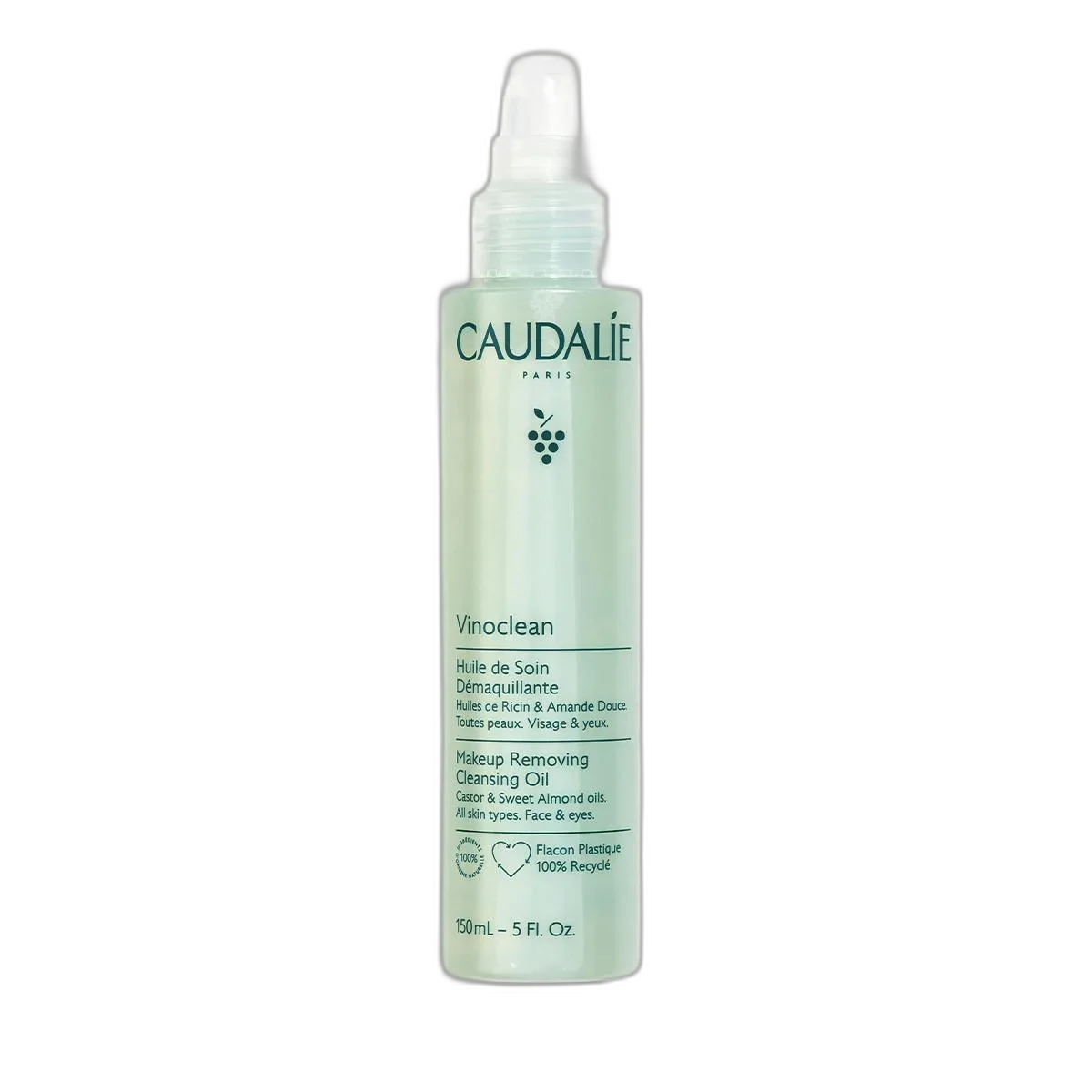
Vinoclean Makeup Removing Cleansing Oil
Luxury Double-Cleanse Pick
 Verified reviewer
Pros & cons.
- +Four-oil blend dissolves makeup and sunscreen effectively
- +Emulsifier rinses cleanly without residue
- +Pleasant sensory experience with light grape-herbal scent
- +Plant-oil formulation ties to Caudalie's vineyard identity
- +Widely available and backed by a nearly three-decade brand
- +Works well as the first step in a double cleanse
- −Added fragrance with four EU-listed allergens
- −Not suitable for sensitive or rosacea-prone skin
- −Expensive compared to functionally equivalent cleansing oils
- −Olive oil content raises mild comedogenicity concerns for some users
- −Not fungal-acne safe due to fatty acid profile
The full review.
About Caudalie
Caudalie has a unique origin story. In 1995, Mathilde and Bertrand Thomas worked at a Bordeaux vineyard when a researcher noted that their discarded grape vine byproducts contained some of the highest concentrations of resveratrol and polyphenols in the plant kingdom. That observation built a brand. For nearly three decades, Caudalie has created product lines around vineyard-sourced ingredients and the Bordeaux landscape. Caudalie boutiques sell a piece of southwestern France alongside skincare. This clever positioning keeps the brand relevant.
Myth
This cleansing oil is part of the Vinoclean line and uses a grape vineyard identity, but the actual grape content is modest. Grape seed oil is fifth on the INCI, behind sunflower oil (the main base), the polyglyceryl-3 diisostearate emulsifier, olive oil, and jojoba oil. This is a sensible choice rather than a flaw; grape seed oil is a good but standard cleansing oil, and a blend of sunflower, olive, and jojoba oil provides a more varied fatty acid profile than a single oil. If you buy this specifically for resveratrol or polyphenol content, you pay more for the grape vineyard branding than the grape chemistry.
Reality
This cleansing oil performs as expected. It glides onto dry skin in a light golden layer, dissolves makeup, sunscreen, and daily grime, then turns into a milky emulsion when water hits it. The polyglyceryl-3 diisostearate handles this emulsification. It is a reliable ingredient that rinses cleanly without the heavy oil residue some cleansing oils leave. The four-oil blend feels slightly silkier than single-oil cleansing oils, and the jojoba oil dissolves waterproof products more completely than pure sunflower-based formulas.
Scent
The sensory experience is part of the cost. The light golden color, subtle grape and herbal fragrance, and the frosted glass bottle with a smooth pump make the evening cleanse feel like self-care rather than a chore. For users who value this ritual, the price covers the experience as much as the ingredients. This is a legitimate value proposition, though it differs from a pure efficacy calculation.
Common Complaints
The main limitation is that Caudalie added fragrance. The parfum component includes limonene, linalool, geraniol, and citronellol—the four most common fragrance-related contact allergens on the European Union allergen list. This is a meaningful issue for sensitive skin, rosacea-prone users, or anyone with a history of contact dermatitis. Because a cleansing oil stays on the skin for less time than a leave-on product, the risk is lower than with a moisturizer or serum containing the same fragrance load, but the risk is not zero. Reactive skin types—the people who need a gentle, non-foaming first cleanse most—should skip this cleanser. This is the formulation irony of the product.
Value
Value is a personal judgment. At thirty dollars for 150 milliliters, this sits in the European pharmacy-premium tier. It costs more than DHC Deep Cleansing Oil and The Inkey List’s minimal plant-oil cleansing oil, but less than luxury cleansing oils from Sulwhasoo or Tatcha. You pay for the four-oil blend, the Caudalie brand identity, the fragranced sensory experience, and the Clean at Sephora designation. If those matter, the price is reasonable. If you only evaluate oil-per-dollar and cleansing performance, you can get functionally equivalent results for half the price.
Best for
The ideal buyer has normal, dry, or combination skin and enjoys the ritual of a fragranced French cleansing oil. It works for Caudalie fans building a full brand routine and for users who double-cleanse heavy waterproof makeup using the lifting power of olive and jojoba oil. Sensitive skin, fungal-acne-prone users, and budget-conscious shoppers should choose a fragrance-free alternative instead.
Ingredient analysis.
Full INCI list
Helianthus Annuus (Sunflower) Seed Oil, Polyglyceryl-3 Diisostearate, Olea Europaea (Olive) Fruit Oil, Simmondsia Chinensis (Jojoba) Seed Oil, Vitis Vinifera (Grape) Seed Oil, Parfum (Fragrance), Tocopherol, Rosmarinus Officinalis (Rosemary) Leaf Extract, Citric Acid, Citronellol, Limonene, Linalool, Geraniol
Skin match.
The science.
The Science
Plant-oil cleansing oils work well as the first step in double cleansing. Research shows oils dissolve sebum, makeup, and lipid-based sunscreens better than water-based cleansers without stripping the skin's lipid layer. This makes the double-cleanse approach — oil first, water-based second — a standard in K-beauty and J-beauty routines. The oils in this formulation have documented cleansing properties: sunflower oil is high in linoleic acid and has a top lipid-compatibility profile for barrier-friendly cleansing; jojoba oil mimics human sebum wax ester structure; and grape seed oil contains antioxidant polyphenols including resveratrol. Olive oil is more controversial — some studies show it disrupts the skin barrier as a leave-on product, though the risk is lower as a rinse-off cleansing agent. The evidence on fragrance is clear: multiple studies and European regulatory reviews identify limonene, linalool, geraniol, and citronellol as common contact allergens. European cosmetic labels must declare these components when they exceed certain thresholds. For users with reactive skin, the fragrance load in this cleanser matters, even with brief skin contact.
References
- Effect of olive and sunflower seed oil on the adult skin barrier — Pediatric Dermatology (2013)
Dermatologist Perspective
Dermatologists often recommend plant-oil cleansing oils as the first step of a double cleanse for patients wearing makeup, sunscreen, or long-wear cosmetics. Board-certified dermatologists note that cleansing oils are gentler on the skin barrier than foaming cleansers and work well for dry or mature skin. However, clinicians advise patients with sensitive skin, rosacea, or known fragrance allergies to use fragrance-free options — which excludes this particular product from that recommendation. The plant-oil blend is well-regarded, but the fragrance components place this cleanser in the 'not for reactive skin' category regardless of the brand's clean beauty positioning.
Where it fits in your routine.
Apply 2-3 pumps to dry skin at night. Massage in circular motions for thirty seconds to one minute on the face, avoiding the immediate eye area. Add a small amount of water to your fingertips and massage until the oil transforms into a milky emulsion. Rinse with lukewarm water. Use a water-based cleanser next for a full double cleanse. Skip this in the morning unless you wore heavy product overnight.
At $30 for 150ml, this cleansing oil is upper-middle priced. DHC Deep Cleansing Oil sets the category benchmark, offering similar size and performance for about two-thirds the price and no fragrance. The Inkey List provides budget cleansing oil function at a fraction of the cost. Premium alternatives like Tatcha or Sulwhasoo cost more for elaborate formulations and sensory experiences. Caudalie sits between these tiers; it offers the four-oil blend, the brand identity, and the Clean at Sephora designation at a price reasonable for the experience, though not competitive for cleansing performance per dollar. The brand's long track record justifies the price if you trust the formulation investment is real rather than just markup.
This cleanser suits normal, dry, or combination skin types that prefer fragranced, sensory cleansing with French plant oils. It works for Caudalie fans building a full brand routine and for heavy makeup wearers needing effective dissolving power.
Sensitive skin, rosacea-prone users, people with fragrance allergies, fungal-acne-prone skin, and budget-conscious shoppers can get equivalent cleansing performance at half the price from DHC or similar alternatives.
Product details.
Light golden oil glides easily and turns into a milky emulsion when it touches water
Caudalie's signature light grape and herbal fragrance
Frosted glass bottle with pump, 150ml
The first use feels smooth — the oil glides over dry skin and turns into a milky wash with water. Most users find their skin feels clean without the tight or stripped sensation of foam cleansers.
3-4 months with nightly use
12 months
All Year
The backstory.
Caudalie was founded in 1995 in the Bordeaux wine region when Mathilde and Bertrand Thomas discovered that grape vine byproducts contained high concentrations of resveratrol and polyphenols. The Vinoclean line was launched in 2020 as the brand's accessible cleansing collection, translating the vineyard-sourced ingredient identity into a daily makeup removal category.
About Caudalie
Caudalie launched in 1995 in the Bordeaux wine region. The brand uses resveratrol and grape polyphenols extracted from vineyard byproducts. Caudalie has nearly three decades of market presence and holds patents for multiple grape-derived ingredient technologies, though its clean-beauty positioning sometimes overshadows the formulation science.
Common myths.
Cleansing oils clog pores
Properly emulsified cleansing oils rinse away without leaving oil residue. This formula rinses the oils off during the cleanse rather than leaving them on the skin — fragrance and individual oil tolerance are the concerns, not pore clogging.
Clean beauty cleansing oils are better for skin
Sephora's clean beauty designation focuses on excluded ingredients, not efficacy or irritation risk. This cleansing oil has added fragrance and several potential allergens that some 'conventional' cleansing oils omit.
FAQ.
Is Caudalie Vinoclean Cleansing Oil worth the price?
Users who value sensory experience and the Caudalie brand identity will find this a legitimate luxury cleansing oil. For ingredient value, plant-oil cleansing oils from DHC or The Inkey List offer comparable performance for less. The fragrance is the main factor; it costs this formula points for sensitive users.
Does it remove waterproof makeup?
Yes — the olive and sunflower oil blend dissolves waterproof mascara, long-wear foundation, and chemical sunscreen. Massage onto dry skin, wait thirty seconds, then add water to emulsify and rinse.
Can I use it on my eye area?
Yes, but avoid contact with your eyes — fragrance components sting if the product hits the eyeball directly. For gentle eye makeup removal, swipe with a cotton pad instead of rubbing into the lashline.
Is it safe for sensitive skin?
It contains added fragrance with multiple European allergens (limonene, linalool, geraniol, citronellol) that can irritate sensitive or rosacea-prone skin. Sensitive users should choose a fragrance-free cleansing oil instead.
Will it clog pores or cause fungal acne?
Olive oil is mildly comedogenic and the formula contains oils that can feed malassezia in sensitive users. For acne-prone or fungal-acne-prone skin, a cleanser with fewer oil types or a non-oil option may be safer.
How does it compare to DHC Deep Cleansing Oil?
DHC uses a simpler, fragrance-free, olive-oil-based formula at a lower price. Caudalie uses a plant-oil blend with fragrance and the brand's grape seed oil signature. Both are legitimate cleansing oils; choose DHC for simpler value or Caudalie for the Caudalie experience.
What the community says.
"Melts away makeup and sunscreen"
"Rinses cleanly without residue"
"Pleasant experience and scent"
"Contains fragrance and allergens"
"Expensive for a cleanser"
"Not suitable for sensitive or rosacea-prone skin"
People also looked at.