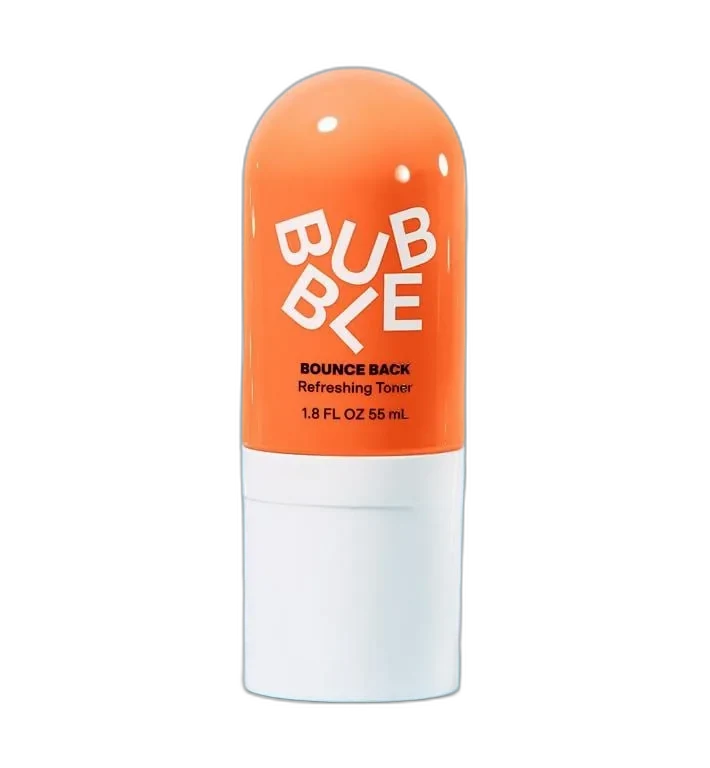
Bounce Back Refreshing Toner
Gen Z Skin Refresher
 Verified reviewer
Pros & cons.
- +Effortless spray format eliminates cotton pads and simplifies application
- +Niacinamide, willow bark, and green tea provide legitimate actives for oil control
- +Rose water base is hydrating and soothing without heaviness
- +Alcohol-free, oil-free, vegan, and cruelty-free with gentle preservatives
- +Lightweight enough for even very oily skin types to layer comfortably
- +Can double as a midday refresher spray over makeup
- −$17 for only 1.8 fl oz makes this one of the pricier toners per ounce
- −Bottle empties in 3-4 weeks with twice-daily use — rapid repurchase cycle
- −Contains citronellol, geraniol, and linalool from rose water — classified allergens
- −Active ingredient concentrations appear moderate — not a treatment-strength product
- −Spray nozzle consistency has been noted as an issue by some users
The full review.
Somewhere between the hyper-clinical world of adult skincare and the candy-scented body sprays of adolescence, there is a gap. Bubble Skincare walked into that gap in 2020 and set up shop, and the Bounce Back Refreshing Toner is a small, perfectly formed example of what they found there.
The product’s origin story matters because it explains the choices. Founder Shai Eisenman did not develop this toner in a lab and then figure out how to sell it. She spent a year talking to over ten thousand teenagers about what they wanted, needed, and would actually use. What emerged was a brand philosophy: effective ingredients, simple routines, appealing packaging, accessible prices. The Bounce Back toner embodies all four.
The format is the first smart decision. It is a spray. No cotton pads. No decanting. No multi-step complexity. You cleanse your face, you spritz this on, and you move on with your life. For a demographic that is still building skincare habits and has approximately zero patience for twelve-step routines, the spray format eliminates friction. It takes three seconds to use, which means it actually gets used.
The ingredient list is the second smart decision. Rosa Damascena flower water — real rose water, not rose fragrance — sits as the second ingredient, providing the base hydration and the light floral scent that makes the spritz feel like a moment of self-care rather than a clinical obligation. Glycerin and sodium PCA handle the humectant duties, drawing water into the skin in a format so lightweight that oily skin types will not even notice it is there.
Niacinamide appears in the mid-list, suggesting a moderate but present concentration. For a toner that sits on the skin for seconds before the next product goes on, a gentle niacinamide dose is appropriate — it provides oil regulation, mild brightening, and pore-minimizing benefits without the irritation that higher concentrations can cause on younger, sometimes still-developing skin barriers. This is not a treatment serum. It is a prep step that happens to carry some actives along for the ride.
Willow bark extract adds gentle exfoliating action through natural salicin — a salicylic acid precursor. For teens dealing with early breakouts and congested pores, this provides mild clarifying action without the aggressive drying that pure salicylic acid can cause. It is a measured approach: effective enough to do something, gentle enough to not do damage.
Green tea extract rounds out the active lineup with antioxidant protection and additional sebum-regulating properties. The echinacea extracts — three different forms are listed — add anti-inflammatory support, though their contribution at typical toner concentrations is likely more subtle than heroic.
The overall formula is clean by most reasonable definitions. Alcohol-free, oil-free, silicone-free, paraben-free, sulfate-free, vegan, and cruelty-free. The preservative system uses sodium benzoate and potassium sorbate — about as gentle as preservatives get. The only flags are citronellol, geraniol, and linalool, which are natural fragrance components from the rose water rather than added synthetic fragrances, but are still classified allergens in the EU.
Texturally, there is almost nothing to describe. It is water. It sprays as a fine mist, lands on the face as a light dew, and absorbs in seconds. There is no residue, no stickiness, no film. If you did not feel the cool mist hit your skin, you would not know anything happened. For oily skin types who recoil from anything that adds even a hint of weight or shine, this transparency is the point.
The rose water scent is pleasant without being insistent. It smells like flowers, not like a fragrance lab. It dissipates within a minute. For a brand targeting an audience that often has strong scent opinions, this restraint is wise.
Results are the gentle, cumulative kind. Nobody is going to spray this toner and experience a visible transformation. What happens over one to two weeks of consistent use is a gradual improvement in oil balance, a slight refinement in pore appearance, and a general sense that the skin looks a bit brighter and more settled. These are modest claims, and the product delivers modestly. For a toning step in a basic routine, that is exactly enough.
The criticism that has followed this product since launch is the size-to-price ratio. At seventeen dollars for 1.8 fluid ounces, you are paying just over nine dollars per ounce for what is essentially flavored water with actives. The spray format accelerates usage — a few generous spritzes per application, twice daily, and the bottle is empty in three to four weeks. For a teenager’s budget, that is a rapid burn rate. The per-ounce cost is higher than many toners from more established brands that offer larger volumes.
Bubble’s defense would likely center on the ingredient quality — real rose water, actual niacinamide, legitimate botanical extracts — rather than filler ingredients in a bigger bottle. That argument has merit. The formula is genuinely well-constructed. But for a brand positioning itself on accessibility, the small format creates a tension between ingredient quality and practical affordability that bigger bottles would resolve.
For what it is — a lightweight, spray-format toner with legitimate actives, pleasant aesthetics, and a formula that respects young skin — the Bounce Back toner does its job. It is not going to change anyone’s life. But it might help a fifteen-year-old develop a skincare habit that sticks, and in the context of building lifelong skin health, that has more value than any single product’s ingredient list can convey.
Ingredient analysis.
Full INCI list
Water (Aqua), Rosa Damascena Flower Water, Glycerin, Pentylene Glycol, Leuconostoc/Radish Root Ferment Filtrate, Sea Water, Sodium PCA, Niacinamide, Citric Acid, Salix Nigra (Willow) Bark Extract, Camellia Sinensis Leaf Extract, Echinacea Purpurea Extract, Echinacea Angustifolia Root Extract, Echinacea Purpurea Root Extract, Sodium Benzoate, Potassium Sorbate, Sodium Phytate, Citronellol, Geraniol, Linalool
Skin match.
The science.
The Science
The formula uses an active trio — niacinamide, willow bark, and green tea — to target young skin concerns. Niacinamide (vitamin B3) regulates sebum production. A 2006 double-blind clinical study in the Journal of Cosmetic and Laser Therapy shows topical niacinamide reduces sebum excretion rate and casual sebum levels after 4 weeks of use. Niacinamide also inhibits melanosome transfer from melanocytes to keratinocytes, which brightens post-inflammatory hyperpigmentation from acne.
Salix nigra (willow) bark extract contains salicin, a beta-glucoside. This undergoes enzymatic hydrolysis on the skin surface to release salicylic acid — a BHA with keratolytic and comedolytic properties. Because of the conversion rate, the effective salicylic acid concentration is lower than direct BHA application, but this gentler delivery works well for younger skin with developing barriers. The slower release reduces over-exfoliation risk while still clearing pores.
Camellia sinensis (green tea) leaf extract provides epigallocatechin-3-gallate (EGCG). This polyphenol has dual roles: it scavenges free radicals to protect against UV-induced oxidative damage and reduces sebum. A study in the Journal of Investigative Dermatology found EGCG suppressed sebum production in human sebocytes, justifying its use in oily, acne-prone skin formulations.
Sodium PCA is a pyrrolidone carboxylic acid sodium salt that makes up about 12% of the skin's natural moisturizing factor (NMF). As a humectant, it binds water at the skin surface more effectively than glycerin alone. This makes it useful in lightweight aqueous formulations where heavier humectants would ruin the sheer, weightless finish this toner aims to achieve.
Dermatologist Perspective
Dermatologists treating adolescent patients say the most important skincare step is the one teens actually use consistently. Board-certified dermatologists note that Bubble's approach — simple routines, pleasant textures, and approachable branding — aligns with compliance-focused dermatological practice for younger patients. The Bounce Back toner's ingredient profile is sound: niacinamide is a top recommendation for oily, acne-prone adolescent skin, and the gentle willow bark extract exfoliates without the irritation risk of stronger BHA products. Dermatologists would recommend this as a reasonable first toner for teens building a basic cleanser-toner-moisturizer-SPF routine, though the active concentrations are mild and should not replace targeted acne treatments for moderate to severe breakouts.
Where it fits in your routine.
After cleansing, hold the bottle 6-8 inches from your face and spritz 2-3 times with eyes closed. Let the mist settle on the skin for 30 seconds before you apply serum or moisturizer. Use it morning and evening. For a midday refresh, spritz lightly over makeup to rehydrate and reduce shine. The spray format applies directly, so no cotton pad is needed. Store at room temperature away from direct sunlight.
At $17 for 1.8 fl oz, this toner costs about $9.44 per ounce. This price is premium for mass-market toners that usually offer more volume for less. The small spray format makes the product run out fast; one bottle lasts 3-4 weeks. But the ingredient quality exceeds this price tier, using rose water, niacinamide, and botanical extracts instead of fillers. Walmart, CVS, and Ulta stock it, so it remains accessible despite the per-ounce premium. For teens and young adults starting a first skincare routine, choosing ingredient quality over volume makes sense if the budget allows.
Teens and young adults with oily or combination skin want a simple, effective toning step. This spray format works for anyone building a basic skincare routine with legitimate actives. It also suits adults with oily skin who want a lightweight, no-fuss toner.
Budget-conscious shoppers who want more product volume per dollar. Anyone with confirmed sensitivity to rose-derived fragrance components (citronellol, geraniol, linalool). Those seeking treatment-strength actives for moderate to severe acne — this toner provides supportive care, not targeted treatment.
Product details.
Ultra-lightweight water-based mist. It sprays as a fine, even fog. The mist absorbs almost instantly and leaves no residue or tackiness.
Rosa Damascena flower water gives a light, natural rose scent. It is pleasant, not overwhelming, and fades quickly.
Small spray bottle with a mist nozzle. It is compact and travel-friendly. Pink and pastel branding matches Bubble's Gen Z aesthetic.
Spritz delivers a fine, cooling mist that hydrates immediately. The rose water scent is light but noticeable. Skin feels balanced and slightly mattified within seconds. It causes no stinging, tingling, or adjustment period. The experience is simple and pleasant — exactly what the Gen Z target audience wants.
3-4 weeks with twice-daily use
12 months
All Year
The backstory.
Bubble Skincare launched in 2020 with a mission to make effective skincare accessible to younger consumers who were overwhelmed by an industry that seemed designed for an older, wealthier audience. Founder Shai Eisenman spent over a year in focus groups with teens and young adults before developing the line. The Bounce Back toner was part of the brand's early offerings, designed to be the simple, refreshing toning step that younger consumers would actually enjoy using rather than treating as a chore.
About Bubble Skincare
Emerging Brand (2–5 years)Shai Eisenman founded Bubble Skincare in 2020 after consulting 10,000 young consumers about skin concerns. The brand is dermatologist-backed, vegan, and cruelty-free. It has grown to over 9,000 retail doors, including Walmart, CVS, and Ulta. Bubble Skincare uses well-studied ingredients, but the brand has a limited track record and lacks independent clinical validation for its specific products.
Common myths.
Toners are unnecessary — skip them entirely.
A well-formulated toner like this one isn't essential, but it delivers actives (niacinamide, willow bark) in a lightweight vehicle that preps the skin to absorb subsequent products better. The spray format also hydrates without the weight of a serum. This works well for oily skin types who want active benefits without heaviness.
Teen skincare brands are just diluted versions of adult products.
Bubble's formulations use well-studied ingredients found in premium adult skincare — niacinamide, green tea extract, sodium PCA — at concentrations for younger skin. The ingredient quality is legitimate; branding and pricing make it Gen Z-accessible, not dumbed-down chemistry.
FAQ.
Is Bubble Skincare Bounce Back Toner good for oily skin?
Yes — the formula uses niacinamide to regulate oil, willow bark extract to clear pores gently, and green tea to control sebum. The lightweight spray adds hydration without heaviness. This works for oily and combination skin types that need balance without greasiness.
How do you use the Bounce Back Toner spray?
Hold the bottle 6-8 inches from your face and spritz 2-3 times onto clean skin after cleansing. Let it absorb for 30 seconds, then apply your serum and moisturizer. Use it as a midday refresher over makeup to rehydrate and reduce shine.
Does this toner contain alcohol?
No — the Bounce Back Toner is alcohol-free, oil-free, silicone-free, paraben-free, and sulfate-free. The formula is vegan and cruelty-free. Sodium benzoate and potassium sorbate act as the preservative system; these are some of the gentlest preservatives available.
Is Bubble Skincare good for sensitive skin?
The formula is gentle and well-tolerated, but contains citronellol, geraniol, and linalool — natural fragrance components from the rose water — which are classified allergens. Most sensitive skin users tolerate it well, but those with confirmed fragrance sensitivity should patch test first.
What age group is Bubble Skincare designed for?
Bubble targets teens and young adults, but the ingredients work for all ages. The formulations use well-studied actives like niacinamide and green tea at concentrations appropriate for younger skin developing its barrier. The toner is equally effective for adults with oily or combination skin.
Why is the bottle so small for the price?
At 1.8 fl oz for $17, this toner costs more per ounce than most in its category. The compact spray format works for portability and on-the-go use, but twice-daily use makes it run out fast—usually lasting 3-4 weeks. Check if the brand offers larger sizes or value sets for a fuller-size option.
What the community says.
"Refreshing mist feels great on skin"
"Doesn't leave skin sticky or tacky"
"Rose water scent is pleasant and light"
"Good for oily skin and oil control throughout the day"
"Small bottle for the price — runs out quickly"
"Spray nozzle can be inconsistent"
"Niacinamide concentration seems low"
"Not much noticeable difference for some users"