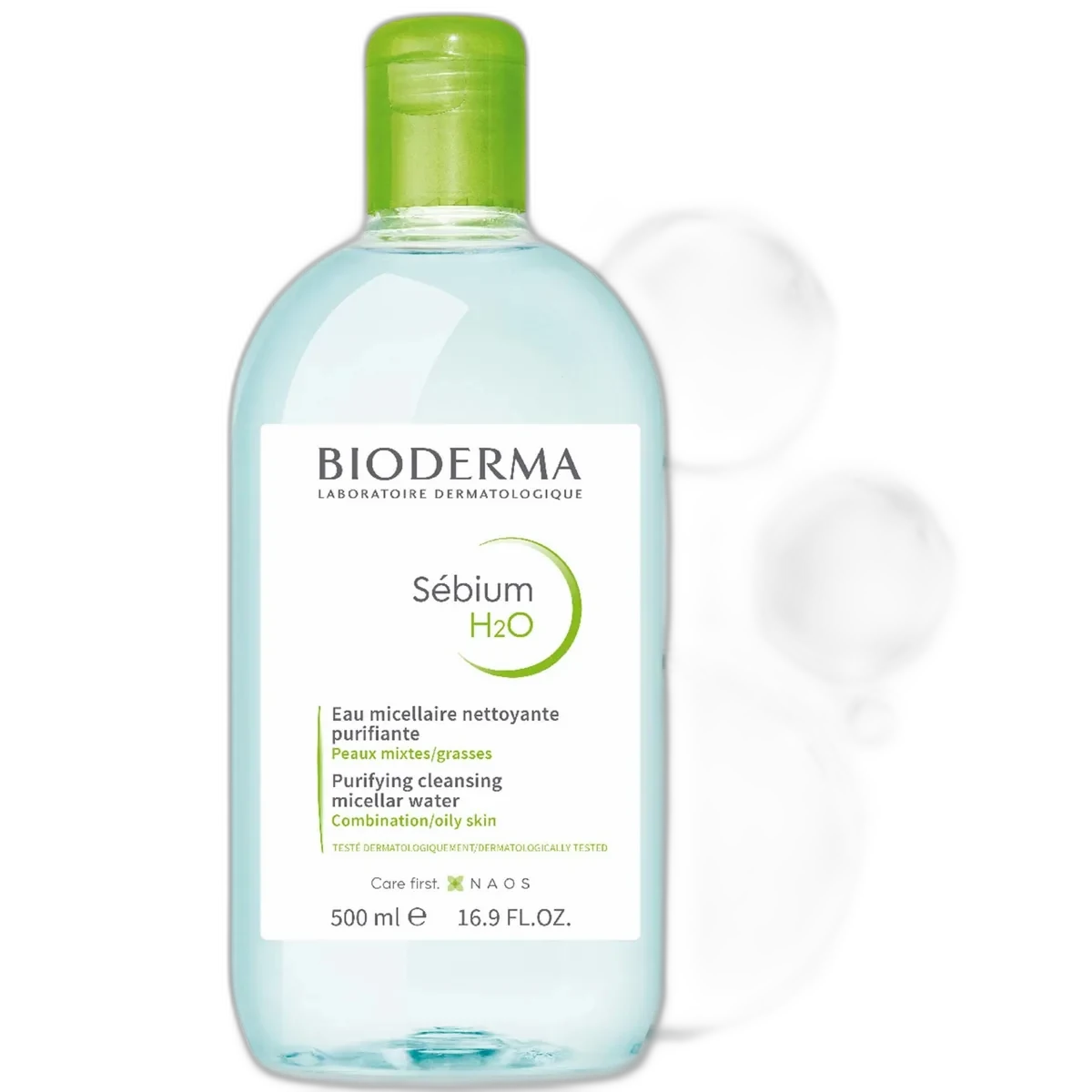
Sebium H2O Micellar Water
Oily Skin's Micellar Match
 Verified reviewer
Pros & cons.
- +Zinc gluconate and copper sulfate provide active purifying benefits during cleansing
- +Fluidactiv technology targets squalene oxidation to prevent comedogenic sebum
- +Biomimetic micelle technology cleanses without barrier disruption or rebound oiliness
- +D.A.F. prebiotic complex supports tolerance in sensitized oily skin
- +Minimalist 15-ingredient formula with no unnecessary fillers
- +Versatile as morning refresher, first cleanse step, or mid-day oil control
- +Non-comedogenic with zero comedogenic ingredients identified
- −Contains fragrance — limiting for fragrance-sensitive users with oily skin
- −Not effective as sole removal step for heavy waterproof makeup
- −Narrower skin type suitability than the Sensibio H2O counterpart
- −Pump bottle version frequently unavailable despite demand
- −May feel slightly drying on combination skin's dry zones without follow-up moisturizer
The full review.
People with oily skin face a common frustration: products often punish pores. Foaming cleansers leave skin dry like a riverbed. Astringent toners sting. Mattifying primers turn faces into plaster casts by noon. This category treats oily skin as a problem to solve aggressively rather than a skin type to manage intelligently.
Bioderma took a different approach. When the French pharmacy brand moved its micellar water technology from sensitive skin (Sensibio) to oily skin, it did not just add a green label to the same formula. Sebium H2O is a different product with a different mission: cleanse gently while addressing the bacterial and sebum factors that cause oiliness.
The key difference is the fourth and fifth ingredients: zinc gluconate and copper sulfate. These are not marketing garnishes. Zinc gluconate has antibacterial properties against Cutibacterium acnes (the bacterium most associated with inflammatory acne) and published research shows it helps regulate sebum production. Copper sulfate adds antiseptic and wound-healing properties. Together, they create a mineral purifying system that works during the cleansing step—something almost no other micellar water does.
The formula also uses Bioderma’s patented Fluidactiv technology to target squalene oxidation. When squalene in natural sebum oxidizes, it becomes thick, sticky, and comedogenic, which clogs pores and feeds breakouts. Fluidactiv keeps sebum in a fluid, non-comedogenic state. This addresses oily skin at the molecular level instead of just blotting the surface.
Using Sebium H2O feels like using its Sensibio sibling—it feels like water. The liquid has a slight blue-green tint from the copper sulfate and a light, fresh fragrance that vanishes in seconds. Sweep a saturated cotton pad across your face to remove makeup, sunscreen, and oil. The skin feels balanced and clean afterward, not stripped or oily, with a subtle cooling sensation.
The fragrance is Sebium H2O’s most divisive feature. In a formula built with pharmaceutical precision, the parfum feels like an odd concession. For most oily-skinned users, the low concentration listed last on the INCI is a non-issue. However, users with fragrance sensitivities may prefer the fragrance-free Sensibio H2O, even though it lacks these purifying actives.
Sebium H2O is a versatile daily cleanser for oily and combination skin. In the morning, two cotton pads refresh the skin and remove overnight sebum without a full face wash. In the evening, it works as an effective first cleanse to dissolve sunscreen and light-to-moderate makeup before a gel or foam cleanser. It also works as a mid-day refresh to remove sweat and oil when a sink is unavailable.
The 15-ingredient formula is longer than Sensibio’s 10 ingredients but remains restrained. Every ingredient has a purpose: the micelle-forming surfactant, purifying minerals, Ginkgo biloba for mattifying antioxidant support, the D.A.F. prebiotic complex for tolerance, the citric acid/sodium citrate pH buffer system, and the preservative. There is no ingredient padding or trendy botanicals.
Sebium H2O excels at removing everyday foundation, sunscreen, and light eye makeup, but it is not a standalone solution for full-coverage, waterproof, or long-wear products. Use it as an intelligent first cleanse step.
At approximately 1 for 500 mL, the price matches Sensibio H2O. It costs roughly -7 per month as both a gentle cleanser and a purifying treatment. For oily, acne-prone skin sensitized by aggressive products, this breaks the cycle of irritation.
Sebium H2O will not transform oily skin overnight. Instead, it cleans skin consistently without the stripping effect of conventional cleansers. In a category that treats oil as the enemy, this approach works with the skin rather than against it.
Formula
PM routine
Ingredient analysis.
Full INCI list · pH 5.5
Aqua/Water/Eau, PEG-6 Caprylic/Capric Glycerides, Sodium Citrate, Zinc Gluconate, Copper Sulfate, Ginkgo Biloba Leaf Extract, Mannitol, Xylitol, Rhamnose, Fructooligosaccharides, Propylene Glycol, Citric Acid, Disodium EDTA, Cetrimonium Bromide, Fragrance (Parfum)
Skin match.
The science.
The Science
Sebium H2O uses mineral actives for antibacterial and sebum-regulating effects, paired with Bioderma's biomimetic micellar technology.
Zinc gluconate is a well-studied ingredient for acne-prone skin. Dreno et al. published a landmark study in Acta Dermato-Venereologica (1989) showing that zinc gluconate reduces inflammatory acne lesions. A systematic review and meta-analysis by Yee et al. in Dermatologic Therapy (2020) confirmed that zinc levels relate to acne severity and that zinc supplementation works for acne management. Most clinical research examines oral zinc, but topical zinc provides localized antibacterial action against C. acnes and mild astringent properties to regulate surface sebum.
Copper sulfate adds antiseptic properties. The zinc-copper combination in this formula creates a dual mineral purifying system — zinc targets bacterial proliferation while copper provides antimicrobial and wound-healing support. This mineral approach to oily skin management differs from the harsh surfactant-based stripping found in most acne cleansers.
Bioderma's Fluidactiv patent technology addresses squalene oxidation. This process turns the squalene naturally present in sebum from a fluid, non-comedogenic lipid into a thick, sticky substance that clogs pores and forms comedones. Research in the Journal of Investigative Dermatology shows that oxidized squalene is more comedogenic than its non-oxidized form, making this oxidation pathway a target for oily skin management.
The D.A.F. complex (fructooligosaccharides, mannitol, xylitol, rhamnose) provides prebiotic support for the skin microbiome. This matters for oily and acne-prone skin, where disrupted microbiome balance contributes to and results from acne. Xylitol decreases transepidermal water loss, so purifying cleansing does not sacrifice barrier hydration.
References
- Low doses of zinc gluconate for inflammatory acne — Acta Dermato-Venereologica (1989)
Dermatologist Perspective
Dermatologists often note that patients with oily and acne-prone skin frequently over-cleanse. Aggressive surfactant-based cleansers strip the skin barrier, which triggers compensatory sebum production and creates a cycle of oiliness and sensitivity. Board-certified dermatologists recommend Sebium H2O for a gentle-but-effective approach — the micellar format avoids barrier disruption while the zinc gluconate provides the antibacterial and sebum-regulating benefits oily skin needs. This product is a common first cleanse step in double-cleansing routines for acne patients using prescription retinoids or other irritating topical treatments.
Where it fits in your routine.
Soak a cotton pad with Sebium H2O. Sweep it across the face, targeting the T-zone and oily areas. Use a new pad for each eye when removing eye makeup. Repeat with fresh pads until the pad is clean. You do not need to rinse, but people with combination skin can rinse drier areas with water. Use Sebium H2O as a morning cleanser and the first step of an evening double-cleanse routine. Store at room temperature.
At 0.99 for 500 mL, Sebium H2O costs the same as its Sensibio sibling. It offers a monthly value of about -7 with twice-daily use. Sebium H2O does more than cleanse; the zinc-copper purifying system and Fluidactiv technology provide treatment-level benefits, combining two routine steps into one. A 100 mL travel size at .99 lets users trial the product before buying the full size. For oily skin damaged by harsh cleansers, the savings from stopping the strip-and-rebound cycle may exceed the price of Sebium H2O.
Oily and combination skin types need a gentle, effective daily cleanser that controls oil without stripping. It works for acne-prone individuals using prescription retinoids or other drying treatments who want to avoid irritation. It also works as a no-rinse option for morning cleansing or mid-day oil refresh.
People with fragrance sensitivities should use the fragrance-free Sensibio H2O, which lacks the purifying actives. This formula is unnecessary and potentially drying for dry skin types. This micellar water alone won't remove heavy waterproof makeup in one step.
Product details.
The consistency is water-like with a slight blue-green tint from the copper sulfate. It has no viscosity or gel quality and behaves like water on a cotton pad.
The fragrance is subtle, fresh, and slightly floral-cucumber. It has more scent than the fragrance-free Sensibio H2O, but the scent fades fast and is undetectable once on the skin.
Clear plastic bottle has a green-tinted cap and Sebium line branding. It comes in travel (100 mL) and standard (500 mL) sizes. A pump-top version exists but often lacks stock.
No adjustment period is needed. Skin feels clean, refreshed, and slightly mattified after one use. The zinc and copper provide a light cooling sensation without tingling. Oily skin users see less morning shine within the first week.
3-4 months with twice-daily use on a 500 mL bottle.
9 months
spring summer
The backstory.
Developed as the oily-skin counterpart to Bioderma's iconic Sensibio H2O, Sebium H2O applied the same biomimetic micelle technology to a different skin concern. Where Sensibio focused on tolerance for reactive skin, Sebium added purifying minerals to create a cleanser that addresses the root causes of oily, acne-prone skin — not just its surface symptoms.
About Bioderma
Legacy Brand (20+ years)Pharmacist-biologist Jean-Noël Thorel founded Bioderma in 1977 in Aix-en-Provence, France. The brand invented micellar water technology in 1995 and has nearly five decades of pharmacy-channel distribution and dermatological validation. Bioderma uses an ecobiology approach to work with the skin's natural biology.
Common myths.
Oily skin uses harsh, stripping cleansers to control oil production.
Over-cleansing triggers compensatory sebum production. This micellar water uses zinc gluconate to regulate sebum at the source. The gentle micelle technology avoids the barrier disruption that causes rebound oiliness, which is a smarter approach than stripping the surface.
Micellar water is too gentle to properly cleanse oily skin.
Sebium H2O's biomimetic micelles capture excess sebum. The zinc-copper mineral complex provides antibacterial action most traditional cleansers lack. Clinical testing shows 93% elimination of microparticles and 95% cleansing gentleness.
FAQ.
What is the difference between Bioderma Sebium H2O and Sensibio H2O?
Sebium H2O uses zinc gluconate and copper sulfate to purify and control sebum in oily and acne-prone skin; it has a light fragrance. Sensibio H2O is fragrance-free and uses cucumber extract to soothe sensitive and reactive skin. Both use the same biomimetic micelle technology but target different skin concerns.
Is Bioderma Sebium H2O good for acne?
Yes — zinc gluconate provides antibacterial action against acne-causing C. acnes bacteria, and the Fluidactiv technology in this formula prevents sebum oxidation that clogs pores. It cleanses without the barrier disruption that triggers rebound oiliness, making it a smart choice for acne management in a complete routine.
Does Bioderma Sebium H2O contain fragrance?
Yes, Fragrance (Parfum) is the last ingredient on the INCI list. The scent is subtle and fresh, then fades seconds after application. People with fragrance sensitivities can use the fragrance-free Sensibio H2O, but it lacks the purifying zinc and copper actives.
Can I use Bioderma Sebium H2O without rinsing?
Yes — like all Bioderma micellar waters, Sebium H2O does not require rinsing. The formula stays on the skin without irritation, and the zinc gluconate provides antibacterial benefits after application. Combination skin types may prefer to rinse drier areas.
Is Bioderma Sebium H2O fungal acne safe?
The formula is minimalist. It lacks the oils or fatty acids that feed Malassezia yeast and is clinically tested as non-comedogenic. However, the fragrance inclusion concerns some fungal acne-prone individuals who prefer completely fragrance-free products. The Sensibio H2O is a safer choice for fungal acne.
What the community says.
"Removes makeup effectively without drying"
"Noticeably controls excess oil and shine"
"Gentle enough for daily use on sensitized oily skin"
"Clean refreshing feeling without tightness"
"Minimalist 15-ingredient formula"
"Non-comedogenic in practice"
"Contains fragrance — unnecessary for a treatment cleanser"
"Bottle dispenses product too quickly due to watery consistency"
"Can feel slightly drying on non-oily skin types"
"More expensive than drugstore micellar waters"
"Pump bottle version frequently out of stock"
"Not as effective on very heavy or waterproof makeup"
People also looked at.