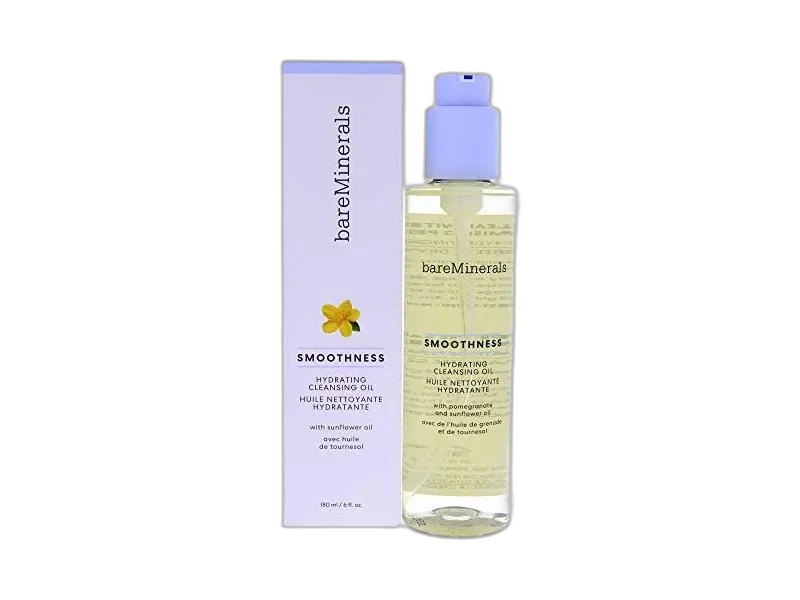
Smoothness Hydrating Cleansing Oil
Gentle Double-Cleanse Starter
 Verified reviewer
Pros & cons.
- +Plant-oil blend leaves skin soft and non-tight after rinsing
- +Emulsifies cleanly with water without leaving residue
- +Pump dispenser controls dosage precisely
- +Removes long-wear makeup and mineral sunscreen in under a minute
- +Gentle enough for nightly use without over-cleansing
- +Accessible at Sephora and Ulta for first-time double cleansers
- −Fragrance with limonene, linalool and citral limits sensitive-skin use
- −More expensive per ounce than Japanese category benchmarks
- −Heavy glass bottle is impractical for travel
- −Not fungal-acne safe due to plant oil content
- −Formulation doesn't meaningfully improve on established J-beauty options
The full review.
The cleansing oil category has a strange map. For decades, DHC, Shu Uemura, Kose, and Fancl dominated because Japanese skincare culture codified double cleansing long before it reached most Americans. When double cleansing hit Western beauty blogs in the mid-2010s, many consumers wanted it but avoided Japanese retailers due to slow shipping, intimidating interfaces, or non-English packaging. Western brands filled this gap, and bareMinerals’ Smoothness Hydrating Cleansing Oil is a pleasant example of this trend. The ingredient list is more interesting than most mass-market cleansing oils. Water is the first ingredient—unusual since most pure cleansing oils skip the aqueous phase—followed by an ambitious oil cocktail: jojoba, squalane, coco-caprylate, hydrogenated polydecene, sunflower, safflower, borage seed oil, and cucumber seed oil. The borage inclusion is the most noteworthy part. Borage is a top natural source of gamma-linolenic acid, which has strong barrier-support data and rarely appears this prominently in a rinse-off. Alongside linoleic-acid-rich sunflower and safflower, the oil phase does more than cleanse; it briefly deposits a fatty-acid profile that suits dehydrated, compromised skin. Squalane keeps the slip light; coco-caprylate and C9-12 alkane ensure effortless spread; sorbeth-30 tetraisostearate handles emulsification with water. Sea salt and pomegranate flower extract support the “mineral-rich” marketing, which is more branding than function. In use, the product behaves like a good cleansing oil. One or two pumps coat dry skin without dragging. A 30-to-45-second massage dissolves foundation, tinted sunscreen, long-wear eyeliner, and sebum into a clear oil layer. Add water, massage for fifteen seconds, and the formula turns milky and rinses without film. Post-rinse, skin feels soft and faintly cushioned rather than squeaky, which is why people use a first-cleanse oil instead of a harsh single detergent cleanser. Fragrance and retail context add complexity. The “clean beauty” label here allows scent, and the limonene and linalool in the formula are not subtle. This is a dealbreaker for fragrance-averse users, and the risk profile is higher for sensitive skin than a fragrance-free J-beauty alternative. At $28 for 180ml, the price is reasonable among Western clean-beauty cleansing oils, but the math changes against category benchmarks. DHC Deep Cleansing Oil costs roughly $32 for 200ml, uses a well-tolerated olive-oil base, and has a global following after almost three decades of iterations. Shu Uemura offers a more luxurious experience at a higher price. Kose Softymo costs under $15 for 200ml if you only care about function. Western-brand cleansing oils occupy a narrow value band; this one justifies its place with a more ambitious oil stack rather than a pricing edge. bareMinerals’ Smoothness Hydrating Cleansing Oil succeeds through accessibility and a thoughtful base. If you are a Sephora shopper starting double cleansing, want to smell the bottle before buying, and want the barrier-support benefits of borage and GLA, this is a real option. It will not embarrass a DHC fan. It does its job, leaves skin softer than most rivals in its tier, and replaces stripping cleansers. For dry and normal skin, that is a decent outcome at a fair price.
Ingredient analysis.
Full INCI list
Water (Aqua/Eau), Simmondsia Chinensis (Jojoba) Seed Oil, Squalane, C9-12 Alkane, Coco-Caprylate/Caprate, Hydrogenated Polydecene, Pentaerythrityl Tetraethylhexanoate, Helianthus Annuus (Sunflower) Seed Oil, Carthamus Tinctorius (Safflower) Seed Oil, Borago Officinalis Seed Oil, Cucumis Sativus (Cucumber) Seed Oil, Sorbeth-30 Tetraisostearate, Fragrance (Parfum), Phenoxyethanol, Tocopherol, Limonene, Linalool, Punica Granatum Flower Extract, Sea Salt (Maris Sal/Sel Marin)
Skin match.
The science.
The Science
Cleansing oil chemistry is straightforward. It works via lipid solubility: oils dissolve sebum, silicone-based sunscreen filters, and long-wear pigment binders that water-based cleansers miss. The sorbeth-30 tetraisostearate in this formula emulsifies the mixture when water hits it, allowing a clean rinse. The specific oil blend is more interesting. Jojoba is a liquid wax ester rather than a true triglyceride; this gives it a silky, non-greasy feel common in cleansing oil formulations. Squalane is a light, non-comedogenic lipid that mimics a component of skin sebum. Sunflower and safflower oils contain high linoleic acid and have peer-reviewed barrier-support data in leave-on studies; in a rinse-off product, they mostly soften the residual feel rather than providing meaningful barrier intervention. Borage seed oil is the most ambitious ingredient: it is a rich plant source of gamma-linolenic acid, which studies link to supporting epidermal lipid synthesis in conditions like atopic dermatitis. A 2003 review in the Journal of the American Academy of Dermatology called GLA's evidence for inflammatory skin conditions promising but not definitive; its value in a rinse-off product is smaller than in a leave-on. Cucumber seed oil adds more linoleic acid. Sea salt and pomegranate flower extract exist at levels too low for meaningful function—they serve the brand's sensory and marketing story. This is a well-built cleansing oil with a better-than-average fatty acid profile, but it does not break new ground.
Dermatologist Perspective
Dermatologists often endorse the double-cleanse method for patients wearing daily sunscreen or long-wear makeup, as the two-step process removes oil-soluble residue better than a single water-based cleanser. This plant-oil-forward first cleanse is a common recommendation for dry and normal skin types because it is less stripping than detergent-heavy single cleansers. Dermatologists also note that fragrance in a rinse-off cleanser is lower-risk than in a leave-on product, though patients with rosacea, perioral dermatitis, or reactive skin often use fragrance-free cleansing oils. Eczema-prone skin may benefit from the soft after-feel of this product, but dermatologists suggest patch testing on the inner forearm before full-face use.
Where it fits in your routine.
Apply two to three pumps to dry skin and hands. Water activates the emulsifiers too early and lowers cleansing efficacy. Massage in gentle circles across the face for 30 to 45 seconds. Focus on areas with sunscreen, makeup, or sebum buildup. Close your eyes while working the lash line to dissolve mascara and eyeliner. Wet your fingertips and massage for another 15 seconds until the oil turns milky, then rinse with lukewarm water. Follow with a water-based second cleanser like a low-pH gel to finish the double cleanse. Use only in the evening; morning cleansing rarely requires an oil step.
At $28 for 180ml, this lasts three to four months with nightly first-cleanse use. This price is reasonable for a Western clean-beauty cleansing oil. However, J-beauty benchmarks offer better comparisons: DHC Deep Cleansing Oil provides a similar experience and per-ounce price with a more iterated formulation, while Kose Softymo oils cost much less for users prioritizing function. You pay for retail accessibility, clean-beauty positioning, and a nicer sensory experience, not a formulation edge. The value is acceptable for shoppers who buy from Sephora and Ulta. Shoppers who order from Japanese retailers find better per-dollar options.
Dry, normal, or combination skin types new to double cleansing can use this accessible, pleasant first-cleanse oil found at mainstream US retailers. It is a reasonable pick for users who find drugstore makeup removers stripping and want a gentler nightly routine without ordering from Japanese brands.
Users with oily, fungal-acne-prone skin who prefer gel cleansers or avoid fragrance should consider J-beauty classics like DHC or Kose Softymo. These offer the same core experience at lower per-ounce prices. Travelers needing a lightweight bottle should look elsewhere.
Product details.
Medium-weight golden oil spreads easily and turns into a soft milky emulsion when water is added.
Soft, faintly green botanical with citrus top notes — noticeably fragranced.
Tall glass bottle with a pump. The pump controls dosing well, but the glass makes the bottle heavy and prone to cracking if dropped.
The first use feels silky and slightly warm. It removes full makeup and SPF in 45-60 seconds, leaving a clean, non-squeaky finish. Skin feels soft, not tight.
3-4 months with nightly use as a first cleanse.
12 months
All Year
The backstory.
bareMinerals expanded its skincare range after the Shiseido Americas acquisition to capture clean-beauty shoppers moving away from traditional drugstore face washes. The Smoothness Hydrating Cleansing Oil was designed as an accessible entry point to double cleansing for Sephora customers who'd heard about the J-beauty two-step routine but didn't want to order directly from Japanese brands.
About bareMinerals
Established Brand (5–20 years)bareMinerals entered the US market in 1995 as a mineral makeup pioneer and grew into clean-positioned skincare under Shiseido Americas. This cleansing oil uses the gentler, mass-market tier of the Japanese-parent's formulation capabilities.
Common myths.
Cleansing oils clog pores.
Cleansing oils emulsify and rinse off completely, so clogging is rare if you wash the product off fully. Residue on skin causes issues, not the oil itself.
Oily skin should avoid all cleansing oils.
Oily-skin users often benefit from a gentle first-cleanse oil to dissolve sebum and sunscreen, provided they follow with a water-based second cleanse. Residue is the problem, not the cleansing method.
What the community says.
"removes makeup effortlessly"
"hydrating post-cleanse feel"
"nice spa-like experience"
"no stinging near eyes"
"fragrance too strong for some"
"bottle is heavy"
"pricey vs J-beauty equivalents"
"leaves slight residue if not rinsed well"
People also looked at.