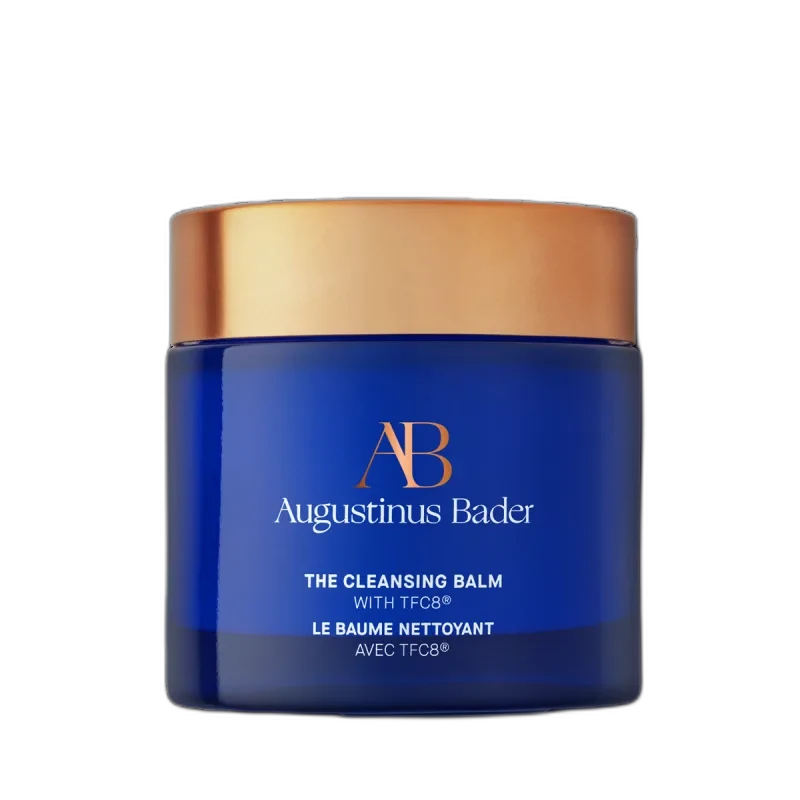
The Cleansing Balm
Editorial Favorite With a Price Tag to Match
 Verified reviewer
Pros & cons.
- +Genuinely elegant texture that melts cleanly into skin
- +Removes SPF and long-wear makeup in a single pass
- +Emulsifies and rinses cleanly with no residue
- +Vegan formulation without beeswax or animal-derived emulsifiers
- +Thoughtful oil selection that suits dry and mature skin
- +Beautiful jar packaging that holds up on a vanity
- −Essential oil fragrance is a deal-breaker for reactive and rosacea-prone skin
- −Price is difficult to justify on cleansing performance alone
- −TFC8 has limited effect in a rinse-off product
- −Glass jar is breakable and heavy to travel with
- −No travel or deluxe size for testing before committing
The full review.
A luxury cleansing balm is an interesting contradiction. The thing it actually does — dissolving sebum and long-wear makeup with a blend of oils — costs the formulator about three dollars in raw materials and can be accomplished by DHC’s sunflower-oil Deep Cleansing Oil, which retails for under thirty. So when a brand like Augustinus Bader asks sixty-five dollars for a cleansing balm, they’re not really selling the cleansing. They’re selling the experience, the jar, the fragrance notes, the editorial coverage, the association with a particular kind of skincare consumer. The honest question, then, is whether the experience earns its price, and whether the cleansing itself is actually good.
The Cleansing Balm launched in 2021 as one of the first additions to the Augustinus Bader line that wasn’t a leave-on treatment. This matters because the brand was built on TFC8 — Trigger Factor Complex 8, Professor Bader’s signature amino acid and small-molecule blend that grew out of his academic work on wound healing at the University of Leipzig. TFC8 has a genuinely interesting research history in its original context of hydrogel wound dressings. In a cleansing balm, though, its role is structurally limited. You’re massaging this onto your face for sixty seconds and then rinsing it down the drain. Whatever TFC8 is doing in there, it isn’t doing it at the same magnitude it does in a cream you leave on overnight. This is not a knock on the complex itself — it’s just an honest assessment of contact time.
What the balm does, it does well. The base is sunflower oil, which has one of the better linoleic-acid profiles among carrier oils and tends to play nicely with sensitive skin. Add caprylic/capric triglyceride, rosehip oil, avocado oil, squalane, a soft emulsifier system, and you have a cleansing balm that melts makeup and SPF in one pass, emulsifies cleanly when you add water, and leaves skin soft rather than stripped. The texture is the kind of soft malleable balm that doesn’t require aggressive scooping. The scent is rose with a citrus lift, driven by actual essential oils rather than synthetic fragrance, which gives it an upmarket olfactory signature that the drugstore competition genuinely can’t match.
The essential oil blend is also the product’s weakness. Limonene, linalool, citral, geraniol, and citronellol are all on the INCI — these are natural fragrance compounds, but they’re also among the most common skin sensitizers. If you’re rosacea-prone, barrier-compromised, or sitting in the “I react to everything” camp, this is not your cleansing balm. There are fragrance-free options from pharmacy brands and K-beauty that will serve you better, and you’ll save money in the process.
Texture, scent, packaging — it all hits the marks. The frosted glass jar looks expensive on a vanity because it is expensive. The balm doesn’t harden into that frustrating solid block that some butter-heavy competitors do. It emulsifies into a light milky lather when you add water, and it rinses without leaving a film, which is one of the harder things for an oil cleanser to get right. People with normal to dry skin report that it leaves their face genuinely comfortable, even without a second cleanse. People with oilier skin tend to follow it with a low-pH gel cleanser, which is the standard double-cleanse move anyway.
The value question is where this gets complicated. For sixty-five dollars you could buy a three-month supply of a functionally identical K-beauty balm, plus a barrier-repair cream from the same savings. The premium here isn’t paying for superior cleansing — it’s paying for the vegan credentials (which matter to a real audience), the editorial halo, the sensorial presentation, and the fact that it slots into an Augustinus Bader routine that the buyer is likely already invested in. None of those are invalid reasons to buy something. They just aren’t efficacy-based reasons.
Where this makes the most sense is for someone who already uses The Rich Cream or The Cream and wants to close the loop with the brand’s cleanser, or for someone who values the ritual aspect of skincare enough that a luxury cleansing experience is part of what they’re buying. Where it makes the least sense is for someone looking for a sensible first-cleanse option who happens to have heard about this balm from a magazine. In that case, the answer is almost certainly an unscented sunflower-oil cleanser at a tenth of the price.
Ingredient analysis.
Full INCI list
Helianthus Annuus (Sunflower) Seed Oil, Caprylic/Capric Triglyceride, PEG-20 Glyceryl Triisostearate, Cetyl Ethylhexanoate, Cetyl Palmitate, Olea Europaea (Olive) Fruit Oil, Coco-Caprylate/Caprate, Rosa Canina Fruit Oil, Persea Gratissima (Avocado) Oil, Glycine Soja (Soybean) Oil, Squalane, Tocopherol, Bisabolol, Rosa Damascena Flower Oil, Citrus Aurantium Dulcis (Orange) Peel Oil, Citrus Limon (Lemon) Peel Oil, Glycerin, Water, Hydrolyzed Rice Protein, Hydroxyphenyl Propamidobenzoic Acid, Hydrolyzed Hyaluronic Acid, Sodium Hyaluronate, Hydroxymethoxyphenyl Decanone, Arginine, Glycine, Alanine, Glutamic Acid, Serine, Valine, Proline, Threonine, Isoleucine, Histidine, Phenylalanine, Aspartic Acid, Limonene, Linalool, Citral, Geraniol, Citronellol
Skin match.
The science.
The Science
The active cleansing mechanism in any oil-based balm relies on the principle that oil dissolves oil — sebum, silicone-based sunscreens, and waterproof makeup are lipophilic and resist water-based cleansers. Research in cosmetic science has consistently shown that oil cleansers outperform surfactant-only cleansers for removing heavy makeup and photostable organic sunscreens, while being less disruptive to the stratum corneum's lipid layer. The specific oils in this formula — sunflower, rosehip, avocado, olive, and soybean — are all characterized in the literature for their fatty acid profiles and barrier compatibility. Sunflower oil in particular has a linoleic-acid-dominant profile, which research has linked to improved barrier function compared to oleic-acid-dominant oils like olive or high-oleic sunflower.
The TFC8 complex, which includes arginine, glycine, glutamic acid, and other amino acids, was developed from Professor Augustinus Bader's academic work on hydrogel-based wound healing at the University of Leipzig. The foundational research, published in journals including Biomaterials and Cell Transplantation, focused on scaffolding and hydrogel systems for tissue regeneration — not on cosmetic topical delivery. The translation from that clinical context to leave-on skincare is the brand's unique proposition, and it's an area where independent efficacy studies of the finished cosmetic products specifically are still limited.
In a cleansing balm specifically, the relevance of TFC8 is structurally constrained by contact time — the formula is on the skin for under two minutes before being rinsed off, limiting the extent to which any leave-on mechanism could plausibly operate. This is not a criticism of the complex itself, but a reminder that ingredient science must be evaluated in the context of the specific product format.
Dermatologist Perspective
Dermatologists generally support oil-based cleansing balms as an effective first step in a double-cleansing routine, particularly for removing photostable sunscreens and long-wear makeup that surfactant cleansers struggle to break down. Board-certified dermatologists note that barrier-compatible oils like sunflower and squalane are usually well-tolerated even on sensitive skin, which makes a balm like this a reasonable pick on texture alone. The more common concern raised in clinical commentary is the inclusion of essential oils — rose, citrus peel, and their fragrance compounds are recognized contact sensitizers, and patients with rosacea, perioral dermatitis, or eczema are typically steered toward fragrance-free alternatives. The broader dermatology community treats TFC8 with cautious interest: the academic origin is respected, but rigorous independent efficacy studies of the finished commercial products remain limited, and recommendations tend to be based on the overall formulation rather than the trademarked complex.
Where it fits in your routine.
Use the included spatula or a clean fingertip to scoop a pea-to-almond-sized amount. Warm the balm between your palms and massage it onto dry skin for 45-60 seconds. Focus on areas with sunscreen, eye makeup, and heavy sebum. Wet your hands and massage to turn the balm into a light milky lather, then rinse with lukewarm water. Use a gentle water-based cleanser as the second step of a double-cleansing routine. Use once daily in the evening; you do not need morning use unless you sleep in heavy products.
At sixty-five dollars for 90ml, this is one of the market's most expensive cleansing balms. The price makes sense for specific buyers: those who want vegan luxury skincare, already use the Augustinus Bader ecosystem, and view cleansing as a sensorial ritual instead of a functional step. For others, the math fails. A twenty-dollar K-beauty or drugstore balm removes the same makeup and SPF, and those savings buy an effective serum or treatment where actives have real contact time. As an emerging brand without decades of independent validation, this premium relies on editorial coverage and aspirational positioning rather than clinical substance.
Users who already own the Augustinus Bader line and want a matching cleanser. Vegan skincare enthusiasts who value sensorial quality. Dry to normal skin types seeking a gentle first-cleanse that includes natural essential oils.
People with rosacea, eczema, a compromised barrier, or sensitivity to natural fragrance compounds. Value-focused buyers seeking equivalent cleansing performance for less. People with fungal acne, as the fatty acid content can feed malassezia.
Product details.
Soft, malleable balm that warms into a silky oil on contact with skin
Subtle rose with a bright citrus lift, driven by natural essential oils
Thick frosted glass jar with a metal lid — looks good on a vanity, but is heavier and more breakable than a typical cleansing balm
The first use feels soft but not messy. The rose and citrus scent smells high-end, not perfumed. It melts makeup off during sixty seconds of massage and rinses into a light milk with no film. People with reactive skin should patch test the fragrance compounds first.
4-6 months with nightly use as a first cleanse
12 months
All Year
The backstory.
Augustinus Bader the brand was launched in 2018 as a commercial application of Professor Bader's academic work on hydrogel-based wound healing at the University of Leipzig, which originated as research into treating severe burns. The Cleansing Balm arrived in 2021 as the brand's entry into the cleanser category — notable because until then the line had been focused almost exclusively on leave-on treatments where TFC8 has more time to work.
About Augustinus Bader
Emerging Brand (2–5 years)Augustinus Bader launched in 2018 using Professor Bader's TFC8 (Trigger Factor Complex 8) delivery system. This technology comes from his University of Leipzig wound healing research. The brand has celebrity and editorial traction, but it is young and lacks extensive independent clinical validation across the full product range.
Common myths.
TFC8 in a cleansing balm provides the same skin-renewing benefits as in the brand's leave-on creams.
Cleansers stay on skin for seconds, not hours, so active ingredients have limited impact. Judge this balm by its cleansing experience and oil quality — not TFC8 marketing claims that apply more to leave-on products.
FAQ.
Is this cleansing balm worth the $65 price tag?
The cleansing experience costs as much as a luxury item but performs like something one-third the price. The price makes sense if you want the vegan formulation, the editorial-grade sensorial experience, and use the Augustinus Bader ecosystem. If you only want an effective first-cleanse oil balm, cheaper options work the same.
Does TFC8 actually do anything in a cleanser?
Cleansers have short skin contact times, so active ingredients deposit little material before rinsing. TFC8 acts as a brand signature in this product rather than a skin-renewal mechanism — plant oils and the emulsifier system do the actual cleansing.
Is it safe for sensitive skin?
The formula uses natural rose and citrus essential oils and fragrance compounds like limonene, linalool, and geraniol, which are common sensitizers. People with reactive skin, rosacea, or a compromised barrier should patch test carefully and consider a fragrance-free alternative.
Can I use this as my only cleanser?
This product works for a double-cleansing routine. Use it first to break down SPF and makeup, then follow with a water-based cleanser. Skipping the second cleanse leaves oil on the skin, which interferes with how subsequent products absorb.
How does it compare to Eve Lom or Elemis Pro-Collagen?
The sensorial experience is similar — all three are luxury-tier balms with elegant textures and thoughtful fragrance profiles. This one is vegan, while Eve Lom contains animal-derived ingredients, and its price is slightly above most other prestige balms. It removes makeup and SPF as effectively as the others.
Will it break me out?
Most users report no breakouts because the oil blend is lightweight and rinses off cleanly. However, it is not fungal-acne safe, and acne-prone skin reacting to sunflower or avocado oil may prefer a different balm.
Is it cruelty-free and vegan?
Yes — Augustinus Bader is cruelty-free. This balm uses no beeswax or animal-derived ingredients, making it a rare luxury vegan cleansing balm.
What the community says.
"Melts off SPF and makeup in one pass"
"Leaves skin comfortable rather than stripped"
"Elegant texture and pleasant rose-citrus scent"
"Emulsifies cleanly without residue"
"Very expensive for a cleanser that rinses off in under two minutes"
"Fragrance and essential oils are not ideal for reactive skin"
"TFC8 claims feel oversold for a product with such short contact time"
Featured in.
People also looked at.