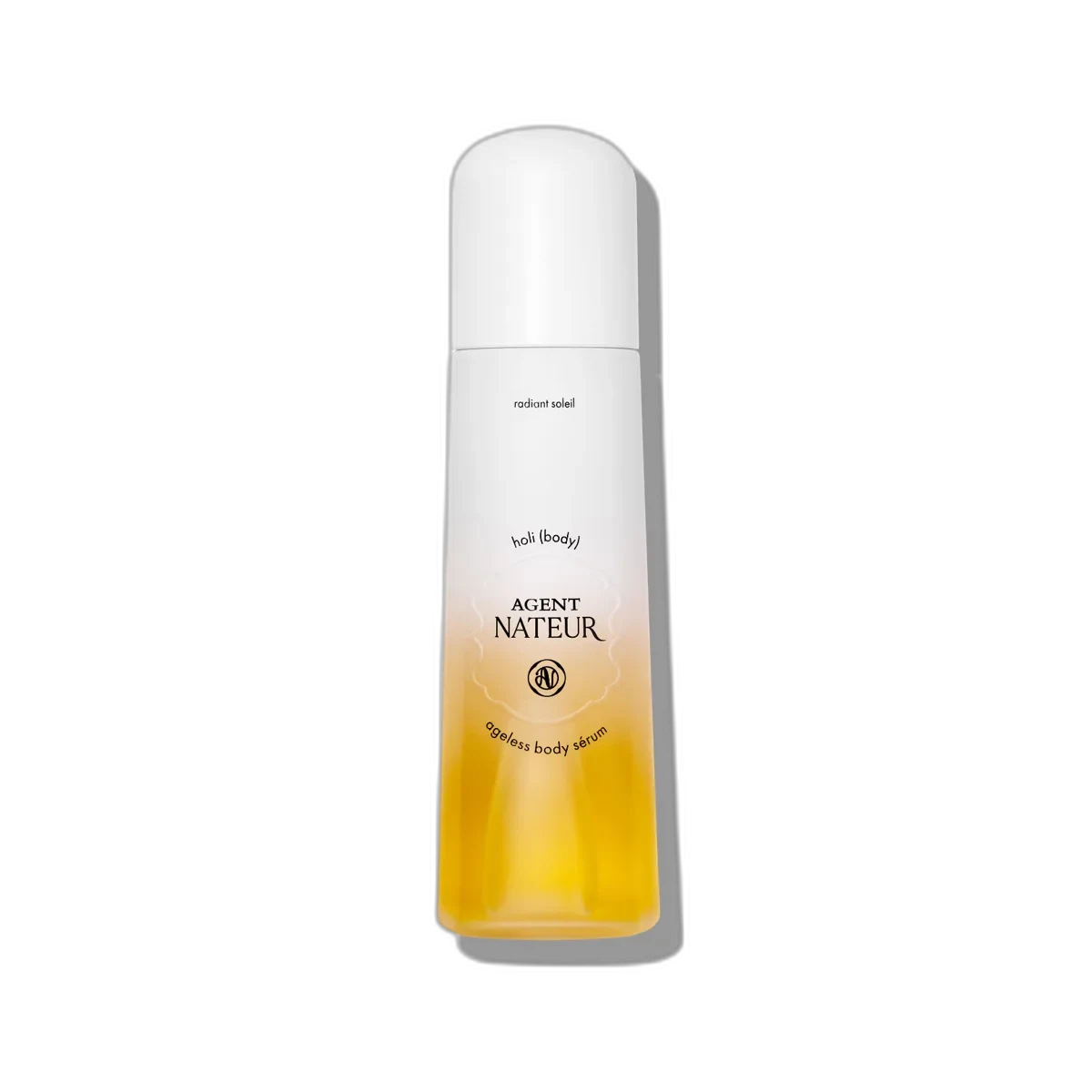
Holi(Oil) Youth Body Serum
Influencer Spa Splurge
 Verified reviewer
Pros & cons.
- +Distinctive sandalwood-rose scent that lingers beautifully
- +Competent plant oil base with good emollient properties
- +Absorbs well into damp skin straight from the shower
- +Beautiful glass dropper packaging suits a luxury bathroom shelf
- +Vegan and free of synthetic preservatives
- +Cumulative skin softness with regular use
- −Punishing price for what is essentially a scented plant oil blend
- −Strong essential oils make it unsuitable for sensitive skin
- −Coconut oil can clog pores on body acne-prone individuals
- −Not safe for pregnancy due to essential oil load
- −Anti-aging vitamin C claims are overstated for an oil base
- −Heavy fragrance allergen load worth flagging
The full review.
There’s a particular kind of skincare product that sells primarily on sensory experience but markets itself on actives. Holi(Oil) Body Serum is a near-perfect example. The scent is the first thing you notice and the last thing you remember — a heavy, warm, almost monastic blend of sandalwood and Damascena rose with helichrysum and a dry woody undertone. Twenty seconds after application, the bathroom smells like a Provençal spa. An hour later, your shoulders still carry a faint trail of it. This is not skincare you forget you’re wearing. This is a perfumed body oil that wants to be considered a serum, and the price reflects that ambition.
The formula starts with a sensible base of sunflower, jojoba, coconut, apricot kernel, grape seed, rice bran, and rosehip oils. That’s a competent plant-oil blend by any standard — sunflower and jojoba are well-tolerated and high in linoleic acid, rosehip brings naturally occurring trans-retinoic acid for a gentle vitamin A note, apricot kernel adds emolliency, and rice bran contributes ferulic acid and other antioxidants. Argan, moringa, and castor oils round out the supporting cast. If you removed everything below this point on the INCI, you’d still have a perfectly nice body oil for around $30. What gets it to $99 is what comes next.
Layered into the oil base are sodium ascorbyl phosphate and calcium ketogluconate — the same two-ingredient duo that makes up the brand’s Holi(C) face powder. In a face product designed to be activated fresh and pressed into clean skin, that combination has a coherent rationale. In a body oil, where the actives are dissolved in a heavy oil base and applied to the body’s largest organ at low percentages, the case is much weaker. Vitamin C derivatives generally work better in water-based formulas where they can interact directly with skin rather than fighting through an oil layer. The brand’s positioning of this product as an anti-aging body serum leans on these two ingredients, and the science doesn’t really support that framing. The actual mechanism here is occlusion and lipid replenishment from the plant oils — well-established as moisturizing strategies but not what ‘youth’ implies.
The scent components are where things get interesting and complicated. Sandalwood (santalum austrocaledonicum), Damascena rose oil, helichrysum, and rosemary leaf extract all contribute to the signature aroma. These are also the ingredients responsible for the heavy fragrance allergen load on the INCI — citronellol, limonene, geraniol, linalool, and santalol are all listed as naturally occurring components. For people who tolerate fragrance well and love sandalwood-forward perfumes, this is part of the appeal. For people with sensitive or reactive skin, this is a meaningful caution flag. The combination of multiple essential oils plus the fragrance allergens means this is decidedly not a body oil for sensitive skin or barrier-compromised body areas.
Practicing how to use it actually matters with this product. Applied to dry skin, it sits heavily and absorbs slowly. Applied to damp skin straight out of the shower, it absorbs much better and traps water in the skin in the way good body oils are supposed to. The resulting feel is silky and slightly dewy for hours afterward, with the scent lingering as a personal aroma cloud. It’s a genuinely lovely sensory experience. It’s also clearly a product designed for people who think of body care as ritual rather than utility.
The limitations are worth being honest about. Coconut oil is comedogenic for some people, and applying this on the chest or back of someone prone to body acne is asking for trouble. The essential oil and fragrance allergen load makes this unsuitable for most sensitive skin, broken skin, or skin recovering from exfoliation treatments. The sandalwood scent is polarizing — some people find it transportive, others find it overwhelming and headachy. And the pregnancy question is real: many experts recommend avoiding sandalwood, rose, and helichrysum essential oils during pregnancy, so this is not the body oil to reach for if you’re expecting.
The value question depends entirely on which product you think you’re buying. If you’re buying a luxury scented body oil that doubles as a sensory anchor for your evening routine, $99 is in line with similar luxury body oils from brands like Susanne Kaufmann or Aesop, and you’re getting a perfectly competent oil base with a memorable scent. If you’re buying an anti-aging body serum that justifies its premium through actives, you’re not getting what the marketing is selling — the SAP and calcium ketogluconate in this oil base are not doing meaningful anti-aging work, and the actual moisturizing benefit comes from the plant oils that any decent body oil would deliver.
The honest verdict is that Holi(Oil) Body is a competent, beautifully scented luxury body oil that earns its place in the cult-favorite tier on ritual and sensory experience rather than on ingredient innovation. Buy it for the scent, the bottle, and the brand identity. Don’t buy it expecting transformative anti-aging on your arms and chest — that’s not what’s actually in the bottle.
Ingredient analysis.
Full INCI list
Helianthus Annuus Seed Oil, Simmondsia Chinensis Seed Oil, Cocos Nucifera Oil, Prunus Armeniaca Kernel Oil, Vitis Vinifera Seed Oil, Oryza Sativa Bran Oil, Rosa Canina Seed Oil, Ricinus Communis Seed Oil, Argania Spinosa Kernel Oil, Moringa Oleifera Seed Oil, Helichrysum Gymnocephalum Oil, Santalum Austrocaledonicum Wood Oil, Sodium Ascorbyl Phosphate, Calcium Ketogluconate, Rosa Damascena Flower Oil, Rosmarinus Officinalis Leaf Extract, Polygonum Tinctorium Leaf/Stem Extract, Santalol, Citronellol, Limonene, Geraniol, Linalool
Skin match.
The science.
The Science
Body oil science relies on simple lipid principles. Plant oils high in linoleic acid (sunflower, grape seed, rosehip) support the skin's natural barrier by replenishing the stratum corneum's fatty acid composition. Oils high in oleic acid (argan, apricot kernel) add emolliency and slip. Applying body oils to damp skin reduces transepidermal water loss by creating an occlusive layer that traps water in the upper skin layers; published research shows occlusion is a top intervention for dry body skin. The plant oil blend in this product covers both linoleic and oleic categories well.
Rosehip seed oil contains natural trans-retinoic acid and provitamin A carotenoids. Published research shows topical rosehip oil improves skin texture, tone, and fine wrinkle depth over 8-12 weeks of consistent use. The trans-retinoic acid concentration in cold-pressed rosehip oil is much lower than in pharmaceutical retinoids, resulting in lower efficacy and lower irritation risk—a trade-off for body skin that usually cannot tolerate strong retinoids.
The sodium ascorbyl phosphate inclusion is more theoretical than functional here. SAP works best in aqueous formulations at concentrations between 1% and 5%, where it dissolves, penetrates, and undergoes enzymatic conversion to active vitamin C in the skin. In an anhydrous oil base, the SAP is suspended rather than dissolved and faces absorption challenges. Published evidence for vitamin C derivatives delivering anti-aging benefits via oil bases is thin; treating this ingredient as a meaningful active in this formulation overstates the chemistry.
Calcium ketogluconate has limited published research as a topical cosmetic active, especially in oil-based delivery systems. Independent literature does not support the marketing weight given to this ingredient in the Agent Nateur product line.
Dermatologist Perspective
Dermatologists recognize that body oils applied to damp skin moisturize dry, mature, or barrier-compromised body skin, and the plant oil blend in this product works for that purpose. Board-certified dermatologists note that the multiple essential oils—specifically sandalwood, rose, and helichrysum—and the fragrance allergens on the INCI make this product unsuitable for patients with sensitive skin, eczema, or contact dermatitis history. The coconut oil component also concerns body acne-prone patients. Dermatological evidence does not support marketing this product as an anti-aging body serum; the moisturizing benefit comes from occlusion and lipid replenishment, not the small amounts of vitamin C derivative in the oil base. Patients seeking real body anti-aging interventions typically use retinoid body lotions or AHA-based body treatments instead of scented oils.
Where it fits in your routine.
Apply to damp skin right after showering to maximize absorption. Dispense 4-8 drops into your palm, warm them, and massage into your chest, shoulders, arms, legs, and other dry areas. Avoid the face (the brand offers a separate face serum). Do not apply to broken, recently exfoliated, or actively irritated skin. The scent is strong; apply at night if you wear perfume during the day to prevent scent clashing. Reapply to very dry areas, especially elbows and shins, as needed.
At $99 for 200ml, Holi(Oil) Body competes in the luxury body oil tier with Susanne Kaufmann, Aesop, and Diptyque. It comes in only one size. The formulation matches those luxury peers in plant oil quality but lacks unique features; the vitamin C and calcium components do not provide the value the marketing suggests. Holi(Oil) Body costs several times more than high-quality utility body oils from Nuxe or Weleda but offers similar moisturizing performance. You pay for the scent, brand identity, celebrity-adjacent positioning, and the ritual experience. The price makes sense for buyers who use body oil for self-care. For buyers focused on ingredient performance per dollar, the cost is hard to justify.
This is for buyers who love sandalwood-rose scents, treat body oil as a sensory ritual, and value luxury packaging and brand identity. It works best for normal to dry body skin without sensitivities or acne tendencies, and for buyers who use essential-oil-forward formulas.
This is for people with sensitive skin, body acne, fragrance allergies, or a compromised skin barrier. Pregnant individuals should avoid this because of the essential oil load. Those seeking functional anti-aging or the best moisturizing performance per dollar will find better value elsewhere.%20Youth%20Body%20Serum)
Product details.
Medium-weight oil that absorbs gradually rather than immediately
Strong sandalwood and rose with warm woody undertones
Glass bottle with dropper that feels appropriately premium
The first application is a sensory experience. The scent fills the room. Skin feels deeply moisturized within minutes, and the scent stays on the body for hours.
About 3-4 months with regular full-body use
12 months
All Year
The backstory.
Holi(Oil) Body was an extension of Agent Nateur's original face oil into the body category, designed to bring the brand's signature scent and oil-blend approach to people who wanted to extend the ritual past the jaw. The vitamin C and calcium components were added to give the formula an anti-aging hook beyond pure nourishment.
About Agent Nateur
Jena Covello founded Agent Nateur in 2014. The clean beauty brand grew mostly through influencer endorsements and celebrity testimonials. Agent Nateur has a devoted following but does not publish independent clinical studies of its formulations.
Common myths.
Vitamin C in a body oil provides anti-aging benefits.
The sodium ascorbyl phosphate in this oil is at low levels and works against the oil base's absorption challenges. Treat the vitamin C as a small supporting feature, not the active mechanism — the oils themselves provide the real benefit through occlusion and moisturization.
Plant oils with essential oils are always gentle because they're natural.
Sandalwood, rose, and the multiple naturally occurring fragrance allergens in this oil irritate sensitive skin. Patch test before broad application and avoid use on broken or recently exfoliated skin.
FAQ.
Is Agent Nateur Holi(Oil) Body Serum worth the price?
The price makes sense if you love the sandalwood-rose scent and use the brand identity in your self-care ritual. If you shop for ingredient quality alone, better-formulated body oils cost much less.
Can you use this body oil on the face?
Agent Nateur sells a separate face serum in the same line. The body version contains coconut oil and more essential oils for body skin. Use face-specific products on your face.
Is it safe during pregnancy?
The sandalwood, rose, and helichrysum essential oils in this blend lead most experts to recommend avoiding or limiting it during pregnancy. Consult your doctor before using essential-oil-heavy products while pregnant.
Does it cause body acne?
It contains coconut oil, which is comedogenic for some people. If you get body acne on your chest or back, avoid this oil and choose a non-comedogenic body oil instead.
How does the scent compare to other body oils?
Holi(Oil) Body has a distinctive scent — a heavy sandalwood and rose blend that polarizes users. People either love it or find it too strong. Sample it before buying a full-size bottle if possible.
When should you apply body oil for best absorption?
Apply to damp skin right after showering, when pores are warm and the skin surface is hydrated. This method uses the oils to trap water in the skin instead of sitting on dry skin.
What the community says.
"Intoxicating sandalwood scent"
"Skin feels silky-soft for hours"
"Beautiful packaging makes a luxury statement"
"Punishing price for a body oil"
"Strong scent isn't for everyone"
"Coconut oil can clog pores on prone individuals"