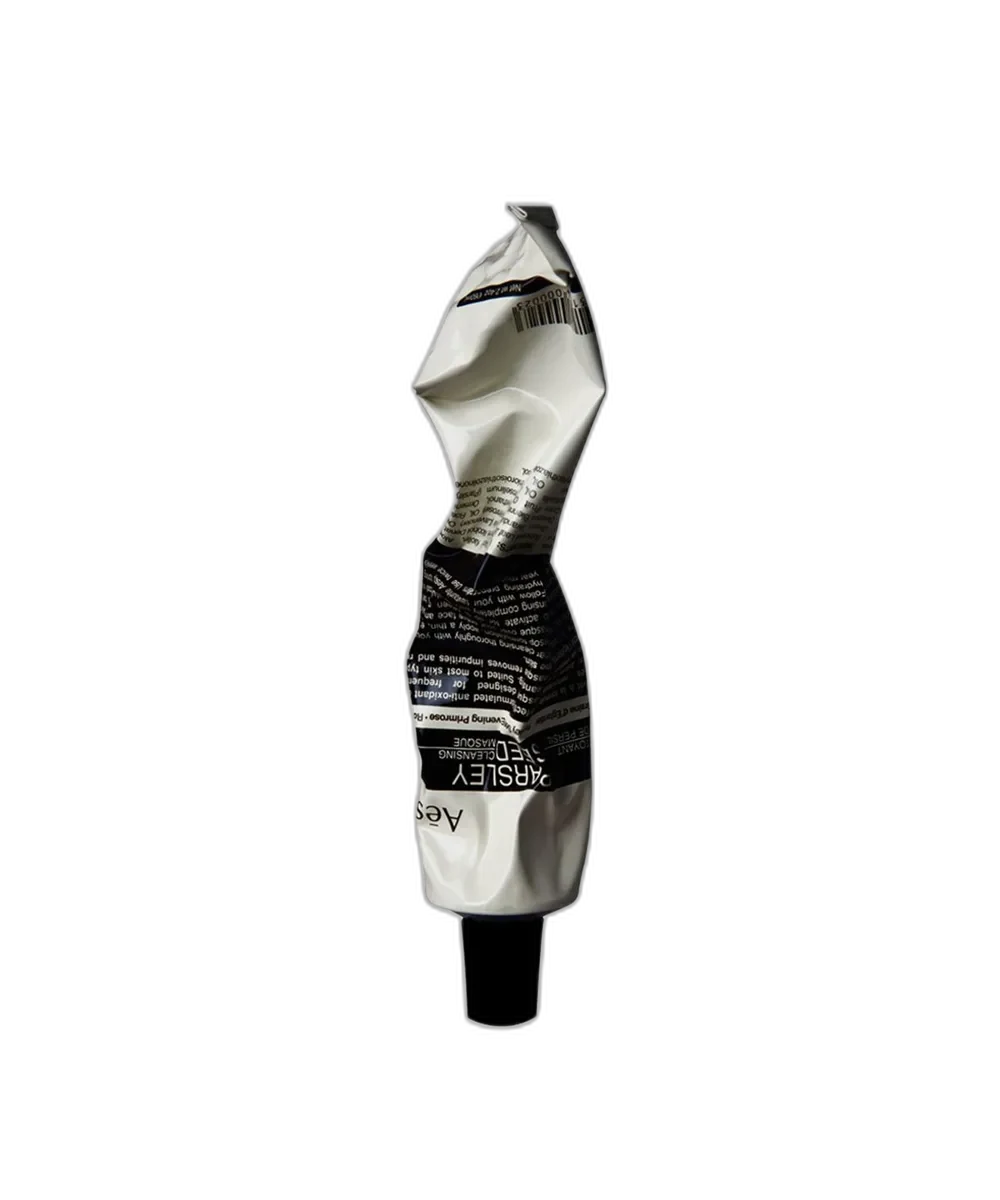
Parsley Seed Cleansing Masque
The Polite Clay Mask
 Verified reviewer
Pros & cons.
- +Layered kaolin and bentonite clay system balances absorbency and gentleness
- +Aloe juice high on the INCI cushions the clay action
- +Evening primrose and rosehip oils prevent post-mask tightness
- +Doesn't crack or feel stripped during wear
- +Visible reduction in surface shine and texture after first use
- +Hygienic aluminum tube format
- +Pregnancy-friendly active profile
- −Denatured alcohol sits high on the ingredient list
- −Lavender oil and allergens limit sensitive-skin suitability
- −Premium price for a functionally familiar clay mask
- −Not appropriate for dry or barrier-compromised skin
- −Luxury cost-per-use compared to drugstore clay alternatives
The full review.
Most clay masks have the same problem. They do what they say — they pull oil and surface debris off the skin — and then they keep going. The clay continues to absorb past the point where it’s working on the surface and starts pulling moisture from the stratum corneum itself. Your skin tightens, the mask cracks, you rinse it off ten minutes later than you should have, and the rest of the day is spent layering moisturizer to undo the dryness. The category has trained users to expect this trade-off and to call it ‘detoxifying,’ which is mostly a marketing word for ‘mildly damaged.’ Aesop’s Parsley Seed Cleansing Masque is one of the few clay masks built to avoid that exact failure mode, and the way it does it is the most interesting thing about the formula.
Look at the INCI and the strategy becomes clear. Kaolin sits in the second slot, the dominant clay — and kaolin is, importantly, the gentler clay. It absorbs sebum and surface debris without the more aggressive moisture-pulling of pure bentonite. Bentonite shows up in the fourth position, layered behind kaolin to add stronger absorbent activity for the T-zone and congested areas, with a smaller amount of illite providing additional clay character. So the mask isn’t relying on a single aggressive clay to do all the work. It’s using a layered clay system, with the gentler one as the headline and the stronger one as the supporting cast. That’s a better formulation choice than most luxury clay masks make, and it explains why the mask feels less punishing than its category peers.
More importantly, look at what sits between the clays and the rest of the formula. Aloe leaf juice is the third ingredient, well above the denatured alcohol and the active oils. That’s an unusual placement for a clay mask, and it’s the most functionally important part of the design. The aloe contributes humectant and soothing activity that runs in the opposite direction from the clays — it draws water in while the clays draw oil out. Then there’s evening primrose oil and rosehip fruit oil further down, providing essential fatty acids and a small lipid cushion that prevents the post-mask tightness that defines most clay treatments. The result is a mask that does the absorbent work of a clay product without the moisture-stripping side effect that the category usually treats as inevitable.
The texture confirms the design intent. Pull a thin layer of the masque from the tube and it spreads cool, smooth, and slightly grainy across the skin — almost soothing on application, with the herbal scent from the parsley seed and lavender hitting before the clay sensation. As the mask sits on the skin, it doesn’t dry into a stiff cracked surface the way aggressive clay masks do. It stays slightly tacky throughout the wear time, which is by design and is the correct way to use any clay mask. Rinse it off with lukewarm water at five to ten minutes — Aesop’s instructions are accurate on the timing — and the skin underneath feels matte, smooth, and balanced rather than dry. There’s no tight pull, no flaking, no need to immediately layer three serums to feel comfortable again.
The limitation that any honest review has to flag is the denatured alcohol. It sits in the fifth position on the INCI, above the glycerin, and that’s higher than most modern formulators would place it. Alcohol denat. in a clay mask serves a few legitimate functions — it improves spreadability, helps the formula dry to the right tackiness, and acts as a mild solvent for the essential oils — but it also adds an irritation and dryness vector that the rest of the formula then has to compensate for. The aloe and oils do that compensation work fairly well, and most users won’t feel any harshness. But the inclusion is a real ingredient choice and worth understanding. If your skin is reliably non-reactive to alcohol in topical products, this is a non-issue. If you have rosacea, eczema, or any history of barrier disruption, it’s a reason to consider a fragrance-free clay mask without alcohol denat. instead.
Results are immediate and visible in the way that all good clay masks are — the surface shine drops noticeably after the first use, the skin feels smoother to the touch, and there’s a subtle tone evenness that lasts for several hours. Combination and oily skin types are the clear best fit for this product, and twice-weekly use produces a steady, ongoing improvement in surface texture and the look of pore congestion. What the mask won’t do is structurally change pore size, dramatically clear deeply embedded blackheads, or treat acne. Clay masks are a complement to a treatment routine, not a substitute for it. A salicylic acid product remains the right answer for persistent congestion. This mask is the supporting cast that makes the overall picture look better.
The pleasing thing about the formula is that the post-mask experience is consistent. Skin doesn’t feel stripped, doesn’t crave heavy moisturizer immediately, doesn’t develop the tight pulled sensation that defines worse clay products. You can rinse this off and proceed straight to your normal serum and moisturizer without any rescue layering, which is honestly the standard a luxury clay mask should be held to. Drugstore clay masks rarely manage this — they tend to leave the skin in worse condition than they found it, and the post-mask dryness becomes its own problem. Aesop’s biggest functional advantage here is the absence of that side effect.
Which brings the conversation around to value, where the math gets harder. Fifty-eight dollars for sixty milliliters of a kaolin and bentonite clay mask is firmly in luxury territory. The actives — clays, aloe, plant oils — are not rare or expensive ingredients, and there are competent clay masks at every price point below this. What you are paying for is the texture refinement, the careful clay layering and aloe cushioning, the herbal scent profile, and the Aesop tube on your bathroom shelf. For someone who wanted a clay mask that doesn’t punish their skin and is willing to pay for the formulation discipline, the math can work. For someone who simply wants the absorbent function of a clay mask and doesn’t care about the post-mask experience, there are five-dollar masks that will technically deliver. The honest framing is that you are paying for restraint, not for novelty.
The other axis to consider is sensitive skin. The lavender oil, ormenis oil, and the disclosed allergens at the bottom of the INCI mean this isn’t the right pick for fragrance-reactive skin, even with the rest of the formula’s softening cast. Sensitive types will be better served by a fragrance-free, alcohol-free clay mask — and there are luxury options that exist in that profile, just not from Aesop’s Parsley Seed line. The brand’s broader pattern of using essential oils as identity markers shows up here just as it does across the rest of the catalog.
Application is straightforward but worth doing right. Start with clean, dry skin. Squeeze a chickpea-sized amount onto your fingertips and spread it as thin and even a layer as you can across the face — heavy application doesn’t make the mask work better, it just wastes product and lengthens rinse-off. Avoid the eye area and the lip line. Wait five to ten minutes (set a timer; it’s very easy to leave clay masks on too long) and rinse with lukewarm water. Follow immediately with a hydrating serum and moisturizer. Twice-weekly use is the right cadence for combination and oily skin; once weekly is appropriate for normal skin. The 60 ml tube should last about two to three months of consistent use.
What the Parsley Seed Cleansing Masque is, ultimately, is a quietly competent luxury clay mask that respects the people using it more than most products in its category do. It’s not revolutionary, it’s not the only well-made clay mask on the market, and it doesn’t completely earn its price on actives alone. But it does what it says, doesn’t punish your skin for using it, and earns a place in routines for combination and oily skin types who can tolerate the fragrance and want the kind of formulation refinement that drugstore options skip. For everyone else, there are better-targeted and lower-priced options.
Ingredient analysis.
Full INCI list
Water (Aqua), Kaolin, Aloe Barbadensis Leaf Juice, Bentonite, Alcohol Denat., Glycerin, Illite, Phenoxyethanol, Lavandula Angustifolia (Lavender) Oil, Oenothera Biennis (Evening Primrose) Oil, Rosa Canina Fruit Oil, Linalool, Ormenis Multicaulis Oil, Limonene, Carum Petroselinum (Parsley) Seed Oil, Geraniol.
Skin match.
The science.
The Science
This masque uses a layered clay system: kaolin is the primary clay, bentonite is the secondary, and a small amount of illite adds absorbency. Kaolin is a well-studied cosmetic clay that absorbs sebum gently; its larger particle size and lower swelling capacity extract less moisture from the skin than bentonite. Bentonite has a higher swelling capacity and stronger surface charge, making it more efficient at pulling oil and debris but more likely to cause post-mask dryness. This combination balances the two: kaolin performs most of the absorption without irritation, while bentonite adds strength for sebum-heavy areas. Published work shows cosmetic clays degrease the surface and temporarily improve the appearance of pore congestion, though these effects are surface-level and do not modify pore structure. The cushioning components—aloe vera leaf juice, glycerin, evening primrose oil, and rosehip fruit oil—distinguish this mask from more aggressive clay products. Aloe provides polysaccharide-driven humectant activity and mild anti-inflammatory traditional-use claims; glycerin is the most studied small-molecule humectant in cosmetic chemistry; and evening primrose and rosehip oils provide essential fatty acids (gamma-linolenic acid in evening primrose, omega-3 and omega-6 in rosehip) for barrier comfort and post-mask softness. The denatured alcohol in the formula—fifth on the INCI—acts as a spreading aid, a solvent for the essential oils, and helps the clay layer dry in a controlled way. This is a legitimate formulation choice but adds an irritation vector for alcohol-reactive skin. The essential oil components (lavender, ormenis, parsley seed) and their disclosed allergens provide aroma and minor anti-inflammatory traditional-use claims, but they are the main contact-sensitization risk for fragrance-reactive users.
Dermatologist Perspective
Dermatologists generally view kaolin-based clay masks as a reasonable supplementary treatment for combination and oily skin types to manage surface sebum and congested pore appearance. Board-certified dermatologists often recommend clay masks once or twice weekly within a broader routine. They typically advise removing clay masks while still slightly tacky to avoid the moisture-pulling effect of a fully dried mask. Standard dermatologic caveats for this specific product include the denatured alcohol high on the INCI and the essential oil profile; dermatologists routinely flag both as suboptimal for patients with rosacea, eczema, or compromised barrier function. For sensitive patients, dermatologists typically recommend a fragrance-free, alcohol-free clay mask instead. Clay masks should not be used immediately after in-office procedures, on actively irritated skin, or with active prescription retinoid routines on the same evening, as cumulative drying can compound irritation.
Where it fits in your routine.
Apply a thin, even layer to clean, dry skin once or twice weekly. Avoid the eye area and lip line. Leave on for 5-10 minutes. Do not let the mask dry and crack on the skin, or it draws moisture from the stratum corneum. Rinse with lukewarm water and follow immediately with a hydrating serum and moisturizer. If you have a history of fragrance or alcohol sensitivity, patch test on the inner forearm for 48 hours before first full use. Do not use on the same evening as a prescription retinoid, immediately after in-office procedures, or on actively irritated skin.
At $58 for the 60 ml tube, the masque costs as much as luxury clay masks. The actives — kaolin, bentonite, aloe, plant oils — are common, inexpensive ingredients. Competent clay masks exist at every price point below this. You pay for the layered clay system, the aloe and oil cushioning that stops the post-mask stripping seen in drugstore options, the herbal scent, and the Aesop packaging. The math works for buyers disappointed by harsher clay masks who want formulation discipline to prevent post-treatment dryness. For those optimizing dollars per treatment, drugstore clay masks at a fraction of the price deliver the same absorbent function — just with less restraint.
This mask suits combination, oily, or normal skin types that tolerate fragrance and trace alcohol. It works for users seeking a luxury clay mask that does not strip or punish the skin after rinse-off. It fits buyers who found cheaper clay masks left their skin feeling tight and dry.
People with dry, dehydrated, sensitive, rosacea-prone, or barrier-compromised skin should use a fragrance-free, alcohol-free clay mask or avoid clay treatments. Skip clay treatments if you need to treat persistent blackheads or active acne — a salicylic acid product works better.
Product details.
Smooth, cool, slightly grainy clay paste that spreads thin and even.
Distinct herbal — parsley seed and lavender over a faint earthy clay note.
Aesop's signature aluminum tube with a screw cap, in a paper carton. The tube format is hygienic and travel-friendly, and it dispenses a controlled amount each time.
The first application feels cool and soothing, with an immediate herbal scent. The mask stays slightly tacky instead of drying fully. This design prevents the moisture-pulling seen in aggressive clay masks. Rinsing off shows immediate matte refinement.
About 12-18 uses at twice-weekly application — roughly 2-3 months of regular use.
12 months
All Year
The backstory.
The Parsley Seed Cleansing Masque has been part of Aesop's catalog for over a decade and represents the brand's approach to treatment masks: pair traditional absorbent clays with humectant and oil-based softening so the skin feels balanced rather than punished after rinse-off. It has remained essentially unchanged because the format works for the brand's combination-skin-leaning audience.
About Aesop
Legacy Brand (20+ years)Aesop launched in Melbourne in 1987 and the Parsley Seed range has been one of its anchor lines for nearly two decades. The Cleansing Masque has been in continuous distribution for over a decade, with consistent formulation and broad global retailer presence supporting its credibility within the prestige clay-mask category.
Common myths.
Clay masks should fully dry and crack on the skin.
That cracked, stiff sensation means the clay lacks surface moisture and pulls water from your skin. Remove a clay mask while it is still slightly tacky; this formula works that way.
Clay masks shrink your pores.
No topical product changes pore size structurally. Clay masks clear surface debris and absorb sebum temporarily. This makes pores look smaller for a short window, but the effect is cosmetic and reversible.
FAQ.
How often should I use this mask?
Most skin types work best with once or twice weekly use. Combination and oily skin can use it twice weekly; normal skin works better with once. Daily use is too frequent for any clay-based mask and risks over-drying.
Should I let it fully dry before rinsing?
Don't. Remove the mask while it is still slightly tacky, typically after 5-10 minutes. Clay masks that dry fully pull moisture from your skin. This is the opposite of your goal.
Does it work for blackheads?
It clears surface sebum and softens debris that clogs pores, but it does not remove deeply embedded blackheads. A salicylic acid treatment works better for persistent blackheads. Clay masks complement, but do not replace, these treatments.
Is it suitable for dry skin?
No. Even with aloe and oil softening agents, the clay base and denatured alcohol rank high on the INCI. This makes it a poor fit for dry or dehydrated skin. Aesop's other masks work better for dryness.
Can I use it with retinol?
Use them on different days. Clay masks increase dryness and irritation from an active retinoid routine. Apply the mask on a non-retinoid evening and skip your retinoid that night.
Is it pregnancy-safe?
Yes. The active profile contains no ingredients typically restricted during pregnancy. You can use it during pregnancy and breastfeeding, though sensitive pregnancy skin may benefit from less frequent use.
How long does the 60 ml tube last?
Roughly twelve to eighteen uses at a thin, even application — about two to three months at twice-weekly use.
Community
What the community says.
"Smooth, cool clay texture that spreads easily"
"Doesn't crack or feel tight on the skin"
"Visible reduction in surface shine after rinsing"
"Pleasant herbal scent"
"Skin feels balanced rather than stripped"
"Denatured alcohol high on the INCI"
"Premium price for a clay mask"
"Lavender oil and allergens limit sensitive-skin use"
"Functionally similar to drugstore clay masks at a fraction of the price"
People also looked at.